


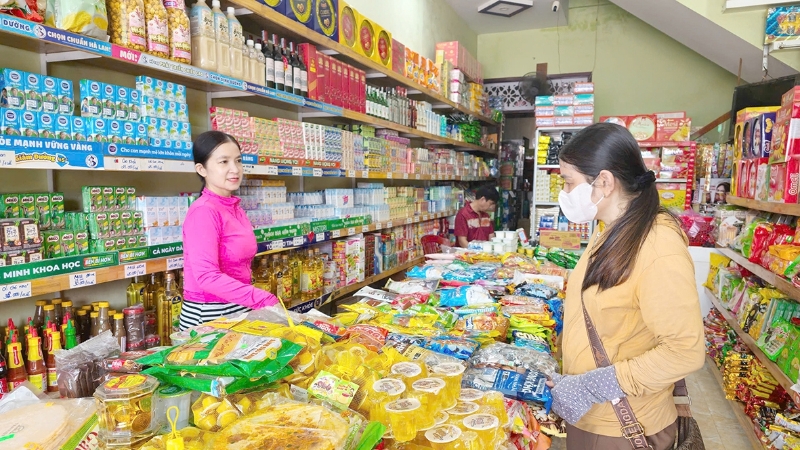
From January 1, Vietnam’s presumptive tax regime on household and individual businesses will be replaced by a declaration-based system anchored in actual revenue, making revenue the core determinant of tax obligations, calculation methods, and accounting requirements. The shift promises greater transparency, fairness, and improved access to credit, but also brings new challenges related to legal liability, inventory management, input invoices, and longstanding habits in manual bookkeeping.
Beyond presumptive taxation
According to the Ministry of Finance (MoF), Vietnam currently has around 3.6 million active household and individual businesses, up 106 per cent over the last year. Budget contributions from the segment are also rising sharply. In 2024, tax revenue from household businesses reached nearly VND26 trillion ($1 billion), up about 20 per cent from the previous year. In the first half of 2025 alone, collections totaled VND17.1 trillion ($658 million), far exceeding the same period of 2024.
While these figures underscore the sector’s growing fiscal importance, they also expose the limitations of the traditional presumptive tax model. Built on estimated revenue, presumptive taxation was suitable when household businesses were small and simple. Today, amid the rapid expansion of e-commerce, digital payments, and multi-channel sales, the “estimate first, collect later” approach struggles to reflect actual revenue, creates unequal tax burdens among similar businesses, and weakens overall fairness.
As a result, many experts view the shift to declaration-based taxation as inevitable - not only to standardize tax administration but also to help household businesses strengthen governance, access credit, and expand more sustainably.
At a recent seminar jointly organized by the KiotViet Technology Corporation and the Vietnam Chamber of Commerce and Industry (VCCI), Ms. Nguyen Thi Cuc, Chairwoman of the Vietnam Association of Tax Consultants, warned that continuing with presumptive taxation carries growing legal risks.
Under current rules, presumptive tax levels are set annually or monthly for seasonal businesses. If actual revenue changes by 50 per cent or more, businesses must adjust their tax obligations from the time the change occurs. In practice, however, many businesses with declining revenue continue paying the original amount, while those with rising revenue who fail to adjust may face back taxes, late-payment interest, or penalties.
More seriously, failure to declare and pay tax as required may be classified as tax evasion. Under current law, tax evasion of VND100 million ($3,845) or more can trigger criminal liability, including prison sentences of up to seven years, in addition to back taxes and fines. Even tax arrears lasting more than three months without declaration may be deemed tax evasion. Presumptive taxation, Ms. Cuc stressed, is no longer the “safe zone” many businesses assume it to be.
Mr. Nguyen Quang Vinh, Vice Executive President of VCCI, emphasized that the reform is not intended to burden small businesses but to create a stable and sustainable foundation for household businesses in line with their expanding role in the economy.
Despite this intent, the transition faces significant resistance. A VCCI survey revealed that 49 per cent of household businesses fear higher costs and time burdens associated with managing invoices and documentation under the declaration regime. Limited digital skills, entrenched manual record-keeping, upfront investment costs, and anxiety over new procedures remain major obstacles.
In reality, most concerns stem not from tax rates but from changes in management methods. Whether under presumptive or declaration-based taxation, tax is still calculated as revenue multiplied by the applicable rate. The key difference lies in accurately identifying and fully declaring revenue.
Under the declaration regime, businesses must proactively determine their tax obligations based on actual performance. However, some individuals still use multiple bank accounts to disperse cash flows, leaving revenue underreported. To address this, the second draft decree on tax declaration and e-invoice usage requires household and individual businesses to disclose all bank accounts used for business activities, not only those used for tax payments. The aim is to ensure transparency and fairness, while reducing the risk of tax reassessments, back payments, and penalties.
Revenue as the core axis
As revenue becomes fully transparent, legal responsibility increases accordingly. Under self-declaration, the revenue figures determined by businesses themselves form the basis of all tax obligations, from calculation methods and accounting regimes to declaration frequency.
Ms. Le Thi Duyen Hai, Deputy Secretary General of the Vietnam Association of Tax Consultants, said the first critical step in minimizing transition risks is for businesses to assess their position by reviewing actual 2025 revenue and estimating revenue for 2026. Correct classification from the outset will determine compliance requirements not only in 2026 but in subsequent years as well.
Household businesses with annual revenue below VND500 million ($19,230) will be exempt from tax and accounting administrative procedures. Instead of declaring in advance, they will declare based on actual revenue, with a deadline of January 31 the following year. This approach reduces estimation risks while preserving the small-scale nature of micro businesses.
Even when revenue is expected to exceed the threshold, businesses are not required to declare immediately and will not incur late-payment interest. The policy introduces a time buffer, allowing businesses to adapt. If the threshold is exceeded late in the year, the declaration deadline remains January 31, 2027. If exceeded in the first half of the year, deadlines fall on June 30 or July 30, 2026.
For businesses with revenue above VND500 million ($19,230), tax declarations will be quarterly, or monthly if revenue reaches VND50 billion ($1.9 million). A major shift occurs at the VND3 billion ($115,385) threshold, where businesses must apply the revenue-minus-expenses method, requiring proper documentation of input goods and operating costs. While this method better reflects actual profitability, poor habits in collecting input invoices remain a major hurdle.
To ease the transition, businesses with revenue between VND500 million and VND3 billion may continue using the simpler revenue-based method, allowing time to build proper documentation practices.
While revenue is the policy axis, accounting is the technical factor shaping compliance behavior. The MoF plan to reduce the required accounting books from seven to four is widely seen as a positive step, though further tiered simplification is needed. Micro businesses would only need a revenue book, while those using the revenue-minus-expenses method would add an expense book.
As revenue becomes central, concerns over inventory and undocumented inputs have intensified. Longstanding reliance on cash transactions and small-scale purchases has left many businesses without input invoices, creating uncertainty under the new regime.
According to tax authorities, much of this concern reflects a misunderstanding of tax thresholds and methods. Only businesses applying the revenue-minus-expenses method need to factor inventory into personal income tax calculations. For businesses using the direct revenue-based method, inventory without input invoices does not affect tax obligations, provided the goods are legal and not linked to smuggling or trade fraud. Tax will be calculated based solely on sales revenue, typically at a 1.5 per cent rate.
Businesses may still issue sales invoices even without input invoices, using standard sales invoices connected to point-of-sale systems, without any requirement for input-output deduction.
A related issue involves purchases from small-scale producers, such as agricultural products bought directly from farmers who do not issue VAT invoices. In such cases, the key requirement is to correctly identify the seller’s legal status.
To have these expenses recognized as deductible costs, particularly under the revenue-minus-expenses method, businesses should prepare detailed purchase lists accompanied by payment evidence, such as cash vouchers or bank transfer documents acknowledged by the seller. Proper documentation, experts note, is not only a matter of compliance, but also a safeguard that helps household businesses reduce risk and optimize their tax obligations over the long term.






 Google translate