


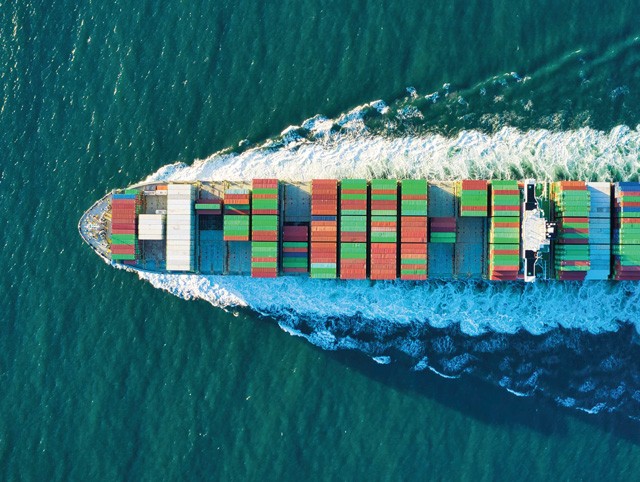
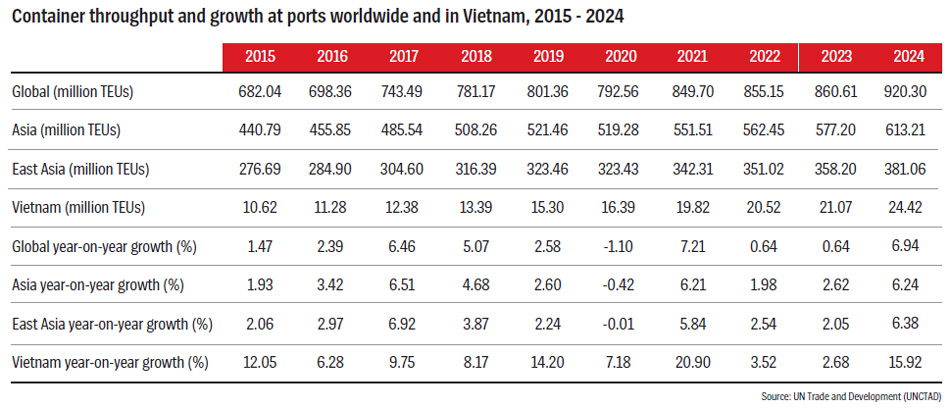
The sea has connected economies for centuries. In today’s global economy, however, its role extends far beyond transporting goods. According to United Nations Trade and Development (UNCTAD), maritime transport accounts for more than 80 per cent of global merchandise trade by volume. In 2024, Asian maritime transport accounted for 66.63 per cent of total container throughput at ports worldwide, underscoring the increasingly important role of Vietnam, East Asia, and Asia more broadly in global shipping networks.
Yet the shipping industry itself is undergoing profound change as routes are disrupted by geopolitical tensions, global trade restructuring, volatile freight costs, decarbonization requirements, and the rapid development of digital technologies. UNCTAD estimates that global maritime trade grew by just 0.5 per cent in 2025; significantly below the 2.2 per cent recorded in 2024. These changes create a new imperative for countries with maritime advantages: shipping must be viewed not simply through the lens of port infrastructure but across the entire maritime value chain.
Maritime and logistics capabilities
For Vietnam, this is particularly significant as its international trade continues to expand. Vietnamese exports and imports must not only be transported at competitive cost but also delivered on time, remain traceable, meet environmental standards, and be supported by insurance, financing, and efficient management. Every stage of this process presents an opportunity to create value. The key question is who captures that value and how much remains in Vietnam’s economy.
If Vietnamese businesses remain concentrated in lower-margin activities such as standalone transportation, warehousing, and traditional freight forwarding, while higher-value functions such as international shipping, supply chain management, maritime finance, insurance, data, and technical services are dominated by foreign companies, rapid trade growth will not necessarily translate into stronger national maritime capabilities. The critical shift ahead is therefore from asking how much cargo passes through to asking how much value is created and retained.
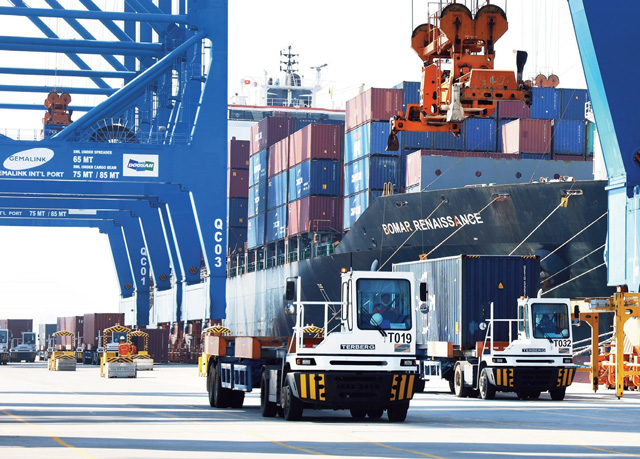
Seaports have always held a special place in the development of the marine economy. Without adequate port capacity, exports and imports, maritime transport, and international logistics cannot operate efficiently. Rising cargo throughput initially indicates improved capacity to receive and handle goods. However, converting that volume into greater economic value requires a strong supporting system, including multimodal transport networks, logistics centers, warehouses, freight forwarding, customs, insurance, finance, ship repair, fuel supply, shipping agencies, information technology, and skilled professionals.
In recent years, Vietnam’s port network has expanded significantly in both scale and operational capacity. The development and expansion of deepwater gateway ports in the north and south have enabled the country to accommodate larger vessels, reduce certain transshipment requirements, and improve direct connections with international markets.
However, continuing to expand port capacity without simultaneously strengthening shipping, logistics, and maritime services could produce economic returns that fall short of the investment involved. A new berth may add millions of tons or millions of TEUs in capacity. But if most of the added value continues to accrue to international shipping companies, global logistics providers, and foreign insurance and financial institutions, the benefits retained by Vietnam will remain limited. This is a fundamental issue that must be addressed in the country’s approach to maritime development.
A strong marine economy does not need to perform every function itself. What matters is whether domestic businesses have the capabilities to participate in higher-value segments and whether a mutually supportive business ecosystem can be established. A seaport can then become more than a facility collecting cargo-handling fees; it can serve as a hub generating multiple revenue streams and services.
Experience from international maritime hubs shows that ports are often developed alongside maritime finance, insurance, shipping brokerage, fuel supply, ship repair, legal services, technology, and supply chain management. This offers an important direction for Vietnam: rather than building ports solely to serve trade, the country should use them as platforms for developing a high-value maritime services ecosystem.
Moreover, an economy with major ports but a weak shipping fleet may remain heavily dependent on foreign maritime transport capacity. Trade volumes may rise, but a significant share of shipping revenue and control over supply chains will continue to lie outside the domestic economy.
Maritime development must therefore focus not only on the gateway but also on the vessels passing through it. Resolution No. 20-NQ/TW, dated July 28, 2026, sets a target for Vietnam’s shipping fleet to carry 20 per cent of the country’s import and export cargo by 2030. This is not simply a target for fleet size; it calls for stronger international shipping capabilities and a modernized fleet that is energy-efficient, safe, and better equipped to participate in international routes.
Alongside fleet development, Vietnam needs a supporting ecosystem of services, including ship management, agency and brokerage services, insurance, maritime finance, ship repair, fuel supply, seafarer training, and technical services. Each vessel would then become not merely a means of transportation but also part of Vietnam’s broader maritime value ecosystem.
In international trade, logistics costs directly affect the competitiveness of goods. Yet viewing logistics solely as transportation costs is insufficient. Total logistics costs also include transit times, waiting times, warehousing, inventory holding, administrative procedures, transshipment, late-delivery penalties, and expenses arising from unexpected risks.
Reliability is therefore becoming a critical factor in logistics competitiveness. International manufacturers care not only about the price of transportation but also when goods will arrive, where they can be tracked, how likely disruptions are, and how logistics providers will respond when problems arise.
A modern logistics system must consequently rest on three pillars: reasonable costs, predictable transit times, and resilience. Vietnam’s Strategy for Logistics Services Development for 2025-2035, with a Vision to 2050, issued under Prime Ministerial Decision No. 2229/QD-TTg dated October 9, 2025, identifies logistics as an important economic sector with high value-added and knowledge intensity. It also prioritizes integrated infrastructure, regional connectivity, stronger domestic businesses, digital and green transformation, and the development of highly-skilled workers.
This direction is reinforced by Resolution No. 20, which calls for maritime logistics services to be integrated with road, rail, inland waterway, and air transport. Logistics is thus no longer merely a service operating after cargo reaches a port. It has become a capability for organizing the movement of goods throughout the economy. Competition in logistics increasingly takes place not only between individual companies but also between networks and economic ecosystems.
Disruptions to international shipping in recent years have provided a clear warning. When routes through geopolitically-sensitive regions are interrupted, vessels must change course, with transit times lengthening and costs rising. Modern logistics cannot therefore focus solely on minimizing costs under normal conditions. It must also be designed to function during disruptions. For Vietnam, improving logistics resilience also means reducing dependence on any single route, transport mode, or hub.
Building a competitive ecosystem
Under the traditional view, maritime and logistics development is concentrated primarily around seaports. A value chain perspective, however, reveals a much broader landscape, including inland logistics centers, port-linked industrial parks, distribution centers, dry ports, maritime service zones, ship repair centers, data centers, training and research institutions, and maritime finance and insurance hubs.
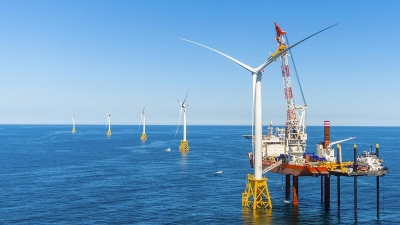
Maritime development can therefore create an entirely new economic ecosystem. Coastal regions can become logistics hubs linked to production centers. Areas with favorable conditions can develop ship repair, fuel supply, or supporting maritime industries. In particular, the future expansion of offshore energy could generate additional demand for service ports, specialized transportation, equipment maintenance, and offshore logistics. These activities should be planned and developed to complement one another rather than compete in fragmented ways.
Vietnam should improve capital efficiency in marine infrastructure development by prioritizing facilities capable of serving multiple purposes. Transportation, logistics, energy, and data infrastructure, along with selected maritime facilities, can be designed for shared use while supporting economic development and maritime security and safety.
This approach is particularly important in areas where investment conditions are challenging. Rather than building multiple separate systems, infrastructure can be designed to meet several needs, reducing costs and improving utilization. However, dual-use capabilities must be incorporated from the planning, design, and investment stages rather than added after construction is complete.
A key shift in policy thinking is the introduction of indicators that measure value creation. Port throughput remains important, but it should be complemented by indicators such as the share of cargo carried by Vietnamese companies; the share of logistics services provided by domestic firms; the proportion of high-value maritime services delivered by local businesses; logistics digitalization rates; port productivity; vessel and cargo turnaround times; emissions per unit of cargo; the share of goods transported by rail and inland waterways; and the capacity of the national fleet and supporting maritime services.
These indicators can help answer a more fundamental question: Is Vietnam strengthening its maritime capabilities or simply handling more cargo? Such a measurement framework would fundamentally change how maritime strength is assessed.
The 2030 targets under Resolution No. 20 illustrate this shift. Vietnam aims for its national shipping fleet to carry 20 per cent of the country’s import and export cargo, while reducing logistics costs to below 12 per cent of GDP. These are not merely targets for shipping volumes and costs. They reflect two core capabilities of a strong marine economy: the ability to organize a substantial share of international transportation and the ability to move goods through the domestic economy with increasing efficiency.
If these targets are achieved alongside continued improvements in the fleet, ports, logistics, maritime industries, technology, and specialized services, Vietnam will be better positioned to move from a country with substantial maritime activity to one with genuine maritime capabilities.
By 2045, Vietnam could seek a stronger position in the Asia-Pacific maritime network. This would mean having internationally-competitive port gateways, multimodal logistics networks, maritime and logistics companies with a strong regional presence, an ecosystem of financial, insurance, technical, and technology services, a highly-skilled workforce, and green, smart, and resilient port and logistics systems. The sea would then become more than a gateway for imports and exports; it would serve as a platform for deeper participation in the organization of global trade. At this stage, geographic advantages would have been translated into institutional, technological, and business strengths.
Vietnam already has an important foundation for maritime and logistics development. However, in a world where shipping routes are constantly changing, supply chains are being restructured, technology is advancing rapidly, and decarbonization requirements are becoming more demanding, competitive advantage no longer rests simply on having a deepwater port or a favorable sea route. It rests on the ability to organize the flow of goods.
More broadly, advantage lies in the ability to provide services for which international businesses are willing to pay a premium and to control high-value links in the supply chain. Maritime and logistics development must therefore be placed within a broader vision of national competitiveness. This is the shift from an economy that benefits from its maritime location to one that knows how to leverage that location to generate value.




 Google translate