



The results of a survey on business trends across key sectors of the economy, conducted by the National Statistics Office (NSO) under the Ministry of Finance (MoF) at the end of the third quarter of 2026, reveal a notable paradox. While businesses in several sectors are optimistic about their prospects for the closing three months of the year, concerns over persistent internal bottlenecks remain high, with little sign of improvement.
Specifically, the survey found that, entering the fourth quarter, 83.9 per cent of businesses in manufacturing and 72.8 per cent in construction expect their operations to improve or remain stable. Indicators for new orders, production volumes, and labor demand also pointed to a recovery. However, converting these expectations into actual output remains a challenge, particularly in terms of costs.
Identifying barriers
Some 94.7 per cent of manufacturing businesses and 65 per cent of construction businesses reported difficulties arising from higher raw material costs. Notably, cash flow constraints are putting considerable pressure on the construction sector, with 25.5 per cent of businesses struggling with outstanding payments for completed public investment projects. Meanwhile, only 30.5 per cent reported having access to preferential credit.
To help businesses translate their growth expectations into actual performance in the fourth quarter of 2026, Ms. Phi Thi Huong Nga, Head of the Industry and Construction Statistics Department at the NSO, said authorities should prioritize stabilizing input material prices, improving contractors’ cash flow by settling outstanding payments for completed public investment projects, expanding access to preferential credit, and accelerating licensing procedures for mineral mines to ensure adequate material supplies for construction projects.
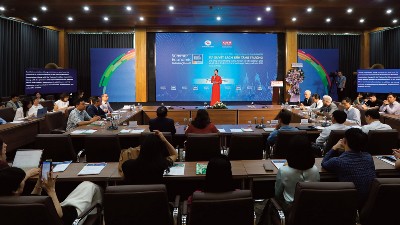
Beyond market and financial difficulties, administrative compliance costs and institutional barriers remain significant constraints on businesses. At a recent consultation conference on the results of a comprehensive review of the legal document system, Mr. Dau Anh Tuan, Deputy Secretary General of the Vietnam Chamber of Commerce and Industry (VCCI), openly criticized what he described as “paper-based reductions” that have done little to ease the actual burden on businesses.
Assessing the review process, he warned that many of the measures taken so far have remained largely technical, involving changes such as renaming government agencies or adjusting the legal grounds for issuing regulations, rather than genuinely removing obstacles to production and business activities. “Legal reviews remain heavily focused on technical matters, with insufficient attention paid to reducing the burden on businesses,” he emphasized. “The results of technical reviews must be distinguished from those of substantive reforms.”
The limited impact on citizens and businesses is also evident in cases where certain business activities have been removed from the list of conditional business lines, only for new regulations to reintroduce barriers in other forms, creating additional obligations and raising barriers to market entry.
According to Mr. Tuan, the ultimate measure of reform should be tangible changes that businesses can actually feel through lower compliance costs and reduced legal risks. “If the number of legal documents decreases but businesses see no meaningful benefits, the reform objectives have yet to be achieved as expected,” he affirmed.
Moving from “responses” to “results”
Amid mounting pressure from both operating costs and administrative barriers, the VCCI representative argued that the commitment to supporting businesses must go beyond slogans and generic written responses. It must translate into concrete results through the definitive resolution of outstanding issues.
From the perspective of improving the business environment and addressing obstacles, recent developments have reflected a significant shift in the government’s approach to economic management. Following the implementation of Resolution No. 216/NQ-CP and building on the spirit of the July 18, 2026 government meeting with the business community, chaired by the Prime Minister and with the theme “Removing Bottlenecks - Unlocking Resources - Driving Growth,” a mechanism for regular monitoring, follow-up, and performance assessment has been established. To date, 146 of the 202 groups of business recommendations, or 72 per cent, have received definitive responses from ministries and government agencies.

Legal reviews remain heavily focused on technical matters, with insufficient attention paid to reducing the burden on businesses. The results of technical reviews must be distinguished from those of substantive reforms.

According to Mr. Bui Anh Tuan, Director General of the Department of Private Enterprise and Collective Economy Development at the MoF, addressing business recommendations has evolved from handling isolated cases into a standardized process. “There have been major changes in the government’s direction and management,” he said. “This represents an important shift in the way issues are handled: from addressing them on a case-by-case basis to monitoring them regularly; from requiring that agencies ‘provide a response’ to requiring that they ‘deliver results’; and from measuring progress by the number of response documents issued to assessing how much of the actual burden on businesses has been alleviated.”
To ensure the mechanism operates effectively, the “five clear” principle has been introduced: clearly identifying the issue, the lead agency, responsibilities, deadlines, and expected results. This provides a transparent roadmap for resolving outstanding issues while distinguishing between problems arising from differing interpretations of regulations, implementation bottlenecks, and shortcomings that require broader policy changes at the macro level.
However, according to Mr. Tuan, government efforts must be matched by businesses taking a more proactive approach to measuring and quantifying the obstacles they face. Rather than making general complaints about difficulties, businesses should identify precisely which procedures or legal documents are causing problems and quantify the additional costs involved.
Practical data and supporting evidence will be essential to helping authorities accurately diagnose problems and identify appropriate solutions. “We need to recognize clearly that every bottleneck removed represents resources being unlocked; every procedure shortened reduces social costs; and every fundamental regulatory shortcoming addressed strengthens confidence and creates more room for investment, production, and business activities,” he said. “This is also how the government’s commitment to supporting businesses can be demonstrated through concrete, verifiable results. Only when barriers are clearly identified and their removal measured by practical outcomes will the economic engine receive the fuel it needs to accelerate more strongly in the period ahead.”







 Google translate