


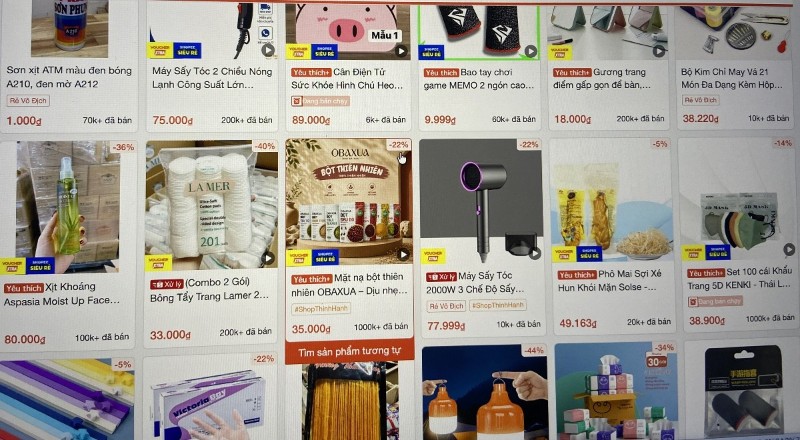
E-commerce continues to be the largest "hotspot" for disputes, with complaints in this sector accounting for 21.3% of the total cases received in 2025, according to the 2025 Annual Report by the Ministry of Industry and Trade's National Competition Commission (NCC).
"The 'breakneck' expansion of online marketplaces and social media sales channels, coupled with risks regarding product quality and misinformation, has kept this sector at the forefront of consumer complaints," the Commission noted.
In 2025, the NCC received a total of 896 written complaints, requests, and petitions from consumers regarding the protection of consumer rights.
Beyond e-commerce, several other service and consumer goods sectors recorded high dispute levels. These include: Tourism and Restaurants (8.3%); Household Electronics (8.1%); Consumer Credit (6.7%); Healthcare and Medical Services (5.9%); Air Transportation (5.5%); while Education, Entertainment, and Banking services each accounted for 5.4%.
Sectors with a moderate volume of complaints included: Postal and Freight services (3.9%); Transportation Vehicles (3.8%); Real Estate, Housing, Telecommunications, and Mobile Information services (each at 3.6%); and Fashion and Jewelry (3.5%). All other industries represented small proportions of less than 3% each.
Regarding illegal practices by businesses and individuals, aggregated data indicates that "failure to conduct negotiations with consumers" was the most common violation, making up 26.9% of total cases.
Ranking second were violations directly related to the "quality of goods and services" (16.1%), followed by the "failure to compensate, refund, or exchange products/services" for customers (14.8%) and "providing incomplete or inaccurate information" (9.2%). These figures reflect a reality where many businesses have yet to prioritize after-sales service or resolve complaints with consumers in good faith.










 Google translate