


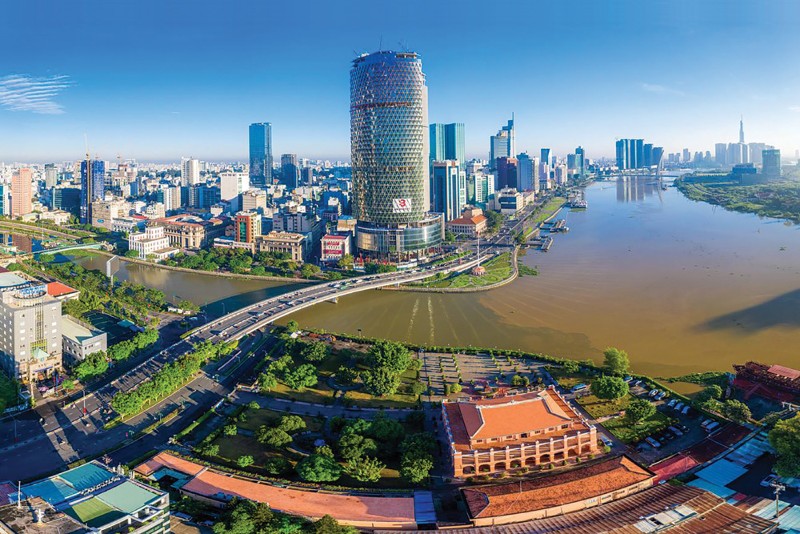
For nearly four decades, Vietnam has built one of Asia’s most compelling economic success stories. Driven by export-oriented manufacturing, FDI, and deeper integration into global supply chains, the country has emerged as one of the region’s fastest-growing economies and a key manufacturing hub.
Yet as labor costs rise, manufacturing becomes more sophisticated, and competition for investment intensifies, the question is no longer simply how to attract factories. Increasingly, it is how to finance the country’s next stage of development - one driven by innovation, infrastructure, technology, and higher-value industries.
That ambition underpins Vietnam’s plans to establish International Financial Centers (IFCs) in Ho Chi Minh City and Da Nang. Rather than creating two competing financial hubs, the government envisions a single financial ecosystem spanning two complementary cities to channel global capital into Vietnam while providing investors with a regulatory framework aligned with international standards.
That vision formed the focus of the recent “VIFCs Unlocked: Vietnam’s Play to Become Asia’s Next Financial Hub” discussion, which underscored a common message: the IFC initiative is about far more than creating new financial districts, it is about building the financial architecture needed to support Vietnam’s next chapter of growth.
New growth story
Vietnam’s economic momentum shows little sign of slowing. Despite an increasingly uncertain global environment marked by geopolitical tensions, trade disputes, and persistent inflationary pressures, the country continues to outperform many of its regional peers.
“The economy is obviously not weak,” said Mr. Dan Martin, Co-head of Business Intelligence at Dezan Shira & Associates. “Vietnam still has a lot of momentum, and that’s not in doubt by any means.”
Yet he argued that headline indicators alone no longer capture the full picture. For years, Vietnam’s investment narrative was built around familiar strengths: a young workforce, competitive labor costs, an expanding network of free trade agreements, and its strategic position within the “China+1” manufacturing strategy. Those advantages remain, but they are no longer what distinguishes Vietnam in the eyes of experienced investors.
“Vietnam is still one of the more interesting growth stories in Asia, but it’s no longer the easy Vietnam story that a lot of people are used to,” he explained. “The more useful question serious investors are starting to ask is: What kind of economy is Vietnam becoming now?”
His answer is that it is evolving into “a faster, larger, more connected, but also more demanding market.” That shift is evident in the changing nature of investment itself. Rather than relying primarily on low-cost manufacturing, Vietnam is pursuing a broad transformation that encompasses infrastructure, advanced industries, digital technologies, and institutional reform.


Vietnam is still one of the more interesting growth stories in Asia, but it’s no longer the easy Vietnam story that a lot of people are used to.
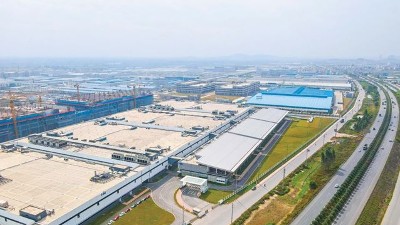
Nowhere is that ambition more visible than in the country’s unprecedented infrastructure drive. Across Vietnam, hundreds of transport, logistics, and urban development projects are reshaping the country’s economic geography. New expressways, ring roads, airports, seaports, bridges, and railway corridors are not simply easing congestion, they are redefining where businesses invest, how supply chains operate, and which regions emerge as future growth centers.
Among the most significant projects are the Long Thanh International Airport and the expansion of Tan Son Nhat International Airport in the southern region, Hanoi’s Ring Road 4, the Lao Cai - Hanoi - Hai Phong railway corridor connecting northern industrial parks with the Chinese border and Hai Phong Port, and the development of Lien Chieu Port in Da Nang. Together, they represent a nationwide effort to modernize the country’s physical infrastructure while supporting industrial expansion beyond its traditional economic centers. “Vietnam is essentially rebuilding the machine while still trying to run it,” Mr. Martin observed.
The transformation extends well beyond transport infrastructure. Vietnam is also positioning itself to move higher up the manufacturing value chain by expanding into sectors such as semiconductors, AI, data centers, and advanced electronics. Major investments by global technology companies, coupled with growing domestic capabilities, signal a gradual shift from labor-intensive production toward more sophisticated manufacturing.
However, Mr. Martin cautioned that this transition also exposes new constraints. Reliable electricity, stronger domestic supplier networks, and a more skilled workforce are becoming increasingly important as Vietnam competes for higher-value industries.
At the same time, regulatory expectations are changing. Tax administration is becoming more digital, compliance requirements are tightening, intellectual property enforcement is strengthening, and greater scrutiny is being placed on rules of origin and supply chain transparency as international trade tensions evolve. “Compliance is no longer paperwork after the fact,” he said. “It’s becoming part of market access.”
That changing reality is also reshaping the questions investors ask. Rather than debating whether Vietnam deserves a place in their regional strategy, they are increasingly focused on more nuanced considerations: where within Vietnam to invest, how resilient local supply chains are, whether power infrastructure can support advanced manufacturing, and how effectively capital can be deployed into the country’s next generation of industries.
Those questions ultimately point beyond manufacturing itself. As Vietnam seeks to sustain its economic momentum, attracting factories alone will not be enough. Financing larger, more complex, and increasingly technology-driven industries will require a financial system capable of matching the country’s evolving ambitions - a challenge that lies at the heart of its plans to establish IFCs.
Financing the next phase
Vietnam’s economic transformation has been one of the fastest in Asia, lifting millions out of poverty and establishing the country as a global manufacturing hub. Yet history suggests that sustaining such momentum becomes increasingly difficult as economies mature. Many countries have successfully leveraged low-cost labor and export-oriented manufacturing to achieve rapid industrialization, only to find themselves struggling to advance further.
Mr. Richard D. McClellan, CEO of the Vietnam International Financial Center in Ho Chi Minh City (VIFC HCMC), believes Vietnam is approaching precisely that moment. “We’ve seen nearly four decades of 5-8 per cent growth,” he said. “We’ve seen massive levels of development.” The country’s younger generations are already enjoying significantly higher living standards than those before them, evidence of the progress Vietnam has made over the past several decades. The challenge now, he argued, is ensuring that this trajectory continues. “Most countries really tap out about where Vietnam is today,” Mr. McClellan said. “It requires a fundamentally different growth model to get to the next stage of development.”
That transition is already taking shape. Alongside an unprecedented infrastructure buildout, Vietnam is investing heavily in semiconductors, AI, digital infrastructure, renewable energy, and advanced manufacturing. These industries promise greater productivity and higher value creation than traditional assembly work, but they also demand significantly larger and more sophisticated sources of financing.
For Mr. McClellan, this is where the new IFCs enter the picture. Rather than viewing them simply as new financial districts, he sees them as part of a broader effort to build the financial architecture needed to support Vietnam’s next stage of development. “What we’re really doing is creating a channel for global capital to flow into Vietnam,” he said.
He likened the country’s current position to New York during the 19th century, when rapid industrial expansion created enormous investment opportunities but also required access to international capital to sustain growth. Vietnam, he argued, is entering a similarly capital-intensive phase, where financing infrastructure, technology, industrial parks, and innovation will become just as important as attracting manufacturers.
That objective distinguishes Vietnam’s approach from many established IFCs. While cities such as Dubai in the UAE have developed as regional financial hubs serving global markets, Vietnam’s ambition is fundamentally domestic: to mobilize international capital that can be deployed throughout the country to finance its own economic transformation.
The emphasis, therefore, is not simply on attracting banks or financial institutions. It is on creating an ecosystem where international investors can more readily identify opportunities, allocate capital, and participate in Vietnam’s long-term development.
Mr. McClellan illustrated the concept with the example of a Vietnamese industrial park developer seeking approximately $150 million to prepare land and build supporting infrastructure. Under current conditions, raising that capital often means spending months approaching investors across multiple international markets, navigating unfamiliar financial systems, and building relationships one-by-one.
If the IFC functions as intended, that process could become significantly more efficient. Instead of Vietnamese businesses searching the world for investors, global investors would increasingly be concentrated within Vietnam’s own financial ecosystem. “If we put pockets of money sitting in Ho Chi Minh City and in Da Nang, that same individual can spend a week in Da Nang or a week in Ho Chi Minh City and be able to find the capital so much faster,” he explained.
The implications extend well beyond the country’s two proposed IFCs. Easier access to capital could accelerate investment in infrastructure, manufacturing, logistics, technology, and small and medium-sized enterprises across Vietnam, strengthening the broader economy rather than benefiting only Ho Chi Minh City or Da Nang.
Achieving that ambition, however, requires more than attracting capital alone. Investors also need confidence that the legal, regulatory, and operational environment will meet international expectations. Building that institutional foundation has become the next major task as Vietnam works to turn its financial center ambitions into reality.
Building Vietnam’s financial gateway
For Vietnam, establishing the IFCs is about more than creating a new business district or offering tax incentives. The broader objective is to build an institutional environment that international investors recognize and understand, one capable of reducing friction in cross-border investment while integrating more closely with global financial markets.
That begins with regulation. Rather than operating solely under Vietnam’s existing regulatory framework, the IFCs are being designed around internationally-recognized standards familiar to global financial institutions. Proposed measures include adopting International Financial Reporting Standards (IFRS), incorporating internationally-accepted banking practices, allowing English-language documentation, and establishing specialized arbitration and dispute resolution mechanisms. “The regulatory framework is really the primary focus,” Mr. McClellan said. “Getting that right this year really, really matters.”
Mr. Oscar Njuguna, Director of Membership at VIFC Da Nang, said the goal is to create “a familiar ecosystem on the ground” by aligning Vietnam’s financial architecture with global standards, making it easier for international firms to operate in Vietnam with greater confidence and predictability.
The model is deliberately structured to attract capital and create a regulatory pathway that enables investors to meet a familiar ecosystem aligned with international standards.
Rather than creating two separate financial centers, the government envisions a single IFC operating across two complementary locations. Ho Chi Minh City will build on its established strengths as Vietnam’s commercial and financial capital, while Da Nang is expected to focus on emerging sectors such as fintech, green finance, digital assets, trade finance, and innovation. “It’s one center, one operating framework, one legal and regulatory ecosystem, but housed in two cities,” Mr. Njuguna explained.
Innovation forms another pillar of the proposed framework. Regulators plan to introduce regulatory sandboxes that would allow emerging financial products and technologies, including fintech, tokenization, blockchain, and digital assets, to be tested under controlled conditions before broader implementation.
“There’s a lot of activity that’s already regulated in other jurisdictions but hasn’t yet been regulated in Vietnam,” he continued. “We’re going to use the sandbox mechanism to introduce those activities and then build out the framework afterwards.”
Officials also hope to improve the movement of capital itself through streamlined licensing and business registration, unrestricted foreign currency transactions between IFC entities and overseas markets, and clearer pathways for capital entering and leaving Vietnam.
“We’re looking at the pathway for investment to come into Vietnam, but then also to leave Vietnam in an orderly manner,” Mr. Njuguna said. “Predictability allows investors to plan their investments and realize those investments over time.”
While preferential tax rates, full foreign ownership, simplified visa procedures, and other incentives have attracted considerable attention, long-term success will depend less on incentives than on institutional credibility.

Most countries really tap out about where Vietnam is today. It requires a fundamentally different growth model to get to the next stage of development.
Though the IFC’s overall framework has been established, many practical aspects, including registration procedures, membership arrangements, and the mechanics of operating across both cities, remain under development as officials work toward their launch. “We understand what our principles are, and we have a direction of travel,” Mr. McClellan said. “We need to work out the mechanics.”
Execution challenge
While designing an IFC is one challenge, delivering it is another. Building such a facility is not simply a matter of designating a district, introducing tax incentives, or issuing new regulations. It requires institutions, skilled professionals, legal certainty, and market confidence - all of which take years to develop.
Mr. McClellan acknowledged that the IFC remains very much a work in progress. While the legal foundation has been established, the regulatory framework, licensing procedures, and organizational structures are still being developed. For him, the immediate priority is ensuring that the regulatory architecture is credible enough to earn the confidence of international investors.
Human capital may prove an even greater long-term challenge. An internationally-competitive financial center requires not only investment bankers and fund managers, but also lawyers, accountants, compliance specialists, regulators, arbitrators, and technology professionals with experience operating in global financial markets. Developing that ecosystem cannot happen overnight.
“We’re going to need tens of thousands of Vietnamese who are capable and skilled in international finance,” Mr. McClellan said. He outlined a multi-layered approach that combines international recruitment in the short term, professional certification and industry training over the medium term, and closer collaboration with Vietnamese and overseas universities to develop future talent. During the IFC’s early years, foreign professionals are expected to play an important role in transferring expertise while domestic capacity is built.
The challenge extends beyond financial services. As Vietnam pushes into semiconductors, AI, data centers, and advanced manufacturing, demand for engineers, software developers, and other highly-skilled workers will continue to intensify.
Mr. Chris Vanloon, Chairman of AmCham Vietnam’s Da Nang Chapter, believes the central city is already adapting to those changing needs. While acknowledging that skilled labor remains a concern for some investors, he argued that universities are increasingly responding to industry demand through closer partnerships with employers, particularly in engineering and advanced manufacturing.

The biggest misconception about Da Nang is that we’re still just a tourism hub for central Vietnam. The government is definitely focused on high-tech manufacturing, the IFC, semiconductor packaging, and related industries. Tourism is just the cherry on top.
Infrastructure presents another test. Vietnam’s massive investment in expressways, ports, airports, and logistics networks is intended to underpin its next phase of growth. Yet physical infrastructure alone is insufficient. As Mr. Martin noted, higher-value industries also require reliable electricity, digital connectivity, and resilient supporting infrastructure. “Power may quietly turn out to be the thing that defines the next phase of Vietnam’s growth,” he said.
The issue is becoming increasingly important as the country seeks to attract data centers, semiconductor production, electric vehicle manufacturing, and other energy-intensive industries that are far less tolerant of supply disruptions than traditional assembly operations.
Competition from elsewhere in Asia is also intensifying. Mr. Vanloon noted that countries such as Malaysia and Indonesia are aggressively pursuing many of the same industries Vietnam hopes to attract, particularly semiconductors and other high-tech manufacturing. Governments across the region are introducing their own incentive packages, investing heavily in industrial infrastructure, and competing for the same pool of global capital. “We need to take action now, or we’re going to lose the initiative,” he warned.
At the same time, Vietnam is becoming a more demanding place to do business. Mr. Martin observed that compliance expectations have tightened considerably in recent years, with greater scrutiny of tax administration, transfer pricing, environmental obligations, intellectual property, and rules of origin as international trade relationships become more complex. “Compliance is no longer paperwork after the fact,” he said. “It’s becoming part of market access.”
That evolution reflects Vietnam’s broader economic maturity. As supply chains become more sophisticated and investors commit larger amounts of capital, transparency, regulatory consistency, and institutional reliability become competitive advantages in their own right.
The vision is ambitious, and the economic rationale is increasingly compelling. Turning that vision into a trusted financial ecosystem, however, will depend on consistent execution over many years. In that respect, the IFC is not simply another development project, but a long-term exercise in institution building, one whose success will be measured not by how quickly it is launched but by how confidently global investors choose to use it.




 Google translate