


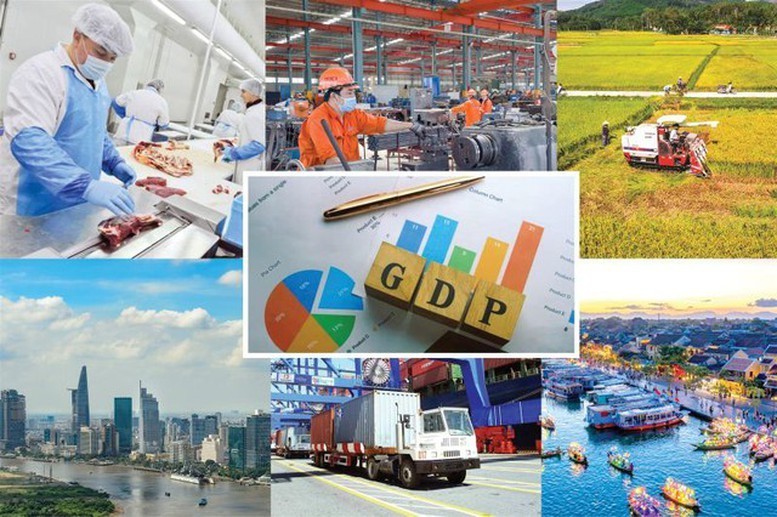
The Vietnamese Government has instructed provinces and centrally governed cities to align their development strategies with the country's ambitious double-digit economic growth targets, identify new growth drivers, regularly update growth scenarios, accelerate public investment disbursement and remove long-standing development bottlenecks.
The directive is outlined in the Government's Resolution No. 169/NQ-CP, issued on June 27, 2026, which sets economic growth objectives for localities in 2026 and the 2026-2030 period.
To achieve rapid, sustainable and substantive growth, the Government has instructed chairpersons of provincial and municipal People's Committees to closely monitor local economic performance while ensuring coordinated and effective implementation of existing socio-economic policies and solutions.
Local authorities are also required to strengthen forecasting and analytical capacity, closely monitor international and regional economic developments, particularly policy changes in major economies that could affect Vietnam, and proactively recommend timely and appropriate policy responses to the Government and the Prime Minister.
Under the resolution, local governments must closely follow the national double-digit growth roadmap for 2026 and the following five years. They are tasked with identifying new growth drivers and untapped development potential to formulate practical and breakthrough measures capable of achieving the assigned targets.
Provinces and cities are required to submit quarterly reports assessing implementation progress and updating growth scenarios where necessary.
The Government also called on local authorities to continue simplifying administrative procedures, reducing business conditions and regulatory barriers, improving the operating efficiency of the newly established two-tier local government system, and resolving the issue of underutilized or surplus public assets, including unused land and buildings.








 Google translate