


The Ho Chi Minh City People's Council has officially approved a investment policy for projects to renovate Ma Lang and Cho Ga - Gao urban areas.
The projects will be implemented under a Public-Private Partnership (PPP) model with a Build-Transfer (BT) contract, carrying a preliminary total investment of over VND16.3 trillion (approximately $620 million).
According to the proposal by the City People's Committee, the projects are scheduled for implementation between 2026 and 2029. The primary goals are to improve local living conditions and gradually resolve the issues of decaying and overloaded infrastructure in these long-standing residential pockets in the city center.
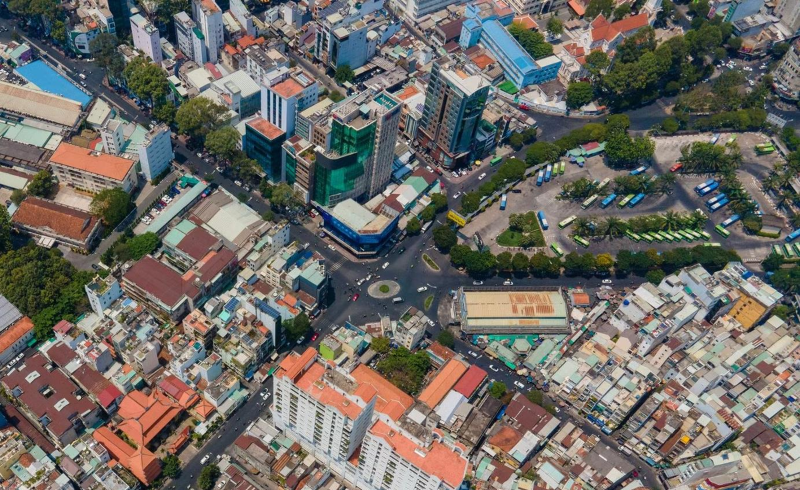
Located in Cau Ong Lanh Ward, the Ma Lang area spans approximately 37,740 sq.m, bordered by Nguyen Trai, Tran Dinh Xu, and Nguyen Cu Trinh streets.
The City People's Committee describes Ma Lang as a high-density residential area that has evolved through various stages of urban development. Most housing in the area was built long ago, featuring small floor areas and cramped structures. Many buildings have significantly deteriorated and no longer meet modern standards for technical infrastructure, environmental quality, or urban safety.
Furthermore, the local systems for transportation, drainage, lighting, greenery, and social infrastructure remain severely limited. Numerous narrow alleys restrict access for fire prevention, firefighting, and rescue services, posing significant safety risks.
Preliminary reviews indicate that the Ma Lang renovation will affect approximately 1,070 land and house cases, involving 1,459 households and nearly 4,700 residents. The project will also impact several existing public facilities, including schools and community centers.
Situated in Ben Thanh Ward, the Cho Ga - Gao area covers approximately 4,350 sq.m, bounded by Nguyen Thai Hoc, Vo Van Kiet, Yersin, and Alley 3 Yersin.
As a long-established residential hub, the area is characterized by high population density and a concentration of small-scale commercial and service businesses. Rapid urbanization has exposed major inadequacies in both technical and social infrastructure. The internal traffic system is narrow, and many housing units have fallen into disrepair.
The area faces restricted access for emergency services, and current evacuation routes do not meet safety requirements, creating high-risk conditions in the event of an emergency.
Initial surveys show that the project will affect approximately 252 houses, involving 192 households and 744 residents.




 Google translate