


The Office of the United States Trade Representative (USTR) on July 23 issued a formal notice announcing the final determination and remedial measures following its investigation under Section 301 of the Trade Act of 1974.
The investigation, which was initiated in March 2026, targeted 60 economies regarding their policies on imported goods produced by forced labor. In its final conclusion, the USTR maintained the allegations from its preliminary report, asserting that all 60 investigated economies have failed, to varying degrees, to meet forced labor criteria as defined by the US.
Based on these findings, President Donald Trump has directed the USTR to implement punitive tariff measures against the 60 involved economies, which collectively account for 99.4% of the total value of goods imported into the US.
The tariff structure is divided into three distinct groups. Group 1 applies an additional 10% tariff to 17 economies, including Argentina, Bangladesh, Cambodia, Canada, Ecuador, El Salvador, Guatemala, Honduras, India, Indonesia, Jordan, Malaysia, Mexico, Pakistan, Sri Lanka, Trinidad and Tobago, and the UK.
Group 2 applies a tariff ranging from 10% to 12.5% based on an "MFN deduction" mechanism. Under this system, the combined total of existing Most Favored Nation (MFN) rates and the new Section 301 forced labor duties is capped at 10% for the European Union and Taiwan (China), and 12.5% for Japan, South Korea, and Switzerland.
Group 3, which includes Vietnam and all other remaining economies, is subject to a flat additional duty of 12.5%.
These tariff measures will apply to all goods from the relevant partners except for those on a specific exemption list. Exemptions generally include humanitarian aid and items for information exchange; goods already subject to Section 232 duties, such as certain steel and aluminum products, derivatives, automobiles, and auto parts; and goods for which there is high demand in the US, such as specific raw materials or agricultural products in short supply. Exemptions may also be granted for goods deemed essential to incentivize partners to eliminate forced labor practices.
Regarding the duration of these measures, Section 301 stipulates that they will automatically expire after four years unless extended.
However, the USTR reserves the right to modify or terminate these actions if circumstances change, such as if a trading partner modifies its policies regarding the practices under investigation.
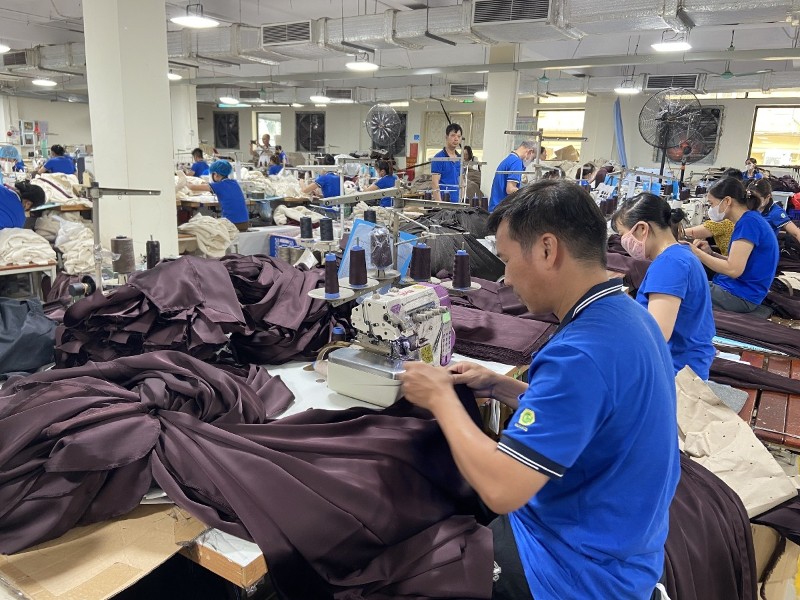
Consequently, starting July 24, 2026, Vietnamese goods entering the United States will be subject to an additional 12.5% tariff, with the exception of those specifically listed for exemption.





 Google translate