


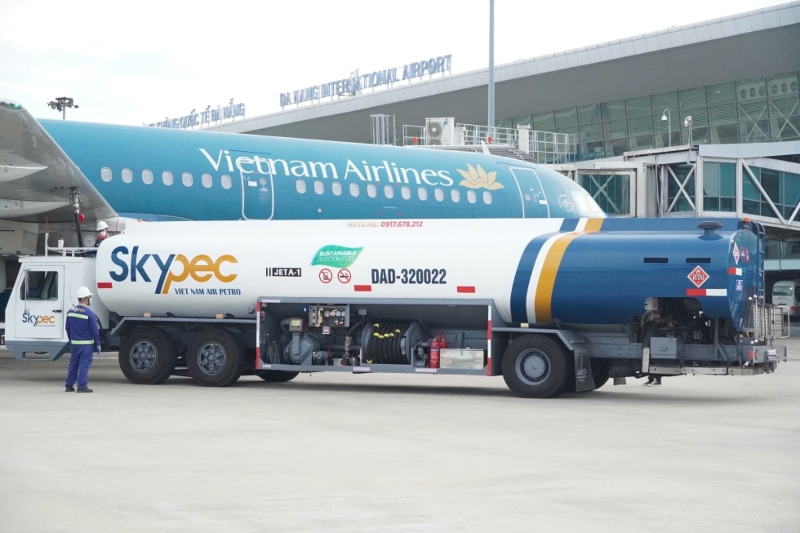
Vietnam has a potential to produce roughly 1 million barrels of SAF daily between 2030 and 2050 by leveraging its vast agricultural waste from rice and cassava.
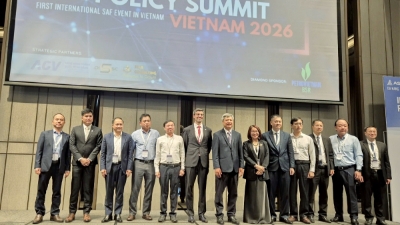
This assessment was shared by Mr. Sharmine Tan, Boeing’s Southeast Asia Sustainability Lead, at the international workshop titled "Sustainable Aviation Fuel (SAF): Policy Framework and Market Development in ASEAN" held on June 25, according to a report by the Government News.
Speaking at the event, Deputy Minister of Construction Le Anh Tuan noted that the green transition and sustainable development within the aviation sector are becoming increasingly urgent. This urgency aligns with Vietnam's commitment to achieving net-zero emissions by 2050 and its official participation in the Carbon Offsetting and Reduction Scheme for International Aviation (CORSIA) starting in 2026.
According to Ms. Nguyen Thi Phuong Hien, Deputy Director of the Ministry of Construction's Institute of Strategy and Development, Vietnam's aviation industry is maintaining one of the fastest growth rates in Asia. Current consumption of traditional Jet A-1 fuel stands at approximately 2.8 to 3 million tons annually. Demand for air transport is forecasted to continue rising sharply, potentially driving fuel consumption to 4 million tons by 2030 and reaching 11 million tons by 2050.
"The biggest barrier to the development of SAF in Vietnam remains the economic challenge, as SAF production requires massive capital investment and cutting-edge technology," Ms. Hien remarked.
Currently, the production cost of SAF is 2 to 5 times higher than that of conventional Jet A-1 fuel, while investment incentive mechanisms are still being refined. Vietnam also faces several hurdles, including the lack of a formal SAF adoption roadmap, the absence of appropriate support mechanisms, difficulties in mobilizing sustainable raw materials, and challenges regarding traceability and meeting international certification standards.
Sharing this perspective, Mr. Philip Goh, CEO of the Asia-Pacific Sustainable Aviation Centre (APSAC), noted that SAF is projected to account for less than 1% of total global aviation fuel consumption by 2025. This is primarily due to its high cost compared to conventional fuels and the fact that production is concentrated in only a few countries. Furthermore, market instability and uncertain demand make investors hesitant to fund production without guaranteed long-term off-take agreements.
To drive SAF development, Ms. Hien suggested that Vietnam needs to establish a roadmap tailored to its practical conditions. Key actions include refining policies to support the SAF ecosystem, ensuring sustainable feedstock supplies, selecting appropriate technologies, and developing supply chains and supporting infrastructure. She also emphasized the need to mobilize investment, create risk-sharing mechanisms, expand international cooperation, and accelerate technology transfer alongside high-quality human resource development.
Echoing these views, Mr. Subash S, Deputy Regional Director for Asia-Pacific at the International Civil Aviation Organization (ICAO), stated that each nation must build an SAF roadmap aligned with its specific reality, based on its potential feedstock, energy sources, market demand, and existing infrastructure.
Developing SAF cannot be the sole responsibility of the aviation industry; it requires a coordinated policy framework involving transport, energy, environment, finance, industry, and investment. SAF must be integrated into existing national policies, with the Government playing a leading role by committing to SAF usage in state-managed activities, said Mr. Subash S.
Mr. Philip Goh added that Vietnam possesses immense potential for feedstock derived from agricultural by-products and biomass waste, such as rice straw, husks, bagasse, and other sources. APSAC is prepared to support research on materials and policies suitable for Vietnam, while providing training and capacity-building for government officials and connecting Vietnam with ICAO, regional partners, and the global aviation industry.


 Google translate