



The emergence of ride-hailing platforms a decade ago transformed Vietnam’s mobility landscape. The new business model not only changed how people traveled and forced traditional taxi operators to adapt in order to remain competitive, but also created new employment opportunities and prompted regulators to revise policies in response.
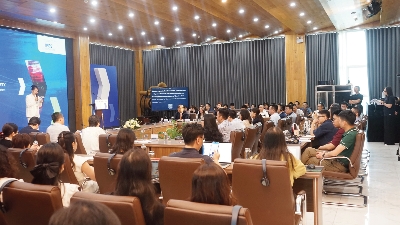
“Today, a new technological wave, particularly AI, could trigger an even greater turning point for Vietnam’s transportation system,” Mr. Nguyen Anh Duong, Head of the Department for General Economic Issues and Integration Studies at the Institute for Policy and Strategic Studies (IPSS), told the “Mobility, Artificial Intelligence (AI) and Society: Strengthening the Future of Transportation in Vietnam” workshop.
Impacts on mobility
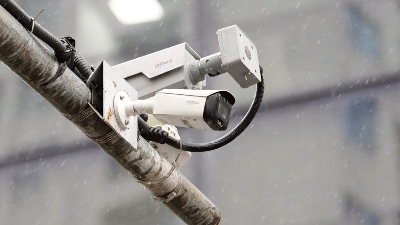
In practice, AI has already begun to feature prominently in Vietnam’s transportation and urban development policies. Intelligent traffic operation centers, AI-enabled cameras, and data analytics platforms are gradually becoming the new “digital infrastructure” of modern cities. In Hanoi alone, according to recently-published figures, the city had installed more than 1,800 AI cameras for traffic management by 2025 and plans to deploy more than 2,100 additional units this year.
AI’s role extends beyond surveillance. The technology is improving the detection and enforcement of traffic violations while reducing dependence on manual monitoring methods. Official reports show that within the first month of deploying Hanoi’s AI camera system, authorities recorded more than 6,300 traffic violations subject to administrative penalties. In Ho Chi Minh City, a similar system identified more than 3,400 violations within a single month.
Countries across Southeast Asia are increasingly leveraging AI to build cities that are more resilient to infrastructure pressures and environmental challenges. Mr. Erlanggasakti Putra, Program Analyst at the Tech for Good Institute (TFGI), said Singapore uses AI to predict congestion risks in public transportation before disruptions spread across the wider network.
In the Indonesian capital Jakarta, AI supports traffic navigation during extreme weather events or sudden flooding. The system can quickly reroute vehicles to safer roads, helping reduce public risk while ensuring smoother mobility.
At the same time, the shift toward electric mobility is elevating AI’s importance within Southeast Asia’s green transportation strategies. According to TFGI, Singapore aims for all newly-registered vehicles to run on clean energy by 2030 and plans to phase out internal combustion engine vehicles entirely by 2040. Malaysia is targeting significant electric vehicle (EV) infrastructure expansion by 2030, with EVs expected to account for 80 per cent of transport by 2050.
Indonesia is seeking to put 13 million electric motorcycles and 2.2 million electric cars on the road before 2030 as part of its pathway toward net-zero emissions by 2060. Vietnam, meanwhile, committed to net-zero emissions by 2050 at COP26 and has introduced a transition roadmap under Decision No. 876/QD-TTg, the Action Program on Green Energy Transition and Carbon and Methane Emissions Reduction in the transportation sector.
According to experts, digital technologies and AI will play a particularly critical role in this process. “We often say AI is driving transportation development, but in reality, the growth of the transportation ecosystem is also feeding back and creating additional momentum for the AI sector,” Mr. Duong said.
Mr. Putra also argued that AI can support policymaking during the transition to electric mobility. Governments are simultaneously grappling with multiple complex challenges, including electricity grid capacity, energy supply, and the still-high upfront cost of EVs. He further emphasized that AI is not only linked to transportation technology but also directly affects labor markets. AI-based training and coordination tools could help workers in traditional transport sectors reskill and adapt to emerging jobs in the green economy.
Within the logistics sector, adopting technology at the appropriate scale can improve operational efficiency and competitiveness. According to the Vietnam Logistics Report 2025, compiled by the Agency of Foreign Trade at the Ministry of Industry and Trade, several leading companies, including the Sai Gon Newport Corporation, Viettel Post, and Vietnam Airlines, have incorporated innovation and AI into logistics operations.
Unlocking AI’s potential
The benefits of AI deployment in transportation and logistics have become increasingly evident. According to reports from Hanoi authorities, AI-driven traffic management has significantly improved traffic flow and reduced congestion. On some roads where AI systems have been introduced, travel time on one-way routes has fallen by as much as 31 per cent, while traffic volume increased by around 13 per cent.
However, experts argue that realizing AI’s full potential in mobility and transportation will require overcoming several key barriers.
According to the IPSS, the first major obstacle is fragmented data. Transportation-related information remains scattered across multiple agencies and organizations. While Vietnam has already enacted laws and government resolutions on data sharing and interoperability, connecting these systems remains a major challenge.
“This is especially important for AI,” Mr. Duong explained. “AI development depends not only on algorithms or processing power but also heavily on access to data for training and operations. Fragmented and disconnected datasets have become one of the biggest barriers to AI deployment.”
A second challenge is uneven AI capacity and infrastructure across localities. To date, most visible progress has been concentrated in Hanoi and Ho Chi Minh City, while many smaller cities and medium-sized logistics and transport firms still face limited investment in AI and digital infrastructure. This raises the risk of widening digital divides between regions and business groups.
The third challenge is cost. Building AI infrastructure for transportation requires substantial investment, from AI camera systems and smart traffic signals to operation centers, data storage, processing infrastructure, and the energy needed to power AI systems. Beyond public investment costs, transportation and logistics businesses also face mounting expenses associated with digital transition.
Experts caution that if technologies are too expensive, overly complex, or poorly suited to business scale, widespread adoption will remain difficult, particularly for small and medium-sized enterprises. For individual users, AI tools may appear relatively affordable and accessible. But for businesses, especially in transportation and logistics, deployment costs represent a much more significant challenge.
On the policy front, Vietnam has developed a relatively comprehensive and rapidly-evolving AI framework. As early as 2021, the government introduced Decision No. 127/QD-TTg on AI research, development, and application. More recently, authorities have issued decisions on strategic technologies and technology products, underscoring AI’s growing role in national development priorities.
In smart transportation, Vietnam has introduced policies promoting the Internet of Things (IoT). However, experts note that an emerging concept - the Artificial Intelligence of Things (AIoT) - remains largely absent from current regulations.
The distinction lies in how data is processed. Traditional IoT systems typically collect information from devices and send it to centralized hubs for analysis. AIoT, by contrast, enables part of the data to be processed directly at the source through embedded AI, with only essential information transmitted to central control systems. This approach accelerates processing, reduces latency, and improves operational efficiency for smart transportation networks.
Based on current realities, Mr. Duong proposed several priorities for the next phase of development. Vietnam, he argued, should first build an integrated and synchronized mobility data platform to support AI deployment in transportation. The country should also help cities beyond Hanoi and Ho Chi Minh City gain access to AI technologies to avoid widening digital divides.
In parallel, Vietnam should accelerate the development of AI-based logistics corridors and expand regulatory sandbox mechanisms for new AI-powered services, such as autonomous delivery and automated operating systems. Without appropriate sandbox mechanisms for both technology and policy, many new transportation models will struggle to move beyond pilot stages and scale effectively.





 Google translate