


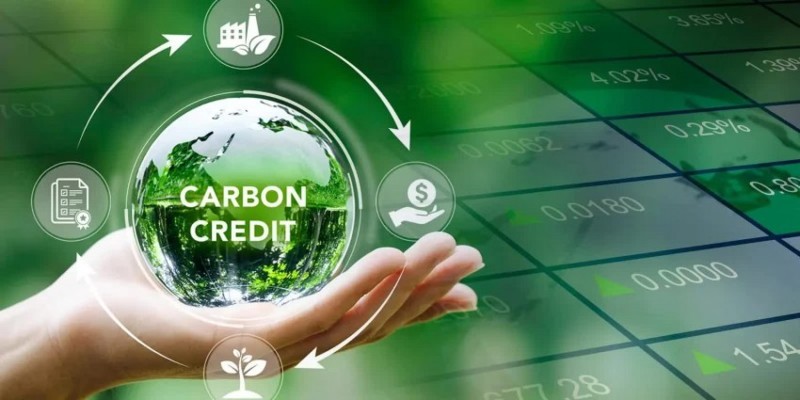
Vietnam has officially launched its domestic carbon exchange. What are the prerequisites for this market to truly attract investment capital, rather than just remaining a compliance mechanism?
Every effective market rests on two fundamentals: attractive goods, and a diversified ecosystem of participants. Seen through this lens, the compliance mechanism is not the opposite of an investment market, it is the stage where both fundamentals are built. I like to think of it as the roots of a tree: invisible at first, but everything that grows later depends on them.
Consider the goods. Carbon allowances and credits are unlike most conventional traded assets: they are created and defined through regulatory and verification frameworks, and their market value is largely shaped by policy. Its most important price driver is not a physical supply shock but regulatory change. This is an entirely new logic for Vietnamese enterprises, and the pilot exchange is where they will absorb it, i.e. learning that emissions are now a cost, that reductions can become revenue, and that investment in cleaner technology is, in effect, a hedge.
The compliance mechanism shapes the participants in the same way. It requires companies to measure, report and verify their emissions, and to bring carbon into their annual corporate planning. This discipline – reliable data, internal capacity, management attention – is exactly what investors will later depend on when they assess the market.
Once these roots are established, the tree can grow, and this is where investment capital enters. On the goods side, the market needs a richer shelf than allowances alone: carbon credits from domestic projects – forestry, low-emission rice, renewables – to deepen supply and trading volume, and, as the market matures, a legal basis for carbon futures. On the participant side, the key words are liquidity and breadth: access should progressively widen to financial institutions, investment funds and professional traders, the actors who provide liquidity, price discovery and risk transfer. Further, Vietnam should pursue international linkage by aligning domestic credits with Article 6 of the Paris Agreement, connecting our market to global demand, global capital and global price benchmarks.
So the prerequisites are being laid right now. Compliance builds trust in the data and in the system, and trust is what attracts capital. Vietnam is planting the roots today. With the right products, the right participants and the right international connections, the tree will grow.

One of the major challenges today is the quality of carbon credits, the transparency of emission data, and the capacity of businesses to participate in the market. In your opinion, what are the "bottlenecks" that need to be prioritized for the carbon market to operate effectively?
I see the bottlenecks sitting on both sides of the market, demand and supply, and each side needs a different treatment.
On the demand side, the challenge comes from the nature of this market itself: demand for carbon is created by policy, not by consumption, and policy must strike a delicate balance between economic growth and emission reduction. Demand will therefore build gradually, and in the meantime the market risks trading in bursts around compliance deadlines. The answer is to treat carbon as a genuinely tradable good rather than a pure compliance instrument: allowing banking of allowances across periods, developing hedging tools, and progressively widening participation beyond compliance entities.
The supply side is where the deeper bottlenecks lie, and it is exactly where the question points: the quality of carbon credits and the transparency of emission data.
On credit quality, the problem is simple to state: a buyer cannot easily tell whether a credit is genuine. For example, two projects both claim 'one tonne of CO2' on paper, but one genuinely cuts emissions, while the other may not change anything at all. As a 2026 report on nature markets led by the Dragon Capital Chair in Biodiversity Economics at the University of Exeter puts it, the difficult issue is not the unit on the registry but the counterfactual behind it. When buyers cannot tell the difference, everyone gravitates to the cheapest credits, and honest, high-quality projects are pushed out of the market. This is exactly what happened in the global voluntary carbon market, where transactions in forest-conservation credits fell sharply after several studies raised concerns that many projects may have overstated their impact.
On data transparency, the solution is more tractable, because disclosure and audit can be mandated. Encouragingly, the rules are largely in place: the national registry, mandatory emission reporting for around two thousand facilities, and the verification framework are all established in law. The real challenge now is not rules but people. Reliable data needs capable hands on both sides: enterprises that can produce it, and professionals who can verify it. As reporting begins at scale, demand for both skills will grow quickly, such as calling for training, simplified templates for smaller emitters, and more accredited verifiers and intermediaries to bridge the factory floor and the trading screen.
So if I must prioritize, I would put it this way. First, use the pilot period to make emission inventories accurate and audits credible, data integrity is the foundation everything else stands on. Second, and just as urgent, issue the policy framework for carbon projects, i.e. methodologies, registry rules, verification standards, as early as possible. Carbon projects take years to develop before they generate a single tradable credit. If project developers can start building during the pilot phase, a supply of quality domestic offsets will be ready when the carbon market moves into full operation from 2029.
The carbon market is expected to open up opportunities for the development of green finance in Vietnam. According to Dragon Capital, what additional financial mechanisms or tools are needed to both mobilize long-term capital and support businesses in sustainably transitioning to green?
Encouragingly, many Vietnamese banks already provide green credit for projects meeting sustainability criteria, including carbon-related projects. But bank lending alone cannot carry the green transition, given the transition requires patient capital over decades. This is where the capital market must step in, with the carbon market serving as its pricing backbone.
First, green and transition bonds – made credible by carbon data. Vietnam’s green bond market remains small relative to its potential, partly because investors have lacked a reliable way to confirm that “green” claims are real. The carbon market changes this: once emissions are measured, reported and verified under the national MRV system, they can serve as hard KPIs for sustainability-linked bonds, where a company’s borrowing cost steps down if verified emission targets are met. In other words, the carbon market supplies the trusted data layer that green finance has been missing.
Second, dedicated financing for the carbon projects themselves. Studies reviewed by the Dragon Capital Chair at the University of Exeter show developers must invest heavily upfront yet earn no credit revenue for several years. Three instruments can bridge this gap: equity funds that invest directly in project developers; offtake agreements, where buyers commit today to purchase future credits, giving developers a predictable revenue stream that banks can lend against; and blended finance, where concessional capital from development institutions absorbs early-stage risk so that private capital can follow at scale
Finally, when Vietnam eventually moves from free allocation toward auctioning of allowances, auction revenues can be recycled into the transition itself, funding technology upgrades and supporting industries facing the steepest decarbonization costs, as the EU has done.
If I may connect this back to where we started: the carbon exchange is the roots; these financial mechanisms are the branches. A verified carbon price feeds into bond covenants, project valuations and investment decisions, turning Vietnam’s net-zero commitment from a policy pledge into an investable asset class. That is ultimately how long-term capital is mobilized by giving them the instruments to price it.







 Google translate