


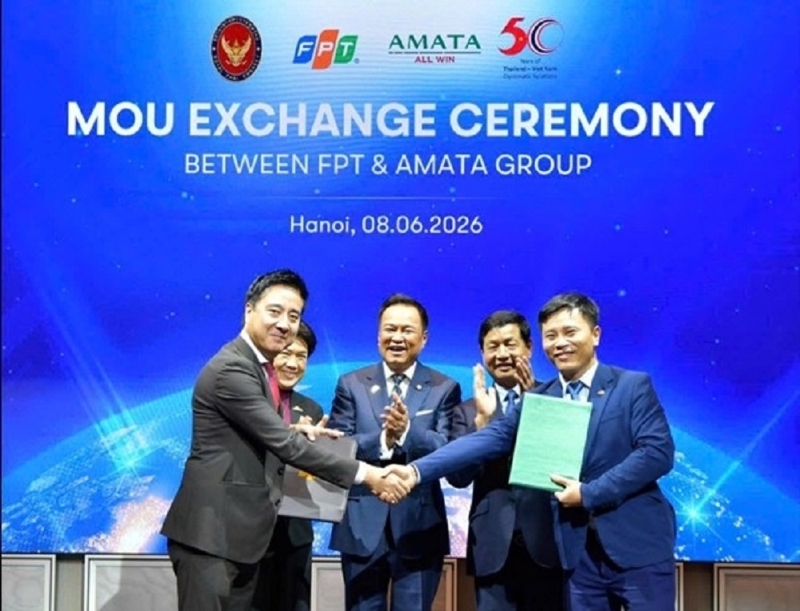
Thai industrial estate developer Amata Group and Vietnam’s FPT Corporation have signed a strategic memorandum of understanding (MoU) to advance smart infrastructure and environmental, social and governance (ESG) standards across industrial developments, strengthening their ability to attract high-quality international investment.
The agreement was signed in Hanoi on June 8 during the official visit to Vietnam by Thai Prime Minister Anutin Charnvirakul.
Under the partnership, the two companies will collaborate on five key areas: the development of smart industrial parks using Industrial Internet of Things (IoT) technologies; the establishment of digital centers for data analytics, cloud computing and cybersecurity; the adoption of artificial intelligence, automation and robotics in manufacturing; environmental monitoring and carbon reduction initiatives aligned with ESG standards; and workforce development for the Industry 4.0 era.
The partnership reflects the deepening nature of Thai investment in Vietnam, where Thailand has become one of the country's largest foreign investors. Amata is among the longest-standing Thai investors in Vietnam and plays a significant role in bilateral economic cooperation.
Amata currently operates 13 industrial city projects across Thailand, Vietnam and Laos, covering more than 150 square kilometers and hosting over 1,600 factories and commercial facilities that employ approximately 350,000 workers.
For FPT, the agreement aligns with its international growth strategy and expanding focus on digital transformation solutions for traditional industries. The technology group operates in more than 30 countries.







 Google translate