


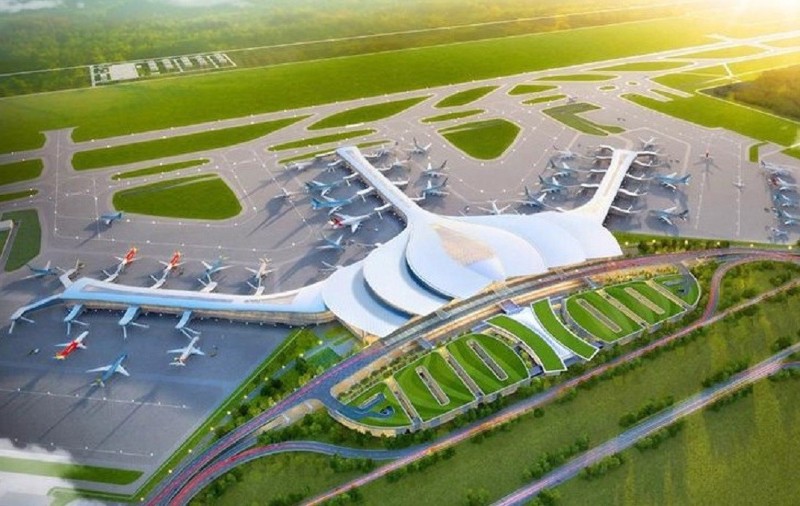
The Politburo has issued Resolution No 16-NQ/TW on the development of Dong Nai City to 2035, with a vision extending to 2065.
Setting out long-term growth targets and eight strategic task categories, the Resolution aims to turn the southern city into a national multi-functional growth engine, fueled by its core 'airport city' development model.
The Resolution establishes a comprehensive 40-year growth framework and development roadmap for Dong Nai, positioning it as a strategic gateway for the Southern Key Economic Region. The city is set to become a vital link connecting the Southeast, South Central Coast, Central Highlands, and the Mekong Delta with both regional and international markets.
A key highlight of this development orientation is the adoption of a new growth model driven by science, technology, innovation, and digital transformation. This strategy aims to transform Dong Nai into a multi-functional growth pole, leading the way in aerospace industries, high-tech manufacturing, logistics, border trade, and high-tech agriculture—all centered around its strategic status as a world-class "Airport City" (Aerotropolis).
The Resolution outlines a long-term vision across three critical milestones.
By 2035, Dong Nai strives to become a multi-center urban area characterized by its "airport city" and "riverside city" models, featuring an international-standard high-tech industrial and aviation economy.
By 2045, the city aims to become a modern aviation hub for the Asia-Pacific region, with a high Human Development Index (HDI).
By 2065, Dong Nai is envisioned as a globally connected city, ranking among the world's elite multi-functional airport urban areas with superior quality of life.
Regarding economic targets, the Resolution sets an ambitious GRDP growth goal of at least 10% per annum for three consecutive phases.
Under this trajectory, the city's economic scale is projected to expand approximately 13.6 times over 35 years—surging from $44 billion in 2030 to $600 billion by 2065. During the same period, per capita GRDP is expected to increase more than sevenfold.
To realize these objectives, Resolution 16-NQ/TW identifies eight core task groups and primary solutions, ranging from institutional reforms to the cultivation of a robust aviation ecosystem.






 Google translate