


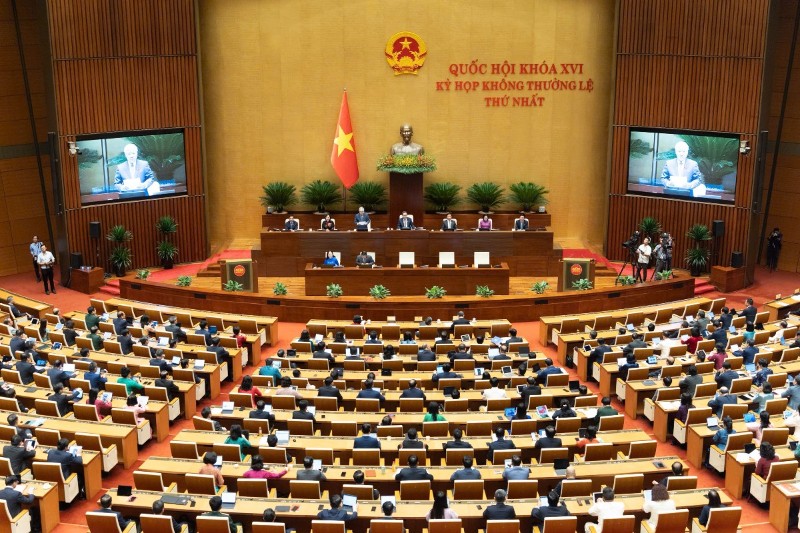
Lawmakers passed a law amending the Law on Investment on August 24 during the closing meeting of the 16th National Assembly’s first extraordinary session.
Effective March 1, 2027, the law slashes 62 conditional business lines and modifies 14 others, representing a 28.28% reduction compared to the 2025 Law on Investment and a 40% drop compared to 2020. This reform eliminates roughly 786 business conditions and 232 overlapping administrative procedures, saving businesses an estimated VND175 billion ($6.7 million) and 7,500 compliance hours annually.
To prevent new administrative hurdles, sub-law documents will be aligned to strictly forbid ministries and local authorities from issuing unauthorized business conditions.
While deregulating low-risk sectors, the law maintains targeted controls on high-risk areas to safeguard public health and national security. It officially bans N2O gas trading for human inhalation, except for authorized medical, food technology, and scientific research purposes.
In defense and security, unmanned aerial vehicle (UAV) trading, importation, and maintenance remain conditional, though research and manufacturing activities are deregulated to encourage technological innovation.
Additionally, visa application support services provided by authorized commercial entities are added to the conditional list to protect personal data security.
For newly deregulated sectors such as clean water supply, gas, and alcohol trading, regulatory focus shifts to strict post-inspection enforcement, specialized technical standards, and corporate self-compliance.
To ensure business continuity, existing permits remain valid until expiration, while pending license applications for deregulated lines will be returned to enterprises.




 Google translate