



Economic performance in the third quarter of 2026 and the first nine months has strengthened Vietnam’s prospects of achieving double-digit growth. In the final months of the year, the focus should be on directing resources into production and business, accelerating investment, and improving capital efficiency. This will require a stable financial system capable of meeting funding needs while withstanding volatility.
Rapid growth, however, also increases financial risks, particularly if corporate cash flows weaken or capital is tied up in projects that are slow to generate revenue. These pressures could spill over into financial institutions and the broader economy. Year-end policies therefore need to remove bottlenecks, maintain capital flows, and strengthen risk management to ensure resources are used effectively.
Positive developments
Vietnam’s economy recorded a number of positive results in the third quarter of 2026 and the first nine months of the year, creating a viable foundation for reaching the double-digit annual growth target. GDP in the third quarter was estimated to have grown 9.95 per cent year-on-year; higher than the 8.15 per cent posted in the first quarter and 8.81 per cent in the second quarter. Overall, GDP grew 9.01 per cent in the first nine months. The strengthening growth momentum across quarters shows that production and business activity continued to expand, creating favorable conditions for acceleration in the final months of the year.
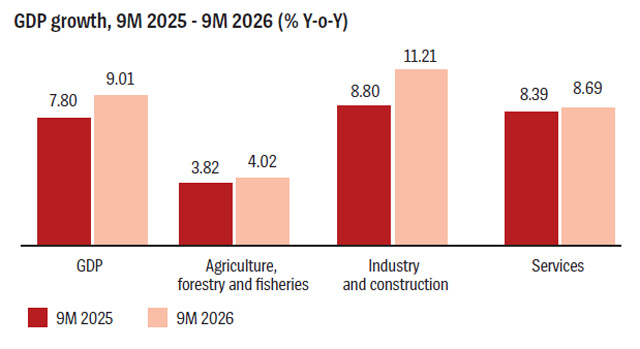
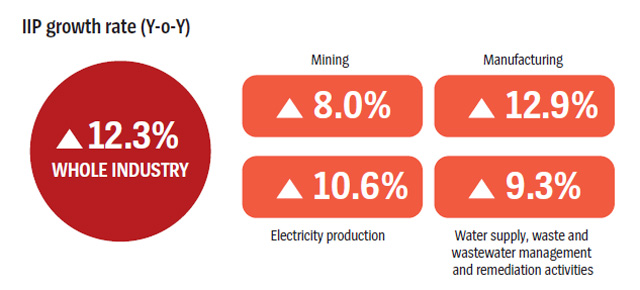
Industry and construction continued to play an important role in growth. Value-added in the sector rose 11.21 per cent in the nine-month period, accounting for 49.62 per cent of the economy’s total increase in value-added. Within the sector, manufacturing grew 11.36 per cent, while construction increased 12.22 per cent. These results reflect the expansion of production and investment activity, while also driving demand for transportation, materials, and labor. The services sector grew 8.69 per cent, with financial, banking, and insurance activities increasing 9.45 per cent, helping meet the economy’s demand for transactions and capital.
Investment continued to add resources for development. Total disbursed investment at current prices reached approximately VND3,109.6 trillion ($119.6 billion) in the period, up 15.1 per cent year-on-year. Notably, investment by the non-State sector increased 14 per cent, accounting for 53 per cent of total investment, highlighting the sector’s role in expanding production and business capacity. Disbursed FDI reached $21.07 billion, up 12.1 per cent, with manufacturing accounting for 82.6 per cent. Disbursed capital is helping add factories, equipment, and supply capacity.
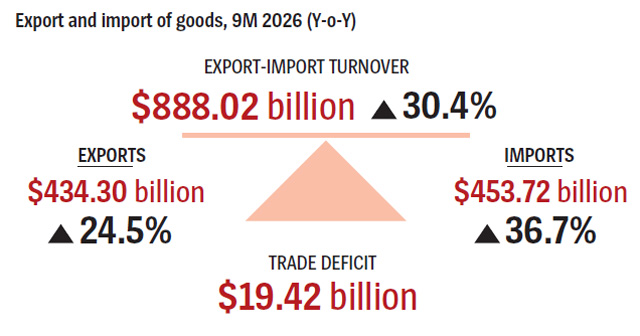
Consumption and exports both supported growth momentum. Total retail sales of goods and consumer service revenue stood at VND5,925.7 trillion ($228 billion) in the first nine months, up 13.4 per cent at current prices and 7.8 per cent after excluding price factors. Continued growth in real purchasing power is creating conditions for businesses to expand their markets. Goods exports reached $434.3 billion, up 24.5 per cent, helping sustain orders and production activity. Rising domestic and international demand is strengthening the business outlook.
On the fiscal front, State budget revenue in the first nine months reached approximately VND2,187.3 trillion ($84.1 billion), equivalent to 86.5 per cent of the annual estimate and up 12.1 per cent year-on-year. This provides resources for spending and development investment. As of September 28, credit had increased 10.89 per cent and deposits 9.78 per cent compared to the end of 2025, continuing to support funding demand.
These results show that the growth foundation has strengthened across production, investment, consumption, and resource mobilization. This is an important condition for accelerating growth in the fourth quarter of 2026 and pursuing the double-digit target.
Bottlenecks and risks
The positive growth momentum in the first nine months of 2026 has created conditions for Vietnam’s economy to accelerate, but the double-digit target places significant demands on the ability to mobilize and use resources. Key concerns include investment efficiency, corporate resilience, credit quality, and macro-economic balances. If these issues are not identified and addressed in a timely manner, they could affect the high growth target while increasing financial risks.
First, converting investment capital into productive capacity remains an important challenge.
Total realized investment in the economy increased 15.1 per cent in the first nine months at current prices. Expanding investment creates additional demand and supply capacity, but its effectiveness depends on the completion schedule, utilization, and output of each project. Obstacles related to procedures, land, site clearance, and implementation conditions can prolong project timelines, increase costs, and delay revenue generation. When capital has been mobilized but a project is not yet operational, interest obligations continue to accrue, putting pressure on the cash flows of investors, contractors, and suppliers. The pressure to accelerate investment toward year-end makes it even more important to focus on project quality and avoid scattered investment or selecting projects without a clear basis in actual demand.
Second, corporate resilience and the breadth of growth need to be strengthened.
In the first nine months, more than 48,700 enterprises completed dissolution procedures, up 118.8 per cent year-on-year, with an average of 19,100 enterprises exiting the market each month. The number temporarily suspending operations or awaiting dissolution declined, while the number completing dissolution procedures increased sharply. This trend needs to be assessed alongside the timing of administrative processing and reviews of legal status to distinguish newly-distressed enterprises from those that had already ceased operations.
Domestic purchasing power continued to increase, with retail sales and consumer service revenue rising 7.8 per cent after excluding price factors. The 13.4 per cent nominal increase therefore does not fully reflect the increase in real consumption volumes. The inventory index for the manufacturing sector at the end of September rose 11.9 per cent year-on-year, which could reflect expanded production or preparations for orders. Cash flow pressure becomes more significant when rising inventories coincide with slower consumption, longer inventory holding periods, and growing receivables. For businesses with large inventories, extended receivables, or rising input costs, expanding revenue does not necessarily translate into a corresponding improvement in cash flow. These difficulties can spread to suppliers and lenders through delayed payments and debt servicing.
Third, credit quality and links across markets require close monitoring.
As of September 28, credit had increased 10.89 per cent, while deposits had risen 9.78 per cent from the end of 2025. The difference in growth rates is not sufficient to conclude that the system faces a liquidity shortage, but it warrants monitoring of maturity structures, funding costs, and the ability to meet year-end funding needs. If short-term funding is used to finance a large volume of long-term investment, liquidity pressures could increase when debt repayment slows or withdrawal demand fluctuates.
Risks also depend on credit concentration among large customers, related groups, and projects that share common repayment sources. Within the interconnected banking, real estate, and corporate bond markets, delayed project completion can simultaneously affect loans, bond obligations, and the value of collateral. Debt extensions only provide additional time; recovery ultimately depends on projects’ legal status, market demand, and cash flow.
Fourth, price pressures and dependence on external markets are complicating policy management.
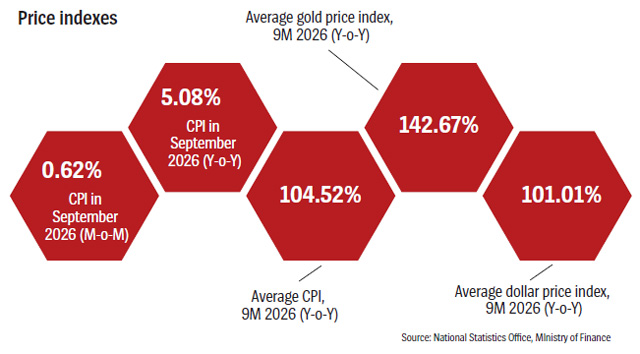
Average CPI increased 4.52 per cent in the first nine months, while core inflation rose 4.26 per cent. Third-quarter CPI alone increased 4.8 per cent year-on-year. Rising prices reduce real purchasing power and increase production costs, while also limiting room for interest rate cuts to support businesses. If demand expands too rapidly while supply remains insufficient, part of the policy impact could translate into higher prices and increased imports.
Goods exports increased 24.5 per cent, but imports rose 36.7 per cent, pushing the trade balance into a $19.42 billion deficit in the first nine months. Imports of machinery and inputs may support expanded production, but their ability to translate into output, exports, and foreign exchange earnings needs to be monitored. The FDI sector accounted for 80.7 per cent of exports, indicating a high degree of dependence on this sector. The extent of spillovers to domestic enterprises will depend on the share of locally-sourced inputs and supply chain links. Trade, exchange rate, and supply-chain fluctuations can therefore quickly affect orders and capital flows. The trade deficit should also be assessed alongside investment flows and other sources of foreign currency to accurately determine external balance pressures.
From a financial safety perspective, priority should be given to cases involving simultaneous weakening cash flows, large debt obligations, and high levels of interconnectedness with multiple financial institutions. When these factors occur together, difficulties at a company or project can affect multiple parties, reducing the economy’s access to financing. This should be a key area of supervision, and the actual level of risk needs to be determined using data on individual debts and customer groups.
Strengthening financial system safety
Positive growth momentum, combined with pressure on cash flows, prices, and capital markets, calls for proactive measures to strengthen financial system safety. The early assessment of large debt obligations, risk concentrations, and payment capacity will help ensure that capital continues to support production and business activity while limiting the costs of addressing problems when they arise.
First, debt-servicing capacity and asset quality should be closely assessed as financing expands.
Cash flow and consumption pressures require reviews of customers with large debt obligations, delayed projects, and restructured loans. Early assessment can distinguish businesses capable of recovery from those lacking viable repayment sources, preventing the prolonged accumulation of debt and rising resolution costs. Collateral values must be assessed together with legal status and marketability, as an appraised value does not necessarily equate to the amount that can be recovered at the required time.
Second, capital, provisions, and liquidity should be prepared before difficulties emerge.
Year-end funding needs may increase while cash receipts from projects and customers are delayed. If financial institutions have to raise funds urgently or sell assets to meet payments, they may face higher costs and reduced capacity for new lending. They should therefore assess potential losses, available sources of funding, and their ability to meet obligations by maturity. Temporary liquidity shortages must be distinguished from capital shortfalls caused by losses; liquidity support cannot substitute for capital replenishment or the resolution of deteriorating assets.
Third, risks should be assessed across the financial market.
Total capital mobilized through the securities market in the first nine months reached VND731.6 trillion ($28.1 billion), up 85.6 per cent. The implications for financial safety vary by type of financing, as equity financing does not create principal and interest repayment obligations in the same way as borrowing. A business may simultaneously borrow from banks, issue bonds, and have guarantee obligations. Therefore, financial obligations, related parties, and repayment sources need to be consolidated to identify concentration risks, while also assessing the impact if a business delays payments or collateral values decline.
In particular, continuous coordination in overall supervision and reporting on the financial market must be ensured following the dissolution of the National Financial Supervisory Commission. After the transfer of responsibilities, the effectiveness of overall supervision will depend on coordination mechanisms and the ability of agencies to consolidate information. Gaps may emerge if sector-specific reports are not integrated into a broader assessment of systemic risks.
A clear lead agency should be designated to prepare periodic overall supervisory reports, along with responsibilities for data provision and mechanisms for exceptional reporting. Reports should clarify large debt obligations, concentration levels, links between banking, securities, and insurance markets, and the impact of macro-economic fluctuations. This will provide the government with a basis for early identification of problems, coordinated responses, and ensuring capital flows continue to support growth.
Key measures for the final months
In the final months of the year, efforts should focus on measures that can generate additional output, improve cash flows, and maintain financing for the economy. At the same time, potential risks to financial activity must be addressed proactively. Each task should have a clearly identified responsible agency, completion deadline, and specific outcome, linked to growth and macro-economic stability objectives.
First, remove obstacles from projects capable of delivering results in the fourth quarter of 2026. Ministries, sectors, and localities should compile lists of public and private investment projects that face implementation obstacles but could be constructed or brought into operation this year. For each project, specific issues related to site clearance, procedures, materials, connections, or acceptance should be identified, with a designated lead agency and resolution deadline. Priority should be given to projects nearing completion, projects capable of entering operation, and production facilities that already have equipment and orders.
Second, accelerate public investment and payments so capital translates into real economic activity. Project owners should update the progress, implementation capacity, and payment needs of each project through year-end. Resources should be concentrated on projects that are ready for construction, while capital may be reallocated from projects with limited implementation capacity to projects with greater needs, in accordance with applicable authority and regulations. Acceptance and payment for completed work should be accelerated, and outstanding documentation for contractors resolved. Results should be measured by completed work, projects brought into operation, and debts paid.
Third, support cash flows, expand orders, and improve businesses’ access to capital. Tax authorities should promptly process eligible tax refund applications, while budget-funded entities should review their contractual payment obligations to prevent businesses from having to borrow to cover prolonged receivables. Banks should proactively work with customers that have orders and viable business plans to determine funding needs, disbursement schedules, and appropriate repayment schedules. For small and medium-sized enterprises, transaction, contract, and cash flow data should be used more extensively in credit assessments.
At the same time, the government should direct the implementation of a domestic supplier development program linked to the procurement needs of exporters, FDI enterprises, and major projects. This should include identifying products that can be locally supplied and supporting businesses with technology, certification, trial production, and financing based on buyers’ requirements. Results should be reported quarterly based on the number of suppliers making actual deliveries and the value of contracts executed, while growth in domestic production input purchases should be assessed annually.
Fourth, review large debts and risk concentrations and develop resolution plans. The monetary authority should require credit institutions to assess large customers, related customer groups, and projects with significant financial obligations, while coordinating with financial authorities to reconcile borrowing, bond, and guarantee obligations through appropriate data-sharing mechanisms. The assessment should cover outstanding loans, bonds, guarantees, repayment sources, and the status of collateral to avoid overlooking related obligations. Customers should be clearly classified as those servicing debt normally, those facing temporary liquidity shortages but capable of recovery, and those with limited recovery prospects. Each case should have a specific plan covering recovery, restructuring of obligations, additional equity, or asset resolution, with clear responsibilities and timelines to avoid prolonging debts without viable repayment sources. In the fourth quarter, priority should be given to completing the review, classification, and approval of resolution plans, while debt resolution, capital increases, or restructuring should continue into 2027 where completion is not possible by year-end.
Fifth, prepare capital, provisioning, and liquidity plans for higher-risk institutions. Credit institutions should update their resilience assessments under scenarios involving delayed debt repayments by customers, declining collateral values, or higher funding costs. On this basis, they should determine requirements for provisions, additional capital, and contingency liquidity, and adjust the pace of asset expansion if available resources are insufficient. Capital-raising plans must have clearly identified funding sources and timelines. The State Bank of Vietnam should closely monitor funding balances and proactively use appropriate policy instruments, linking liquidity support to supervision and the responsibilities of recipient institutions.
Sixth, address real estate obstacles and bond obligations on a project-by-project and company-by-company basis. Local authorities should prioritize resolving dossiers for projects with sufficient legal status, realistic completion prospects, and genuine market demand. Businesses must disclose project progress, capital-use plans, and repayment sources, while proactively increasing equity, collecting receivables, or transferring assets. Adjustments to bond obligations must comply with the law and agreements with investors and be based on adequate information.
Seventh, establish overall financial market supervision linked to policy coordination. Financial authorities should take the lead, in coordination with monetary authorities, in preparing periodic overall supervisory reports and exceptional reports when significant risk indicators emerge. Clear responsibility should be established for consolidating information, providing data, and handling recommendations. Reports should connect information across banking, securities, and insurance markets, clarifying large debt obligations, funding concentration, and channels through which risks can spread. At the same time, budget, credit, deposit, and foreign exchange balances should be monitored to support appropriate policy adjustments. Authorities should ensure the supply of essential goods, consider the timing of adjustments to State-managed prices, and help businesses access foreign exchange-hedging instruments. The progress of disbursement and resolution of project bottlenecks should be monitored weekly and maturing debt obligations and financial risks updated monthly.









 Google translate