


As Bac Ninh enters a new phase of development and seeks to attract higher-quality FDI, how would you assess the role of housing and the broader living environment in strengthening the city’s competitiveness in attracting and retaining international talent?
On September 20, Resolution No. 39/2026/QH16 from the National Assembly officially took effect, establishing Bac Ninh city on the basis of the entire natural area and population of former Bac Ninh city. This new development status brings higher expectations for urban quality, governance, and the living environment.
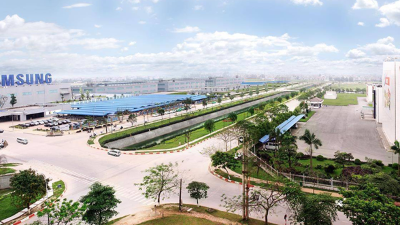
Bac Ninh city is now one of Vietnam’s major industrial production centers and FDI destinations. As of the end of September, the city had 3,720 FDI projects with total registered investment of approximately $52.39 billion. Gross regional domestic product (GRDP) grew by an estimated 11.81 per cent in the first nine months of this year, ranking fourth among Vietnam’s 34 cities and provinces. The presence of global technology and manufacturing corporations has also created a growing community of international experts, engineers, managers, and workers living and working in Bac Ninh over the long term.
The question today is therefore not simply how many apartments can be sold or leased to foreign residents. The broader question is what kind of living environment Bac Ninh needs to develop to match the scale and quality of investment it aims to attract.
As competition for investment shifts from quantity to quality, a locality’s advantages can no longer be measured solely by its industrial land, factory infrastructure, or investment incentives. Its ability to attract and retain highly-skilled talent is also a key component of its competitiveness.
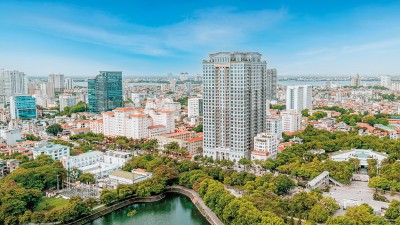
A company may choose a factory location based on investment criteria, but when deciding whether to relocate their families and settle in a place for the long term, international experts also consider housing, schools, healthcare, transportation, retail, green spaces, property management services, community life, and convenient, transparent access to information. Housing for foreign residents should therefore not be viewed as a niche real estate market but as part of the infrastructure needed to support economic development and attract higher-quality FDI.
Based on Bac Ninh’s implementation of housing policies for foreigners, what progress has been made and what issues still need to be addressed?
Bac Ninh has gradually moved from policy direction to implementation in recent years. In March, the City People’s Committee called for a review and public disclosure of residential projects eligible for foreign ownership.
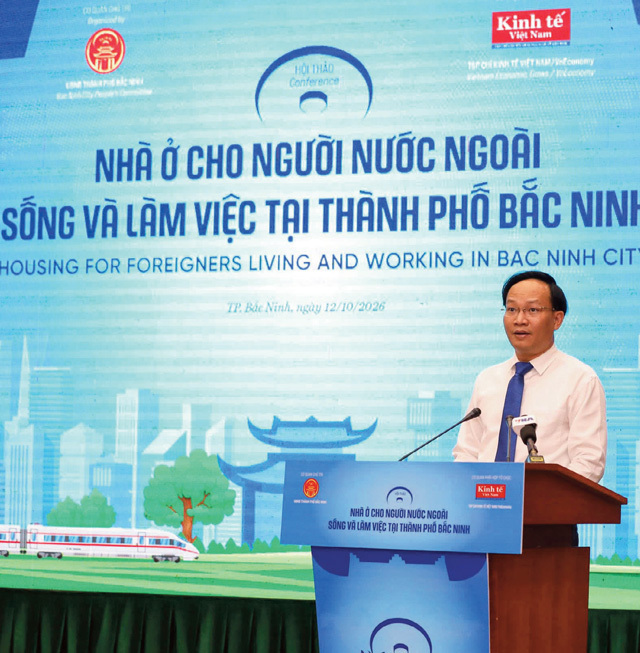
According to land registration authorities, we have issued 498 certificates of ownership to foreign organizations and individuals. Notably, 100 per cent of applications were processed within the prescribed administrative timeframe of eight working days. The remaining applications are under review or awaiting confirmation that financial obligations have been fulfilled.
These figures demonstrate that demand for homeownership among foreign organizations and individuals in Bac Ninh is real and has translated into actual transactions and registered ownership. They also indicate that, once eligible applications reach the land registration and certificate issuance stage, processing times at the relevant authorities are not currently a major bottleneck.
The issues that need closer attention lie across the entire process before and after a transaction. Can foreign buyers easily find suitable properties? Can they identify which projects permit foreign ownership and how many units remain available within the applicable quotas? Are advisory services, transactions, and document preparation convenient? Is essential information sufficiently connected and publicly accessible to those who need it?
What key priorities will the city focus on to ensure the housing market for foreign residents develops in the right direction?
I believe there are four priorities. The first is to quantify demand. We need to establish how many foreign experts, managers, engineers, and workers currently live and work in the city, and which industrial parks they are concentrated in. We must also understand whether they prefer to rent or buy, whether their needs are short or long-term, what they can afford, and how demand is likely to change over the next three to five years. Without reliable data, it is difficult to make sound planning and investment decisions.
Second, assess supply accurately. This means looking beyond the number of available apartments to determine whether they are located where international workers need them and whether they offer appropriate services, property management, transportation, education, retail, and overall living standards.
Third, clearly distinguish issues by jurisdiction. Matters that the city and its departments can resolve directly should be assigned to specific agencies, with clear procedures and deadlines. Issues involving national laws or central government policies should be documented comprehensively and supported by evidence before being submitted as recommendations. We should not lump every difficulty together under the broad label of “mechanism-related obstacles.”
Fourth, improve access to information. The City People’s Committee has already publicly disclosed project lists in accordance with regulations. The next step should be to develop a more accessible data system through which foreign residents and FDI enterprises can readily identify suitable projects, the number of units still available, ownership conditions, applicable procedures, and relevant contacts.
In practice, public disclosure is a legal requirement, but turning disclosed information into usable data is what creates value for the market. This provides a concrete foundation for exploring the development of a dedicated data portal or housing guide for foreign residents in the future.
As of early October, 41,416 foreign nationals were registered as temporary residents in Bac Ninh city.
As of the end of September, nearly 25,000 foreign experts, managers, engineers, and highly-skilled technical workers were employed at the city’s industrial parks.


 Google translate