


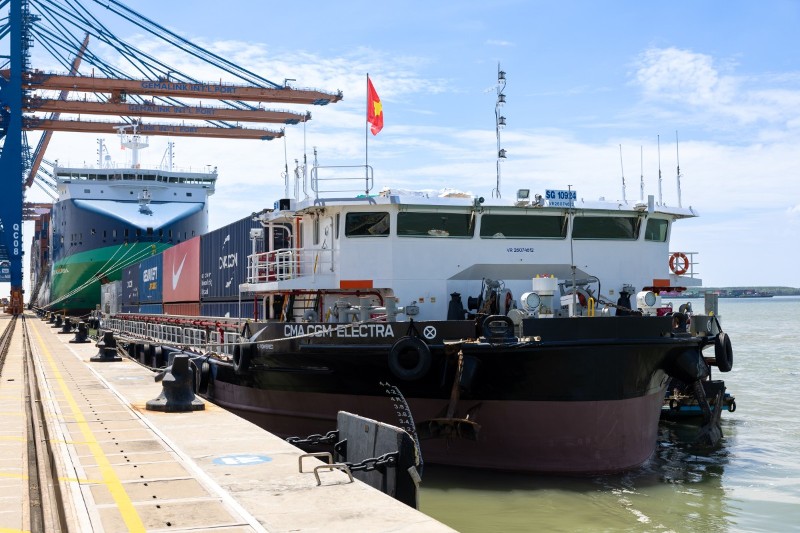
A collaborative project to deploy an electric barge between CMA CGM, Nike, and Gemadept was announced on October 29, marking a significant milestone in realizing green transition commitments.
Powered entirely by renewable energy, the electric barge connects Nike’s inland consolidation hub in Ho Chi Minh City with the Gemalink deep-water port on a 180-kilometer round-trip route. The solution is projected to cut approximately 778 tonnes of CO2 emissions annually.
The vessel pairs on-board battery power with Gemalink's on-site solar energy installation, creating an integrated system combining low-emission waterborne transport with renewable power generation. With a carrying capacity exceeding 50,000 TEUs per year, the electric barge offers a substantially more sustainable inland logistics alternative to road freight.
By combining electric transport, dedicated charging infrastructure, and renewable energy generation at Gemalink, this fully electric barge project demonstrates how innovation can turn sustainability ambitions into tangible, real-world solutions, said Mr. Chu Do Cong Khanh, Deputy CEO of Gemadept Corporation and Chairman of Gemalink Deep-Sea Port.
Mr. Khanh expressed high expectations for the model’s scalability, emphasizing its potential to accelerate Vietnam's long-term transition toward a low-carbon logistics network.
As Vietnam’s first fully electric barge project, the initiative stands as a clear testament to multi-stakeholder collaboration across ocean carriers, global brand owners, and port operators pooling expertise to decarbonize global supply chains, noted Ms. Christine Cabau, Executive Vice President of Assets and Operations at CMA CGM.
She highlighted that with strong potential for replication across other geographies, Vietnam is steadily establishing itself as a frontrunner in developing sustainable inland transport solutions while building domestic capacity across the renewable energy sector.
"This electric barge project further solidifies CMA CGM's long-term commitment to Vietnam and Southeast Asia, accelerating the broader transition toward sustainable shipping and logistics," Ms. Cabau said.

 Google translate