


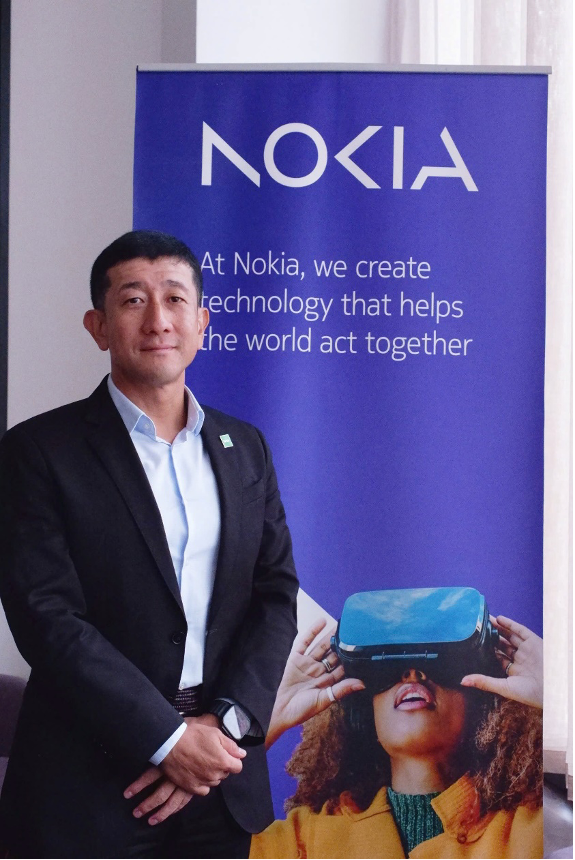
Nokia has recently signaled a significant evolution in its global strategy. How is this new vision redefining operations here in Vietnam?
Nokia has shifted from being known for ‘connecting people’ through mobile devices to ‘connecting intelligence.’ We have entered the AI era, and our technology investment now centers on it. In Vietnam, this shift shapes not only mobile networks and 5G deployment, but also our core infrastructure portfolio — optical networks, IP networks, and fixed networks, which are now Nokia’s main pillars.
Nokia’s recent 5G rollout with Viettel across 22 provinces uses locally manufactured equipment. How does this ‘Made-in-Vietnam’ blueprint affect your supply chain resilience, and are there plans for export?
Vietnam’s 5G launch came at the right time for us, aligning with our decision to establish high-tech manufacturing in Bac Giang Province. The network products we manufacture there include baseband units, remote radio heads, and fiber network equipment. Today, all 5G equipment we deliver to Vietnamese operators is made locally — a choice we made for supply chain diversity and resilience. Going forward, our roadmap is for 5G equipment serving the wider Asian market to be exported from our Vietnamese manufacturing base.
Under Nokia’s Edge Cloud vision and your collaboration with Viettel, NVIDIA, and Ericsson, how will edge computing widen access to AI processing for SMEs in fragmented industrial zones?
This ecosystem is driven by the AI-RAN Alliance [AI RAN: Artificial Intelligence Radio Access Network — a technology that integrates AI into cellular networks to automatically optimize data speeds, frequencies, and energy efficiency directly at the base stations]. Viettel is actively collaborating within this ecosystem, and Nokia — as a leading member of the alliance — supports these initiatives. We have also formed a deep-tech partnership with NVIDIA on AI RAN innovation, investing to make our radio software stack run natively on NVIDIA’s accelerated computing platform.
What are the core components of AI RAN, and what is the current timeline for deployment?
AI RAN architecture has three components: AI for RAN, AI on RAN, and AI and RAN. AI for RAN is a mature technology available today — our Self-Optimized Network (SON) solution already uses AI to maximize spectral efficiency and automate network design for operators such as Viettel, VNPT, and Mobifone. AI on RAN and AI and RAN form our deeper integration with NVIDIA; we are advancing through this phase and are on schedule to bring these capabilities to market in the near future.
Capital markets are tightening globally. Why does Nokia stay optimistic about high-cap infrastructure investment in Vietnam during a period of selective spending?
The AI cycle has begun, but we are still in its early phase, and infrastructure spending will grow substantially. This extends beyond the radio network to heavy infrastructure such as subsea cables and cross-border connectivity, which operators like Viettel, VNPT, and Mobifone are already building. The Vietnamese government has also taken decisive steps to drive national digital transformation toward 2030. That creates real demand for robust infrastructure, and Nokia is positioned to support these investments.
Skeptics note that 5G has yet to deliver clear ROI for operators. How does Nokia help partners like Viettel and VNPT monetize 5G Advanced for the B2B enterprise segment?
5G is still in its early stages in Vietnam, and 5G Standalone (5G SA) has not yet gone commercial here. But mature markets show where the value lies: in Singapore, operators have advanced 5G SA slicing features that now contribute to both their consumer and enterprise businesses. Realizing this domestically depends on migrating to 5G SA, which unlocks capabilities such as network slicing. As Vietnamese operators move in that direction, we are working with them on proven monetization frameworks for the B2B segment.
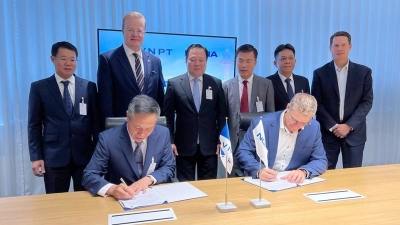
Your recent MOU with VNPT underscores a ‘Security by Design’ framework. How does Nokia secure Vietnam’s 5G backbone against sophisticated cyber threats?
Nokia deploys a specialized telecom security portfolio. We implement our Cybersecurity Dome, which delivers tailored protection for telecom networks. Our hardware is also built as a quantum-safe network: quantum computing will sharply accelerate processing power, so code-breaking that would take a hacker a century today could take minutes in the future. Nokia preemptively addresses this by embedding post-quantum encryption into our network equipment, safeguarding Communication Service Providers (CSPs) against both current and future cryptographic vulnerabilities.
While 5G is still being optimized, Nokia is already discussing 6G with Vietnamese leadership. What foundational milestones must Vietnam clear to secure 6G readiness?
Vietnam is at the start of its 5G and 5G Advanced journey, but it is worth preparing now. 6G standardization has already begun: the 6G study in 3GPP Release 20 is due to conclude in March 2027, followed by implementation specifications in Release 21, expected around the end of 2028, with productization to follow.
A key requirement will be new mid-band spectrum, particularly the 6–8 GHz range, which balances coverage and capacity. Nokia works globally with operators, regulators, and the ITU-R on allocating this spectrum. Vietnam has made strong progress here, reserving 700 MHz in the upper 6 GHz range for IMT communications at the end of 2025.
On research, Nokia is shaping a shared 6G vision with industry peers, academia, and research institutions across the US, Europe, and Asia-Pacific. In the Asia-Pacific region, we contribute to national programs such as XGMF in Japan, the 6G Bharat Alliance in India, and the 6G Forum in Korea, alongside bilateral collaborations with operators and universities. For Vietnam, continuing a proactive spectrum and frequency strategy with the Ministry of Information and Communications and the Ministry of Science and Technology will help map out the most effective bands for 6G.






 Google translate