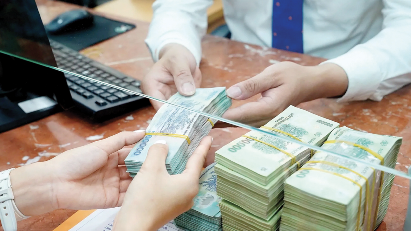
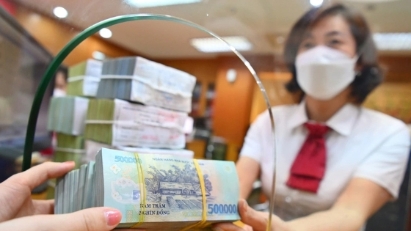
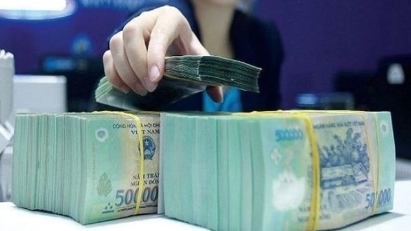
A survey by the State Bank of Vietnam shows that borrowing demand from corporate customers overtook that of retail customers, signaling a shift in capital flows toward business expansion and investment activities.
The move aiming to reduce business conditions, simplify administrative procedures and expand foreign exchange services at locations frequented by international visitors.
Stronger collaboration among regulators, banks, and fintech firms is becoming increasingly essential to protect users and reinforce confidence in Vietnam’s digital financial ecosystem as AI reshapes the industry.
The central bank has instructed credit institutions to strictly control credit expansion in high-risk areas, particularly the real estate sector, throughout 2026.
To establish a commercial bank in the IFC, a wholly domestically-owned bank must have minimum total assets of VND100 trillion ($3.8 billion); a wholly foreign-owned bank must have at least VND10 billion (over $380,000) in assets, while a foreign bank branch's parent must possess minimum total assets of VND20 billion (nearly $760,500).
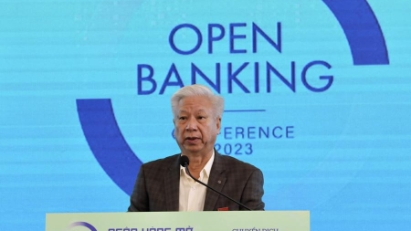
Conference held by VnEconomy / VET and partners on December 7 provided an opportunity for banks, payment intermediaries, and service providers to discuss further advances in Open Banking.