


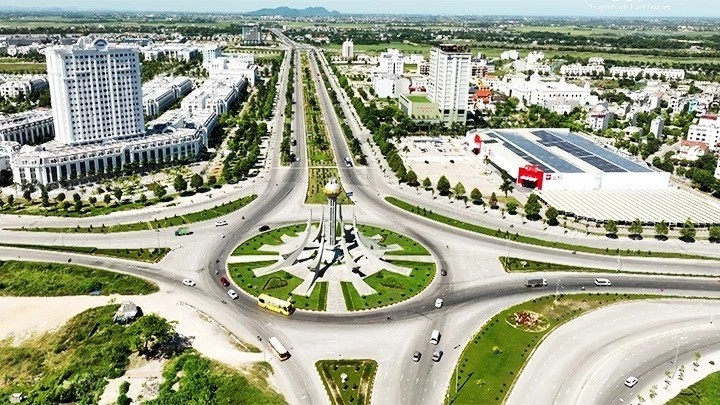
Under its recently adjusted master plan for the 2021-2030 period, with a vision toward 2050, central Thanh Hoa province has officially established the goal of transforming the province into a centrally-run city after 2030.
The locality is envisioned to become a modern and smart urban center, serving as a new growth pole for Vietnam's North Central region and the country as a whole.
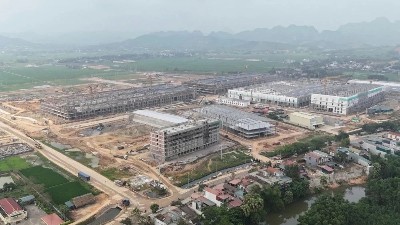
According to the adjusted planning, Thanh Hoa aims to maintain an average annual GRDP growth rate of at least 11% through 2030. The digital economy is expected to contribute approximately 30% of the provincial GRDP, while the processing and manufacturing sector will account for a minimum of 36%, continuing its role as the primary engine of economic expansion.
The province also targets an export turnover of $15 billion, the establishment of 15,000 new enterprises, and an urbanization rate of at least 50%.
To realize these ambitions, the plan outlines a development model built upon five key economic pillars: processing and manufacturing; agriculture; tourism; science, technology, and digital transformation; and logistics and port services. The province's development space will be organized into three distinct zones—coastal, plains, and midland/mountainous—to ensure the harmonious exploitation of each region's specific potential.
A focal point of the planning is the formation of five dynamic economic centers designed to drive regional growth. The Nghi Son Economic Zone will continue its transformation into a national-scale hub for industry, energy, and logistics, while the Thanh Hoa Urban Area will maintain its role as the province's administrative, political, and cultural heart.
Meanwhile, Sam Son is set to become a premier national and international coastal tourism destination, Bim Son will focus on industrial and commercial development as a northern gateway, and the Lam Son - Sao Vang area will emerge as a new growth pole integrated with high-tech agriculture and airport services.
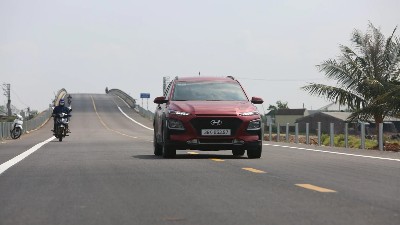
In tandem with these hubs, Thanh Hoa will develop six strategic economic corridors. This network is designed to create seamless connectivity between the dynamic centers and the province’s system of seaports, airports, and international border gates, thereby expanding development space and enhancing regional integration.
The master plan further emphasizes four strategic breakthroughs: perfecting institutional frameworks, developing modern infrastructure, promoting digital transformation and innovation, and enhancing the quality of human resources.






 Google translate