


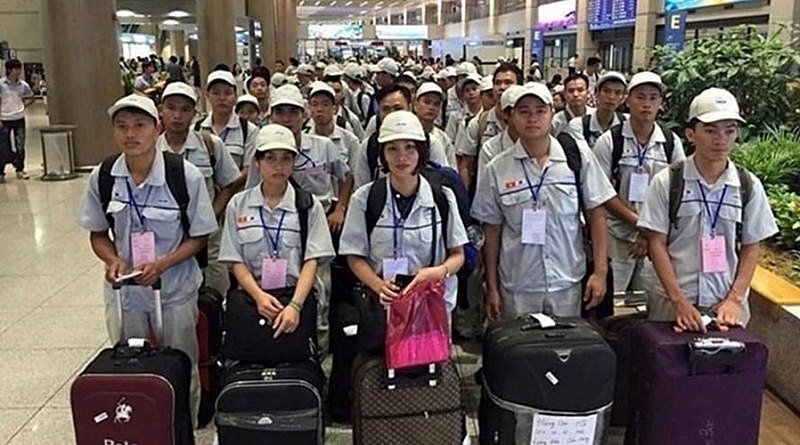
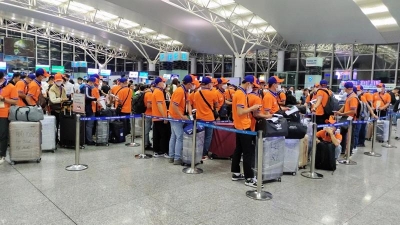
Thanh Hoa province in central Vietnam currently has nearly 45,000 residents working abroad on fixed-term contracts, according to the Provincial People's Committee.
The largest concentrations of these workers are in Japan with 17,000, Taiwan (China) 15,000, and South Korea 9,000.
Since 2022, the province has successfully sent more than 11,000 workers abroad under labor contracts each year. With average monthly incomes ranging from VND25 to 40 million ($950-1,520), this workforce consistently sends home over VND9 trillioin (approximately $342 million) in remittances annually.
In addition to international labor, the province has more than 400,000 residents working in other cities and provinces across Vietnam. This domestic migrant workforce is concentrated in major urban centers and key industrial hubs, most notably Ho Chi Minh City (approx. 110,000 people) and Hanoi (92,000), followed by Bac Ninh (28,000) and Dong Nai (16,000).
Locally, a rapid shift from agriculture to manufacturing is also underway. On average, nearly 15,000 rural agricultural laborers transition to jobs within the province’s own economic and industrial zones every year.
Thanh Hoa has also become a destination for approximately 20,000 workers from neighboring provinces seeking employment, primarily from Nghe An (3,000), Ha Tinh (1,000), and Ninh Binh (500).
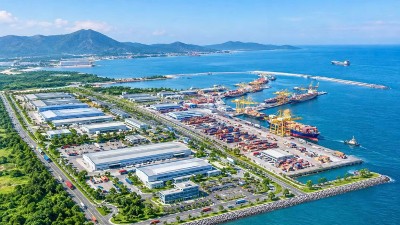
Notably, the Nghi Son Economic Zone and various local industrial parks have attracted 2,692 foreign personnel. This group primarily consists of nationals from mainland China with 1,803, Taiwan (China) 269, and South Korea 166.
In contrast to the local workforce, the foreign contingent primarily holds leadership and specialized roles: 74.1% are high-tech laborers, 14.3% are experts, and the remainder serve as managers and executive directors.





 Google translate