


According to Agoda’s “2026 Travel Trends” report, travelers are increasingly filtering for flexibility markers - free cancellation, multiple payment options, and verified reviews - the kind of granular, self-directed decision-making that a fixed group tour simply doesn’t require.
The shift comes as Vietnam’s tourism sector continues to gain momentum. Data from the National Statistics Office at the Ministry of Finance show that Vietnam welcomed roughly 1.7 million international visitors in June, up 14.7 per cent year-on-year. In the first half, international arrivals reached nearly 12.3 million, up 14.9 per cent. That puts the tourism industry close to 50 per cent of the way to its target of 25 million international visitors in 2026, laying a solid foundation for a strong push in the closing months of the year.
The global travel industry is undergoing a structural shift. Fixed package tours are steadily giving ground to a new generation of travelers seeking personalized experiences, flexibility, and cultural depth. Nowhere is that shift clearer than in the rise of Free Independent Travelers (FIT) - now one of the fastest-growing, highest-value segments in global tourism.
Traveling independently
At the FIT Tourism Economic Forum 2026, held recently in Hanoi, Mr. Nguyen Trung Khanh, Director General of the Vietnam National Authority of Tourism, said the number of international visitors traveling independently to Vietnam has risen steadily since the Covid-19 pandemic. He attributed the trend to the country’s increasingly open visa policy, along with the growing ease of researching destinations and booking cross-border services made possible by digital travel platforms and AI tools.
According to Mr. Ly Xuong Can, Vietnam’s Tourism Ambassador to South Korea, FIT travelers already account for a large share of South Korea’s outbound tourism market and are expected to keep growing as digital transformation deepens - a shift, he said, that requires travel businesses to invest more heavily in technology, service quality, and digital engagement with travelers.
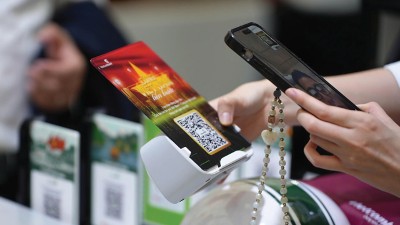
Mr. Can added that travelers increasingly prioritize safety, convenience, and a seamless experience throughout their journey, and that cashless payment methods are becoming standard practice, further enhancing the experience for international visitors. Stronger digital platforms connecting businesses and travelers, he said, would help deepen tourism ties between Vietnam and South Korea while better serving the growing FIT segment.
Da Nang, one of Vietnam’s leading destinations for international visitors, particularly from South Korea, offers a concrete illustration of the shift. According to the Da Nang Statistics Office, the city welcomed 9.8 million visitors in the first half of 2026, driving strong growth in accommodation and food service revenue. Travel agency revenue, however, grew far more slowly, a gap the Office attributed directly to the rising share of visitors organizing their own trips rather than booking through tour operators.
The city’s service sector posted 9.31 per cent growth in value-added over the same period, contributing 4.95 percentage points to overall gross regional domestic growth (GRDP) growth of 9.52 per cent and accounting for 54.93 per cent of the city’s economic structure. Yet revenue from travel agencies and related tourism support services reached an estimated VND2.35 trillion ($89.39 million), up just 10.4 per cent year-on-year - a markedly slower pace than the broader service sector. That gap reflects a broader shift toward travelers who prefer to organize their own itineraries rather than book through a travel agency.
That nuance matters for foreign business audiences used to reading this trend as a straight line toward total independence. What travelers increasingly want is control over the booking layer - choosing their own flights, accommodation, and activities rather than accepting someone else’s bundle - while still being open to curated recommendations and local expertise layered on top.
“Independent travelers are more than just a market segment - they generate outsized value for Vietnam’s tourism industry,” Mr. Khanh said. “FIT travelers tend to spend more on personalized experiences, helping reduce Vietnam’s dependence on any single source market and strengthening the industry’s long-term resilience.” A satisfied FIT traveler, he continued, effectively becomes a “tourism ambassador,” spreading Vietnam’s image across global digital platforms and travel communities.
Taking the wheel
Domestically, the same instinct toward self-directed travel is showing up in a very different form: a growing appetite for self-drive road trips, often referred to locally as “phuot,” in which travelers plan their own route, set their own pace, and rent a car rather than join an organized coach tour. Vietnam’s rapidly-improving road network - particularly its expanding expressway system - is giving that trend a further push, letting travelers control their own schedule while covering more destinations within a single trip.
The self-drive rental market has expanded quickly enough to draw in a crowded field of competing apps - Mioto, Sencar, TripX, and others - all built around connecting private car owners with travelers who want a vehicle for a few days rather than a seat on someone else’s bus.
Mr. Pham Trung Luong, former Director of the Institute for Tourism Research Development, said self-drive tourism has already taken off in many countries and that Vietnam now has the conditions to follow suit. “Vietnam’s road network has improved significantly in recent years, particularly with the expansion of the expressway system,” he said. “I believe this will open up strong growth for self-drive tourism in the years ahead.”
That shift is already steering demand toward specific destinations. Discovery-oriented spots such as Ly Son, Mang Den, and Mai Chau are attracting a growing number of self-drive travelers, according to Mr. Branavan Aruljothi, Country Manager for Booking.com Vietnam.
The platform’s “Travel Predictions 2026” report found that 93 per cent of Vietnamese travelers said the appeal of a road trip lies in its flexibility, spontaneity, and the chance to meet new people along the way, while 87 per cent valued sharing the driving with travel companions as a way of making the journey feel more connected and personal.
Mr. Pham Hai Bang, General Director of the Bluetour International Travel JSC, said air-based domestic tours have lost some of their appeal this year as costs have risen 30-40 per cent. Road trips with shorter travel times, by contrast, are increasingly favored by families for their affordability and the flexibility to control their own schedule - a shift reinforced, he said, by the recent opening of new expressway routes.
That shift shows up in the numbers: the share of domestic tours in many operators’ total summer 2026 revenue rose 10-15 per cent year-on-year, even as long-haul, flight-based package tours slowed noticeably. Facing that wave, travel companies are being forced to restructure their offerings or risk being left behind.
Mr. Vu Van Tuyen, General Director of Travelogy Vietnam, said his company has rolled out three product lines to adapt to travelers’ growing preference for self-drive trips. For self-drive travelers, the company offers ground-service combos - hotel bookings discounted 20 to 30 per cent more than travelers could get by booking directly, skip-the-line attraction tickets, and integrated roadside insurance with 24/7 vehicle rescue.
For travelers who want a more organized experience, Travelogy has built out professional caravan tours with a lead vehicle and exclusive rest stops - a segment now running at 85 per cent occupancy on routes through the northwest, northeast, and central coast. At the same time, the company’s “300-kilometer radius” strategy - short trips built around ecotourism, craft villages, and hot-spring resorts near major cities - has grown 35 per cent year-on-year, fully offsetting the decline in domestic air travel.
For this shift to become a sustainable growth driver, Mr. Tuyen said, travel companies, hotel chains, and local governments need to work together to standardize rest stops, parking facilities, and local experiences along the way.
Mr. Dang Duy Trung Hieu, Chairman of Vietnam Express Tour and Vice Chairman of the Hanoi Tourism Association, argued that businesses shouldn’t frame this as a competition between “guided tours” and “independent travel,” but as a shift in customer demand that the industry needs to adapt to.
These trends point to the same structural shift. International visitors are unbundling their trips through Online Travel Agents (OTAs) and direct-booking platforms, while Vietnamese travelers are doing the same by taking the wheel themselves instead of joining scheduled coach tours. In both cases, the traditional all-in-one travel package is giving way to more flexible, self-directed journeys built around individual choices.
For travel businesses, the shift is a test of how well they understand changing customer preferences. As the market moves toward experience, personalization, and technology, the operators that adapt their products and services will be best positioned to capture the opportunities in the independent-travel era.
At the FIT Tourism Economic Forum 2026, held recently in Hanoi, Mr. Nguyen Trung Khanh, Director General of the Vietnam National Authority of Tourism, said the number of international visitors traveling independently to Vietnam has risen steadily since the Covid-19 pandemic.


 Google translate