


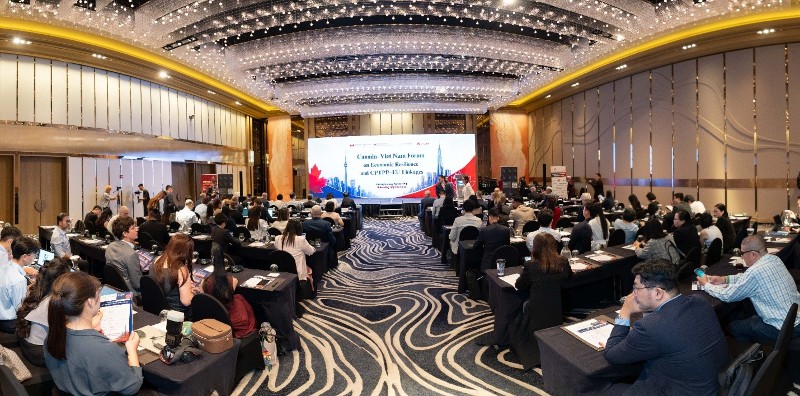
The Economic Resilience and CPTPP-EU Linkages Vietnam-Canada Forum 2026 was jointly organised by the Vietnamese Ministry of Industry and Trade (MoIT), the Asia Pacific Foundation of Canada (APF Canada), the Embassy of Canada in Vietnam on July 20 in Ho Chi Minh City, on the sidelines of the Third CPTPP Senior Officials' Meeting of 2026.
The event brought together senior representatives from Vietnam, Canada, Japan, Singapore and the European Union to discuss practical pathways for strengthening cooperation between two of the world's most significant trade frameworks while enhancing economic resilience and expanding opportunities for businesses.
Against the backdrop of increasing geopolitical fragmentation and rapidly evolving global trade dynamics, participants explored how closer cooperation between CPTPP and the EU could reinforce an open, inclusive and rules-based international trading system. The discussions also focused on practical measures to deepen regulatory cooperation, improve interoperability in digital trade, strengthen resilient supply chains and facilitate cross-border investment.
Opening the programme, organisers underscored the importance of building stronger partnerships among governments, businesses and research institutions as economies seek to diversify trade relationships and respond to mounting global economic challenges. Rather than focusing solely on policy coordination, the forum aimed to identify concrete areas where closer collaboration could translate into tangible commercial outcomes for businesses operating across the Indo-Pacific and European markets.
One of the central themes throughout the forum was the growing importance of cooperation among middle-power economies in maintaining stability within the international trading system. Speakers noted that as supply chains become increasingly vulnerable to geopolitical tensions and external shocks, countries sharing a commitment to open and rules-based trade have an opportunity to strengthen resilience through closer regulatory cooperation and deeper economic integration.
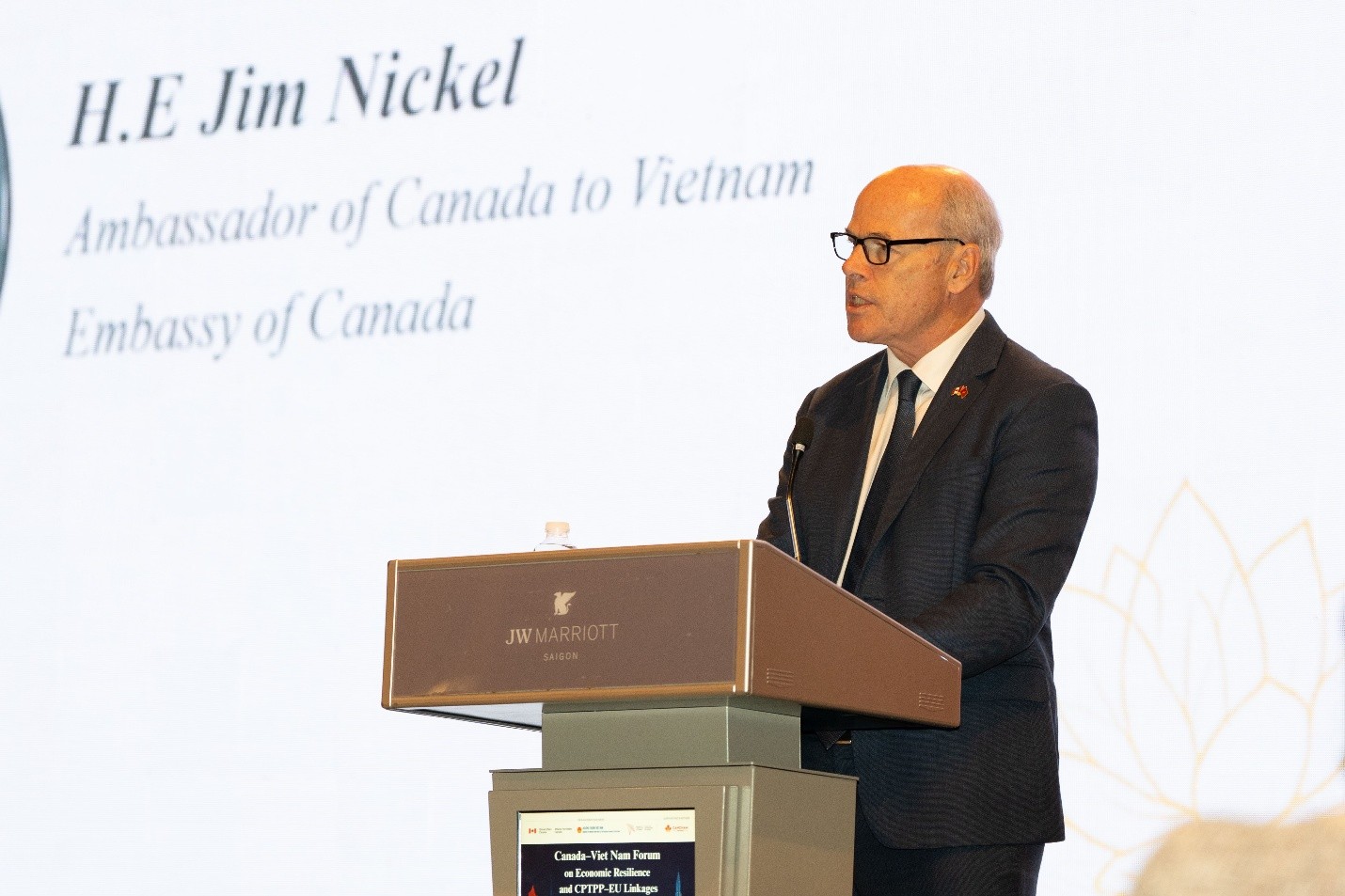
H.E. Mr. Jim Nickel, Canada's Ambassador to Vietnam, said Canada and Vietnam share a strong interest in building more resilient, diversified and sustainable trade relationships during a period of heightened uncertainty in the global economy.
He said the forum had brought together leaders from government, business and academia to exchange practical ideas capable of strengthening economic cooperation while creating new opportunities across CPTPP and European Union economies. According to the Ambassador, the expanding trade partnership between Canada and Viet Nam demonstrates the continuing value of open, rules-based trade and strong international collaboration in fostering a more resilient and prosperous future.
Participants also highlighted Vietnam's unique strategic position within the evolving global trade landscape. As one of the few economies that is both a member of the CPTPP and a party to the EU-Viet Nam Free Trade Agreement (EVFTA), Vietnam occupies a distinctive position linking two of the world's most ambitious trade architectures. Delegates agreed that this position provides significant opportunities for the country to facilitate closer economic cooperation between Asia-Pacific and European markets while encouraging greater investment and trade connectivity.
Building on that discussion, participants examined opportunities identified through the inaugural CPTPP-EU Trade and Investment Dialogue. Particular attention was given to expanding cooperation in digital trade, sustainable trade, investment promotion and the development of more resilient supply chains. Delegates agreed that strengthening interoperability between CPTPP and EU frameworks could reduce unnecessary barriers for businesses while preserving high standards in digital governance, sustainability and investment policy.
Speaking during the forum, Mr. Barrett Bingley of the Asia Pacific Foundation of Canada said the future of global trade and investment would not be determined solely by the world's largest economies, but increasingly by countries prepared to work together to strengthen trust, reinforce resilient supply chains and uphold a rules-based international trading system.
He said the dialogue demonstrated the growing leadership of Canada and Vietnam in advancing that vision by bringing together governments, businesses and academic institutions to develop practical pathways for closer cooperation between CPTPP economies and the European Union.
Throughout the discussions, speakers repeatedly emphasised the need to translate trade agreements into measurable commercial outcomes. Beyond policy dialogue, participants stressed that businesses require greater regulatory transparency, improved market connectivity and stronger institutional cooperation to fully realise the benefits offered by modern free trade agreements. Strengthening collaboration among governments, chambers of commerce, research institutions and the private sector was therefore viewed as essential to supporting future economic growth.
Closing the forum, Mr. Ngo Chung Khanh, Deputy Director of the Multilateral Trade Policy Department under the Vietnamese Ministry of Industry and Trade, said that as Chair of the CPTPP in 2026, Vietnam intends to engage the business community more closely in shaping the next phase of cooperation between CPTPP members and European economies.
He said Vietnam would seek to establish stronger and more regular connections among businesses, chambers of commerce, research institutions and government agencies, ensuring that cooperation extends beyond policy dialogue to generate practical commercial partnerships. While policy discussions remain important, he noted that successful trade relationships are ultimately built between people and companies.
The event received support from foreign chambers of commerce in Vietnam, including the Canadian Chamber of Commerce, the British Chamber of Commerce, the Australian Chamber of Commerce, and the Singapore Chamber of Commerce.
 Google translate