


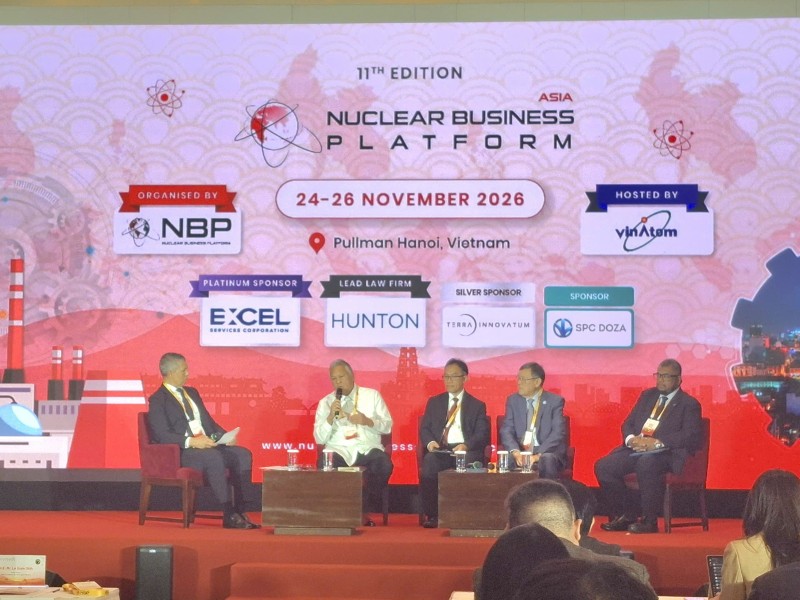
The 11th Asia Nuclear Business Platform (ANBP 2026), taking place in Hanoi from November 24 to 26, brings together government officials, nuclear regulators, energy companies, technology providers and financial institutions from many countries, mostly from ASEAN, to discuss how ASEAN countries can move their nuclear ambitions from planning to implementation.
Hosted by the Vietnam Atomic Energy Institute (VINATOM), the event is being held under the theme of executing ASEAN’s nuclear programmes. Its agenda covers a broad range of issues, including national programme development, regulatory readiness, project financing, technology choices, local industrial participation and workforce development.
The discussions come as electricity demand across the region continues to grow, driven by industrial expansion, digitalisation, artificial intelligence (AI) and data centre development. Against this backdrop, nuclear energy is increasingly being considered as one potential source of reliable, low-carbon electricity to support long-term energy security and decarbonisation.
Vietnam builds the foundations for its nuclear power programme
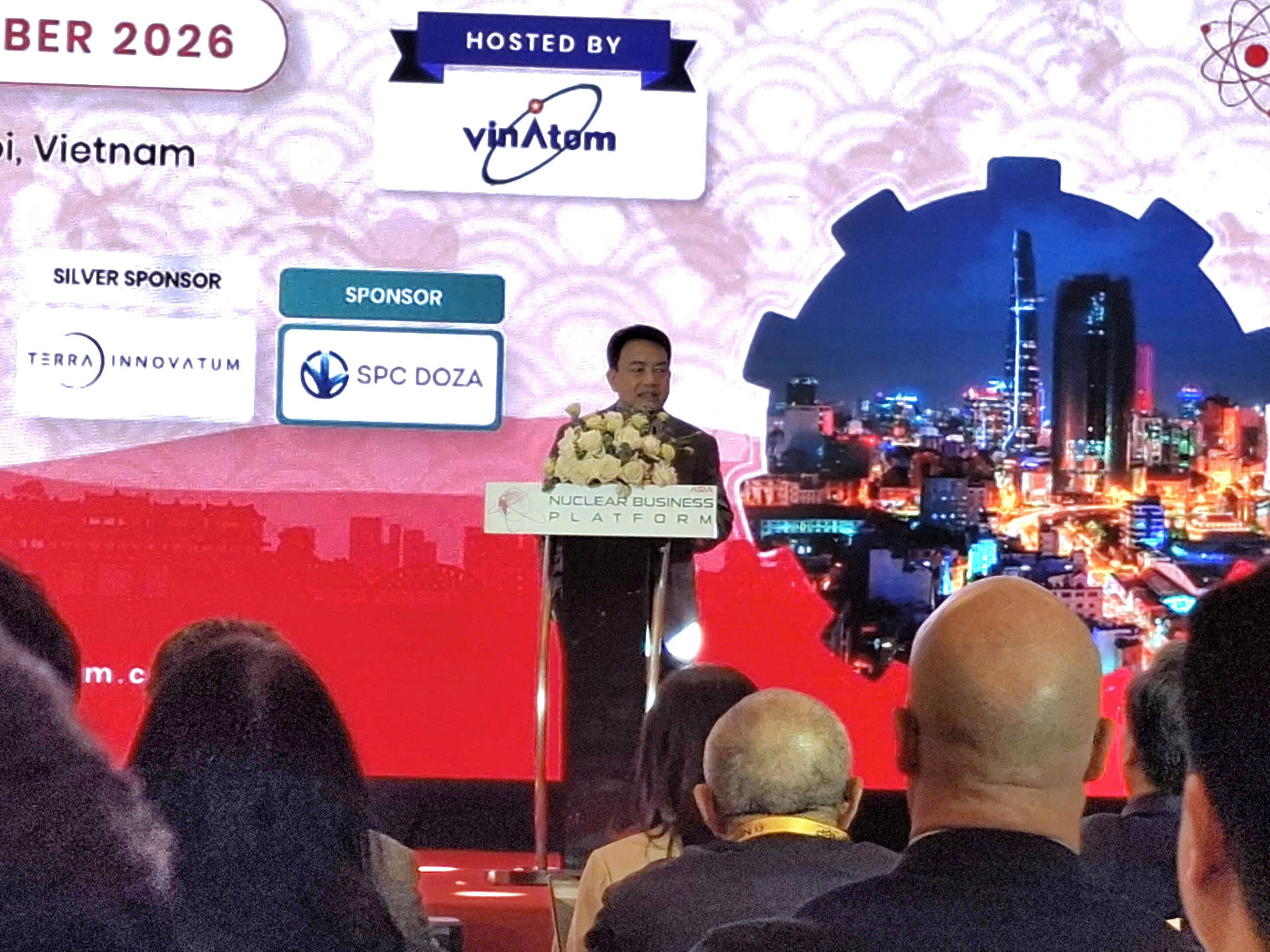
In his opening remarks, Dr. Le Xuan Dinh, Deputy Minister of Science and Technology of Vietnam, highlighted the importance of nuclear energy in the country's long-term development strategy and the need to prepare carefully for the implementation of its nuclear power programme.
Developing nuclear power is a complex undertaking that requires more than the selection of reactor technology. It involves a comprehensive institutional and legal framework, effective regulatory oversight, qualified human resources, adequate infrastructure and sustained investment. Nuclear safety, security and non-proliferation must remain central throughout the process.
The Deputy Minister's remarks also underscored the importance of international cooperation and knowledge sharing. For a country preparing to develop nuclear power, learning from the experience of countries that have already built and operated nuclear facilities can help strengthen national capabilities and reduce implementation risks.
The conference's opening sessions also focus on Vietnam's nuclear energy vision and project development. Mr. Tran Chi Thanh, President of the Vietnam Atomic Energy Institute (VINATOM), is scheduled to present the country's nuclear energy outlook, while a representative of the Vietnam National Industry and Energy Group (Petrovietnam) will discuss the development of Vietnam's nuclear power projects.
A high-level panel examines how new electricity demand drivers are reshaping energy planning in Southeast Asia. In particular, the rapid expansion of AI applications and data centres is creating additional pressure on power systems, while industrial electrification is increasing the need for reliable electricity supplies.
The discussion also considers how nuclear energy could contribute to regional industrial decarbonisation and how international cooperation might accelerate project development. The panel is moderated by George Borovas, Head of Nuclear at Hunton, with participation from representatives of the Philippines, Indonesia, Kazakhstan and Malaysia.
Vietnam's progress in strengthening its nuclear power infrastructure is another major focus. Dr. Tran Bich Ngoc, Deputy Director General of the Vietnam Agency for Radiation and Nuclear Safety (VARANS), is scheduled to share key lessons from the International Atomic Energy Agency's (IAEA) 2025 Integrated Nuclear Infrastructure Review (INIR) mission.
The session also provides updates from other Southeast Asian countries. Singapore will present its approach to building nuclear-related capabilities and preparing for potential deployment, while the Philippines will discuss the rehabilitation of the Bataan nuclear power plant, partnerships in small modular reactors (SMRs) and its 4,800 MW target.
Thailand's nuclear development plans, Malaysia's experience with its TRIGA PUSPATI research reactor and Indonesia's preparations for a first 500 MW unit by 2032 are also included in the programme. Together, these presentations offer a regional picture of how countries are approaching nuclear readiness, despite differences in policy, infrastructure and development timelines.
For Vietnam, a dedicated session examines the implementation status and infrastructure readiness of the Ninh Thuan 1 nuclear power project. The discussion is expected to address the practical requirements of moving from policy decisions to project implementation, including institutional coordination, infrastructure preparation and the development of the necessary technical capabilities.
ASEAN shares experience and strengthens regulatory capacity
The pre-conference workshops held on November 24 provided participants with practical insights from countries that have advanced their nuclear power programmes.
The first workshop examined Bangladesh's experience with the Rooppur nuclear power plant, focusing on the transition from construction to commissioning and operational readiness. Speakers such as Mohammad Shariful Islam of Nuclear Power Plant Company Bangladesh Limited and Dr. SK Anisur Rahman of the Bangladesh Atomic Energy Regulatory Authority presented the project from the perspectives of the plant owner and the regulator.
The discussion covered the division of responsibilities among government agencies, the project owner, the regulator, grid stakeholders and international partners. It also examined how the operating organisation was prepared, how cooperation with technology vendors was managed, and how workforce training and licensing requirements were addressed.
These issues are particularly relevant to countries embarking on their first nuclear power projects, as the transition from construction to operation requires close coordination between technical, regulatory and operational organisations.
The second workshop explored Türkiye's experience in developing its nuclear industry around the Akkuyu nuclear power plant. Led by Mustafa Selim Çelen of the General Directorate of Nuclear Energy under Türkiye's Ministry of Energy and Natural Resources, the session examined the country's ambition to reach approximately 20 GWe of nuclear capacity by 2053 through the Akkuyu, Sinop and Thrace projects.
A major topic was local industrial participation. Türkiye's programme includes a localisation target of at least 50% of project costs, supported by measures to qualify domestic manufacturers, certify suppliers and encourage local companies to participate in nuclear supply chains.
The experience also highlighted challenges such as differences in technical standards, certification requirements, limited domestic nuclear experience and complex procurement arrangements. These lessons offer useful reference points for countries seeking to develop local industrial capabilities alongside nuclear power projects.
On November 25, the conference continues with discussions on legal frameworks and regulatory readiness. Harry Brunt, Partner for International Energy and Infrastructure at Hunton, is scheduled to provide a comparative analysis of the legal frameworks required by ASEAN countries from the outset of their nuclear programmes.
James Voss, General Director for Vietnam at EXCEL Services Corporation, will share lessons from the experience of the United States Nuclear Regulatory Commission (US NRC), focusing on a regulatory roadmap for countries new to nuclear power.
A panel bringing together regulators from Vietnam, the Philippines, Malaysia and Thailand will further examine regulatory independence, international peer reviews, safety and security culture, and the resources needed for effective oversight.
Regulatory independence is particularly important because nuclear regulators must be able to make licensing and safety decisions based on technical assessments, without undue influence from project developers or other interests. Establishing this capacity early can help build public confidence and strengthen the credibility of a national nuclear programme.
Financing, technology and human resources shape the next phase
Financing is one of the most significant challenges facing countries planning their first nuclear power plants. Large upfront investment, long development timelines and complex risk allocation arrangements mean that governments must consider a range of financing mechanisms and partnerships.
The November 26 programme is set to address these issues in a dedicated session on financing ASEAN's first nuclear reactors. Speakers will examine the role of export credit agencies, private capital, multilateral institutions, climate funds and sovereign financing models.
Harry Nguyen, Country Head for Vietnam at UK Export Finance, will discuss the mobilisation of export credit and private capital for nuclear projects in ASEAN. Julien Saigault of EY will examine the EU Green Taxonomy and the potential reallocation of climate-related capital towards nuclear energy in Asia. A panel featuring representatives from EY, Hunton and Temasek Trust will further explore emerging financing structures.
Technology options are another central theme. The programme includes discussions on microreactors for islands, mines and industrial parks; CANDU reactor technology and its potential contribution to fuel independence and local industry; and operating experience from the VVER reactor fleet, including lessons relevant to large nuclear units and floating nuclear power plants.
These discussions reflect the diversity of energy needs across Southeast Asia. While large nuclear power plants may be suitable for countries with sufficient grid capacity and long-term electricity demand, smaller technologies could offer additional options for specific industrial or geographically isolated applications. However, technology selection must be assessed against national requirements, safety standards, economic feasibility and the capacity of the electricity grid.
The development of a skilled workforce and local supply chains will also determine whether nuclear programmes can be implemented sustainably. A session on building Vietnam's nuclear workforce will examine the role of universities and technical training institutions in preparing specialists for the sector.
Another discussion will bring together representatives from Vietnam, Indonesia and Thailand, as well as technology providers, to consider grid compatibility, site selection, workforce development, regulatory coordination, financing and public acceptance in preparation for potential SMR deployment.
The conference will conclude with a synthesis roundtable involving senior representatives from the ASEAN Big 6: Vietnam, Singapore, the Philippines, Thailand, Malaysia and Indonesia. Participants are expected to reflect on the key lessons from the three-day programme and identify priorities for their respective national nuclear initiatives.
By bringing together policymakers, regulators, utilities, investors and technology companies, ANBP 2026 provides a platform for countries in Southeast Asia to exchange experience and explore practical cooperation. The discussions highlight that advancing nuclear power requires coordinated efforts across policy, finance, technology, regulation and human resources - not simply the construction of power plants.
For Vietnam and its regional partners, the challenge ahead is to translate growing interest in nuclear energy into well-prepared, safe and economically viable programmes that can contribute to long-term energy security and sustainable development.





 Google translate