


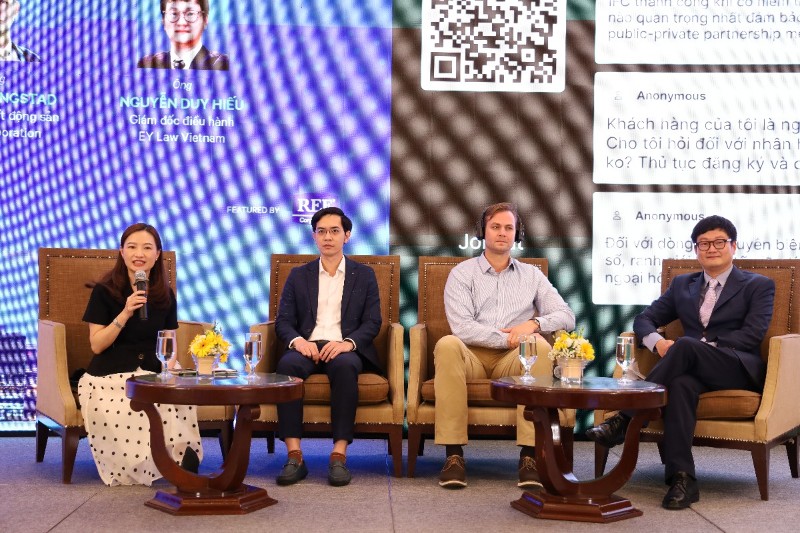
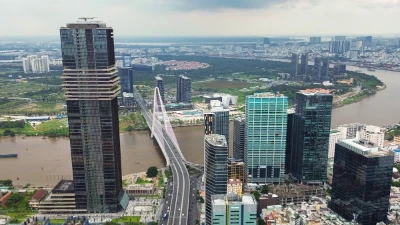
The Vietnam International Financial Center in Ho Chi Minh City (VIFC-HCMC) has attracted $20 billion from domestic and international investors and partners after six months of operation. At the same time, its foundational components such as aviation finance and maritime financial ecosystems are gradually taking shape.
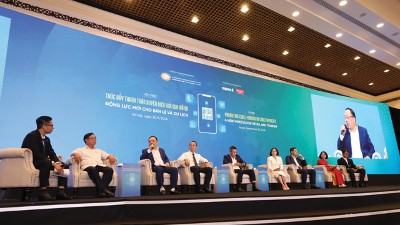
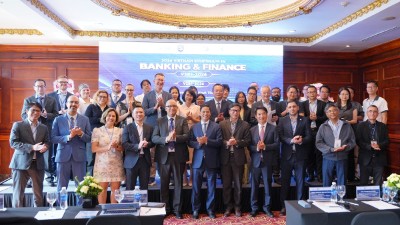
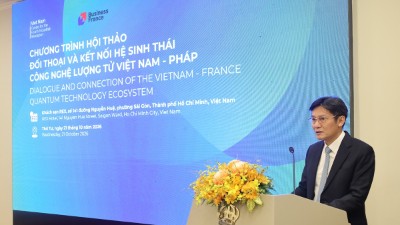
Assoc. Prof. Dr. Nguyen Huu Huan, Vice Chairman of the VIFC-HCMC Executive Board, shared this information during an investment promotion conference for the center held on August 11.
According to Dr. Huan, these figures are not merely "paper commitments" but reflect a shift among investors from exploring mechanisms to selecting specific sectors and products. This demonstrates the feasibility and attractiveness of the financial components that VIFC-HCMC is currently building.
Beyond capital attraction, the development of VIFC-HCMC has significantly improved HCM City’s standing in international rankings. According to the Global Financial Centres Index (GFCI) 39, released in March 2026, the southern city of Vietnam jumped 11 places to rank 84th out of 120 global financial centers, securing the third-highest position in Southeast Asia.
“VIFC-HCMC does not aim to become a second Singapore or Hong Kong (China). Instead, it must find its own unique position as a financial gateway for a high-growth economy with immense investment needs that is integrating deeply into global value chains. This defines a unique development strategy focused on Vietnam’s internal strengths and actual needs, particularly long-term capital for infrastructure, urban development, energy, green transition, and digital transformation,” Dr. Huan stated.
To realize this vision, VIFC-HCMC is focusing on several key areas beyond aviation and maritime finance. These include fund and asset management, international capital and bond markets, green finance, fintech and regulatory sandboxes, digital assets, and international banking and payment activities.
Transparent legal foundation to anchor investor trust
In the context of shifting global capital flows and the rapid rise of digital finance, fintech, and digital assets, competition among regional countries to attract international financial institutions has become increasingly fierce. To secure high-quality, long-term, and sustainable capital, HCM City needs more than just traditional advantages: it requires a transparent and stable legal framework, effective and reliable dispute resolution mechanisms, a competitive tax environment, and foreign currency convertibility. This is the mission of the VIFC—to serve as a bridge between global capital and the Vietnamese economy.
Speaking at the event, Managing Director of EY Law Vietnam, Mr. Nguyen Duy Hieu, argued that a regulatory sandbox would create space for innovation while maintaining close interaction with existing legal systems regarding investment, banking, foreign exchange, taxation, data, and anti-money laundering. This highlights the balance between innovation and risk management—a key factor in building trust among international investors.
In addition to legal frameworks and financial products, physical infrastructure is an indispensable element. Senior Director of CBRE Vietnam, Mr. Le Trong Hieu, predicted that between 2026 and 2028, approximately 76% of the nearly 165,230 sq.m of new Grade A office supply is expected to be concentrated in the VIFC-HCMC area. This supply is anticipated to meet the rising demands of international financial institutions and enterprises regarding technological infrastructure, operational standards, floor plate efficiency, ESG (Environmental, Social, and Governance) standards, and user experience.
Most experts agree that VIFC-HCMC is approaching a critical turning point. The central task for 2026 is to transition from a "legal framework" to a "real-world market," where institutions operate, capital is raised, products are traded, and cross-border transactions are executed. The next challenge is to transform these commitments into actual capital flows into the economy, generating specific projects and deals, thereby realizing the goal of becoming a regionally competitive financial center deeply integrated into the global financial network.


 Google translate