


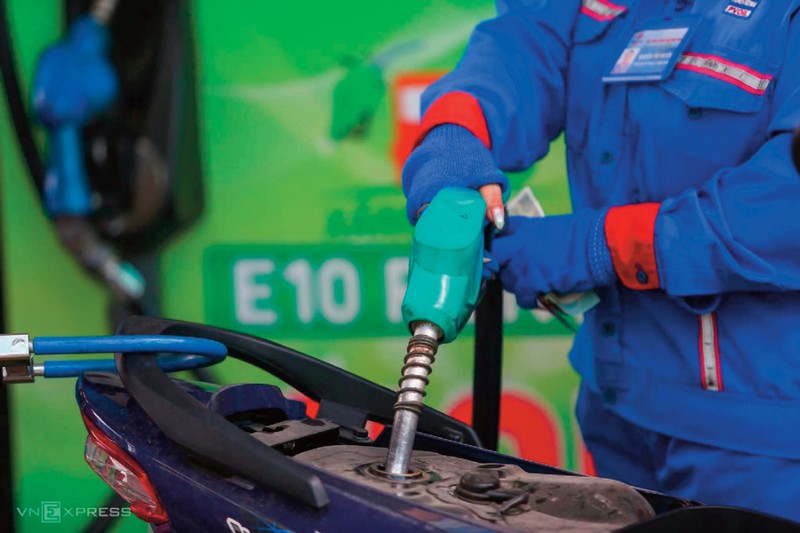
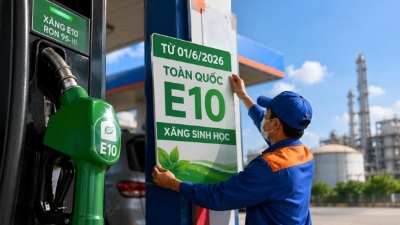
According to the Ministry of Industry and Trade, after implementing the E5 and E10 biofuel roadmap nationwide for 16 days, from June 1 to June 17, total biofuel consumption reached approximately 540 million liters, including 500 million liters of E10 and 40 million liters of E5. This was comparable to previous consumption levels of conventional gasoline, ensuring that transportation, logistics, and agricultural production activities continued without disruption to the economy. However, economists caution that these figures represent only the initial stage of the transition.
The nationwide shift to E5 and E10 biofuels marks a strategic step toward building a circular bio-economy. To overcome challenges related to feedstock supply and technology, however, Vietnam will need a coordinated approach encompassing policy reforms and green finance solutions to establish a self-reliant and sustainable energy ecosystem.
Opportunity for transformation
From a macro-economic perspective, the development of biofuels is about far more than replacing conventional gasoline. It is increasingly viewed as a critical solution for strengthening the economy’s resilience against global energy shocks. Vietnam remains dependent on imports for a portion of its crude oil and refined fuel needs. Expanding domestic biofuel production could directly reduce gasoline import demand by 8-10 per cent while lowering greenhouse gas emissions in line with blending ratios.
Highlighting the sector’s potential, Mr. Mai Tuan Dat, Deputy General Director of the PetroVietnam Refining and Petrochemical Corporation, pointed to lessons from one of the world’s leading biofuel producers. “Brazil is a major crude oil exporter, yet it has consistently developed biofuels as a national advantage, with blending ratios reaching E20 and E30,” he explained. “Based on Vietnam’s current fuel demand, annual ethanol (E100) consumption could reach around 1 million cu m, creating an industry worth nearly VND20 trillion ($769 million). If the value chain is optimized, more than VND10 trillion ($385 million), equivalent to roughly 70 per cent of feedstock costs, could flow directly to farmers, fishermen, and those working in agriculture, forestry, and aquaculture.”
Similarly, Associate Professor Nguyen Hong Quan, Director of the Institute for Circular Economy Development (ICED), said biofuels should be considered within the broader framework of a circular bio-economy rather than from a narrow or short-term perspective.
Vietnam’s abundant agricultural residues and by-products could strengthen national competitiveness, he said. Beyond cassava and sugarcane, biofuel feedstocks could include fish oil, organic waste, and other biomass resources, enabling more efficient use of both land- and water-based resources.
Persistent bottlenecks
Despite being described as a potential “gold mine,” Vietnam’s biofuel industry continues to face significant structural barriers, ranging from production capacity and technology to feedstock supply.
One of the most pressing challenges is limited domestic production capacity amid intensifying global competition. Vietnam built seven ethanol plants between 2010 and 2014 under an earlier biofuel development program. However, only four have resumed operations, with combined output of around 20,000-25,000 cu m per month; enough to meet only some 25 per cent of nationwide ethanol demand.
According to Mr. Dao Duy Anh, Deputy Director General of the Department of Innovation, Green Transition and Industrial Promotion at the Ministry of Industry and Trade (MoIT), even if six of the plants were fully restored, annual production capacity would reach only about 500,000 cu m; enough to supply just half of the ethanol required for E10 gasoline blending. The remainder would still need to be imported.
At the same time, domestic producers face intense price competition from major ethanol exporters such as the US, which produces ethanol from corn, and Brazil, which relies on sugarcane and benefits from substantial government support.
Feedstock supply presents another major challenge. Vietnam’s bioethanol industry currently depends almost entirely on dried cassava chips. Though annual production of cassava chips is estimated at around 5 million tons and only 1.5 million tons would theoretically be needed to produce 1 million cu m of ethanol, the sector faces significant constraints.
Mr. Nguyen Hung Manh, Chief of Office at the Vietnam Cassava Association, noted that cassava production is highly seasonal and incurs substantial storage costs. Ethanol producers must also compete with higher-margin cassava starch processors, animal feed manufacturers, and export markets for raw materials. Vietnam already imports cassava chips and fresh cassava roots from Cambodia and Laos.
Historical experience has shown that when global oil prices fall and domestic gasoline prices drop below VND20,000 per liter, ethanol plants quickly become unprofitable and struggle to compete for feedstock supplies.
Another challenge lies in the lack of coordinated financial support mechanisms. Ms. Luu Anh Nguyet from the National Institute for Economics and Finance at the Ministry of Finance acknowledged that while Vietnam is gradually developing frameworks for green credit, green bonds, and sustainable finance taxonomies, dedicated long-term financial mechanisms for the biofuel sector remain limited.
Biofuel projects typically feature large upfront investments, long payback periods, and significant exposure to global oil price volatility. Without attractive financing packages and risk-sharing mechanisms, private sector participation is likely to remain limited.
Five breakthrough solutions
To move beyond the cycle of intermittent growth and stagnation, experts argue that Vietnam needs a comprehensive strategy that shifts from administrative mandates toward market-based incentives.
The first priority is establishing a stable long-term roadmap for biofuel blending while diversifying feedstock sources. A predictable policy framework would provide investors with greater confidence to commit capital. Vietnam should also accelerate the development of Sustainable Aviation Fuel (SAF) policies to align with global decarbonization trends. At the same time, the country must move beyond its dependence on cassava and expand into advanced biomass feedstocks that do not compete with food production.
The second priority is investing in technologies that convert agricultural waste into energy. Public investment should support innovation and technology transfer, including next-generation ethanol plants capable of processing rice straw, rice husks, and organic waste. Such projects would not only reduce production costs but also address the environmental problems associated with open-field burning of agricultural residues.
Third, policymakers should develop dedicated green credit programs and value-chain financing mechanisms. Under such models, banks would assess projects based on the cash flows and contractual relationships across the entire value chain, from the cultivation and collection of biomass to production, blending, and distribution, rather than relying solely on collateral. Specialized blended-finance institutions could also provide preferential green financing to lower initial capital barriers.
Fourth, Vietnam needs to standardize lifecycle emissions data and integrate biofuels into carbon markets. Developing a national database on biomass resources and lifecycle assessment methodologies would allow domestic biofuel products to meet green certification standards, improving access to international climate finance, facilitating green bond issuance, and enabling participation in Vietnam’s planned carbon market, which is expected to become fully operational after 2028.
Finally, tax and fee policies should be used more strategically to create a meaningful price advantage for biofuels. While Vietnam has already introduced incentives such as preferential environmental protection taxes and a zero Special Consumption Tax rate for biofuels during periods of energy market volatility, experts believe a stable long-term tax framework is needed to ensure a sufficient price gap between biofuels and conventional gasoline. Such a differential would provide consumers with a natural economic incentive to choose greener fuels without relying on administrative measures.





 Google translate