


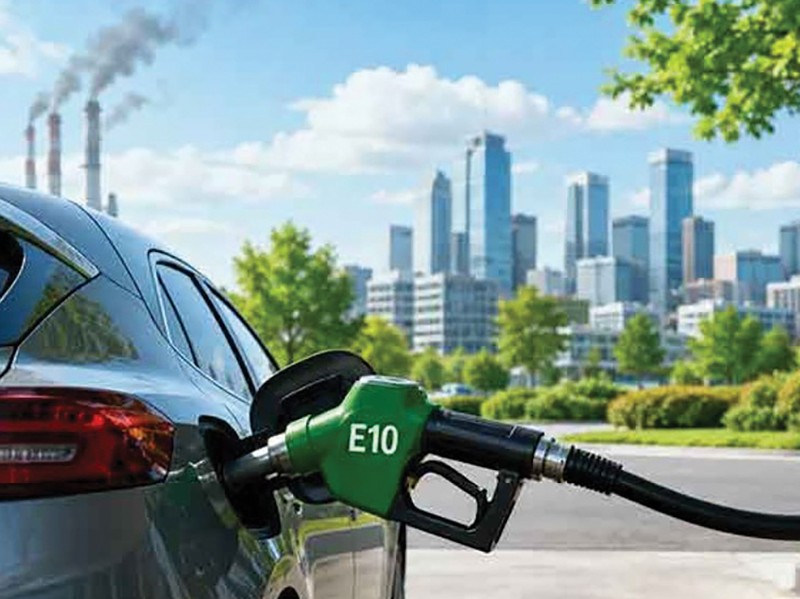
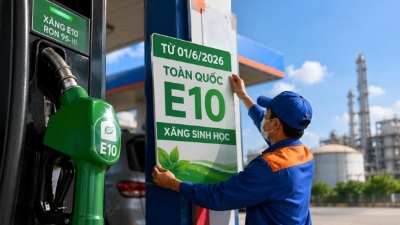
Vietnam’s transition to E10 blended gasoline is proving to be more than a fuel policy. It is rapidly becoming a market-wide test of consumer confidence, brand credibility, and the future direction of the country’s automotive industry.
According to a June 2026 social listening analysis from Kompa, nearly 300,000 online discussions were generated within just four days following the introduction of E10 blended gasoline, illustrating the scale of public attention surrounding the policy. More importantly, the conversations quickly evolved beyond ethanol-blended fuel itself into broader questions about vehicle ownership, operating costs, and the growing appeal of electric mobility.
For manufacturers, distributors, and policymakers, the findings suggest that the transition represents not simply an environmental initiative but a pivotal commercial moment capable of reshaping consumer preferences across both motorcycles and passenger vehicles.
Consumer confidence issue
Between June 1 and June 4, the report recorded 299,617 online mentions related to E10 blended gasoline, with discussions spanning eight major topics, including government policy, fuel prices, engine performance, environmental impacts, and electric vehicles. Rather than focusing exclusively on the technical characteristics of ethanol-blended fuel, consumers increasingly framed the discussion around the practical implications of vehicle ownership. Questions about maintenance costs, compatibility with existing motorcycles, long-term operating expenses, and whether switching to electric vehicles might ultimately be the better financial decision all emerged as dominant themes. Kompa concluded that the public conversation has already shifted “from the story of fuel to the story of vehicle ownership,” reflecting a broader reassessment of mobility choices among Vietnamese consumers.
That shift carries significant implications for the industry. Fuel retailers, motorcycle manufacturers, automakers, and electric vehicle producers are no longer competing only on product specifications. They are increasingly competing on trust.
The report noted that conversation volumes remained well above normal levels even after the initial spike, indicating sustained public interest rather than a short-lived viral event. For businesses, this means online communities are likely to remain the primary battleground for customer education and reputation management throughout the transition period.
Despite widespread discussion, public sentiment has not turned decisively against E10. Kompa’s analysis suggests the market remains broadly receptive to the new fuel, though technical uncertainty continues to dominate consumer concerns.
Approximately 30 per cent of discussions expressed support for the policy, 60 per cent remained neutral, and 10 per cent reflected negative sentiment. The largest single audience consists of consumers who are adopting a “wait-and-see” approach. Rather than rejecting E10 outright, many users indicated they intend to observe real-world experiences before changing their fueling habits.
Technical compatibility remains the biggest source of hesitation. Older motorcycles equipped with carburetors generated the highest level of concern, with users questioning whether ethanol could accelerate deterioration of rubber components, fuel systems, or storage tanks.
Cost also remains a major consideration. Many users expressed concern that although E10 may carry a lower price per liter, reduced fuel efficiency could offset any savings through higher overall consumption. These discussions suggest that transparent technical guidance may be more valuable than promotional campaigns in influencing public acceptance.
Electric vehicles gain momentum
One of the report’s most notable findings is the extent to which the E10 rollout has accelerated conversations about electric vehicles. Electric motorcycles attracted nearly twice as many discussions as gasoline-powered motorcycles within conversations explicitly comparing transportation choices. Consumers increasingly viewed electric mobility not simply as an environmentally-friendly alternative but as a potential solution to uncertainty surrounding future fuel standards.
Within online discussions, the “switching to electric vehicles” segment represented only about 10 per cent of total conversation but recorded the strongest positive sentiment and the fastest growth, suggesting this group includes consumers already close to making purchasing decisions.
Battery performance, charging convenience, driving range, and purchase price emerged as the leading questions surrounding electric vehicles - concerns that now appear nearly as prominent as technical questions surrounding E10 itself.
The report also noted that discussions about policy support for electric vehicles exceeded those for gasoline-powered vehicles by roughly 13 times, reflecting growing public expectations for incentives and clearer government guidance.
Among motorcycle brands, Honda emerged as the clear focal point of the E10 discussion. The company accounted for approximately 95 per cent of all motorcycle-related conversations associated with E10, totaling 1,734 mentions, while Yamaha and SYM together represented just 99 mentions.
According to the report, Honda’s dominant market position has effectively made it the representative brand for consumer questions surrounding E10 compatibility. That creates both advantages and risks. Honda benefits from extensive brand trust, a broad product lineup, and a nationwide dealer network capable of providing customer support.
At the same time, older Honda models, including Wave and Dream motorcycles equipped with carburetors, feature prominently in discussions expressing concern about compatibility with ethanol-blended gasoline.
Kompa suggested that manufacturers could reduce uncertainty by publishing model-specific compatibility guidance and expanding customer inspection programs during the early implementation period.
Yamaha, meanwhile, appears to possess a technical advantage through the wider adoption of electronic fuel injection technology but has maintained a relatively limited presence in the broader conversation.
SYM faces a different challenge altogether. Though serving a large value-oriented customer base, the brand generated relatively little discussion, suggesting limited visibility during an important period of consumer decision-making.
While Honda dominates the gasoline discussion, VinFast clearly leads the conversation around electric mobility. Within electric motorcycle discussions, it accounted for approximately 70 per cent of total mentions, recording 1,104 references compared with 303 for Yadea, while Pega and DatBike occupied much smaller shares.
The report suggested consumers increasingly associate VinFast with the transition away from gasoline-powered transportation, making the company the primary beneficiary of heightened interest generated by the E10 rollout.
Discussions surrounding electric motorcycles focused primarily on battery charging, battery safety, initial purchase prices, and long-term operating costs. These findings indicate that although consumers appear increasingly willing to consider electric vehicles, practical ownership considerations continue to shape purchasing decisions. For manufacturers, addressing these issues through infrastructure investment, transparent communication, and after-sales support may prove just as important as launching new vehicle models.
Beyond fuel
Perhaps the report’s most important conclusion is that Vietnam’s E10 transition is changing the basis of competition across the transportation sector. Rather than competing solely on engine performance or pricing, brands are increasingly being evaluated on their ability to guide consumers through technological change.
For gasoline vehicle manufacturers, the immediate priority is reducing uncertainty through credible technical information. For electric vehicle companies, the challenge is converting heightened interest into actual purchases by addressing concerns over charging, battery life, and total ownership costs.
Meanwhile, fuel suppliers and policymakers face the equally-important task of ensuring that public understanding keeps pace with regulatory change.
The first few days following the introduction of E10 demonstrate that policy shifts can rapidly reshape market conversations. Whether those conversations ultimately accelerate Vietnam’s broader transition toward electric mobility may depend less on the fuel itself than on how effectively businesses respond to consumers’ questions in the months ahead.
Five Strategic Insights from the E10 Discussion
1.E10 blended gasoline has become the center of consumer discussions
The rollout generated 299,617 mentions in just four days, with conversations primarily focused on E10’s impact on vehicles and the cost of ownership.
2.Concerns about motorcycles using the new fuel dominate online conversations
Consumers are primarily focused on the compatibility of E10 blended gasoline with popular motorcycle models, particularly older vehicles.
3.Electric vehicles are emerging as the alternative
Consumers are increasingly considering electric vehicles when comparing long-term costs and convenience with gasoline-powered vehicles.
4.Consumers are just as concerned about electric vehicle technology as they are about E10
Concerns over batteries, charging infrastructure, and driving range are now comparable to concerns surrounding E10 blended gasoline.
5.Expectations for electric vehicle support far exceed those for gasoline vehicles
Discussions about government support for electric vehicles are 13-times higher than those for gasoline vehicles, reflecting growing demand for incentives, guidance, and consumer support.
(Source: Kompa Strategic Intelligence, Vietnam’s E10 Fuel Transition & Vehicle Market, June 2026 (Social Listening Analysis, June 1-4, 2026)

 Google translate