


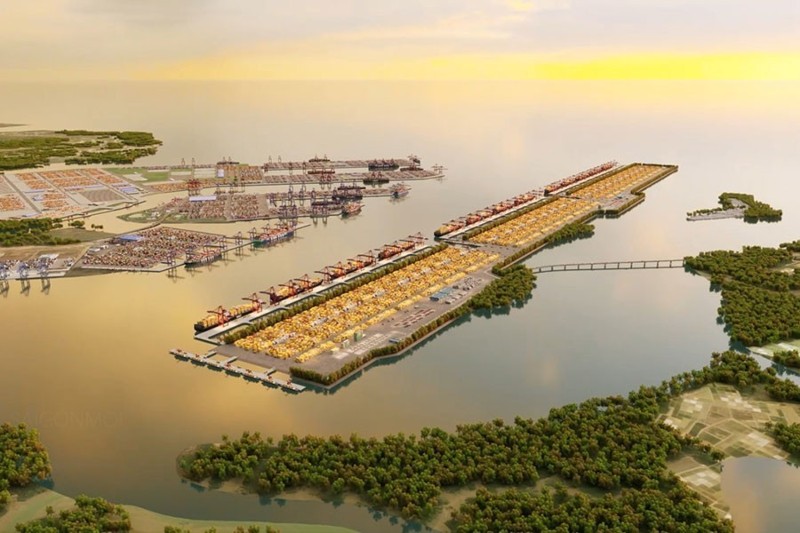
Ho Chi Minh City aims to become a modern, green and smart marine economic center with international competitiveness by 2030.
The goal is outlined in the implementation plan, recently approved by the city government, for Resolution No. 20-NQ/TW, dated July 28, 2026, issued by the 14th Party Central Committee on building and developing Vietnam into a strong maritime nation.
Under this strategy, the city's marine economy will extend beyond leveraging its seaport advantages. Instead, it seeks to develop a multi-sector ecosystem integrating maritime services, logistics, trade, finance, marine tourism, science and technology, and innovation.
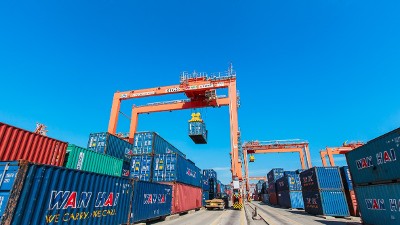
One of the key priorities is the development of the Can Gio International Transshipment Port in conjunction with a free trade zone, linked to the Cai Mep-Thi Vai port complex and Con Dao island. The project is envisioned as a core driver of cargo transshipment, logistics services and international trade.
Alongside port development, the city plans to invest in transport infrastructure, logistics networks and maritime support services to strengthen regional connectivity.
The plan also calls for the expansion of competitive marine industries, including shipping, maritime transport, logistics, port services, marine and coastal tourism, high-tech aquaculture, offshore energy, and related industrial and service sectors.
In tourism, the city aims to establish a Can Gio-Vung Tau-Con Dao tourism corridor during the 2027-2030 period, focusing on marine and island tourism products and high-value-added services. Revenue from marine and coastal tourism is targeted to grow by an average of 14% annually.
In the fisheries sector, HCM City plans to promote sustainable, high-tech aquaculture. Marine aquaculture output is expected to increase by an average of 8% per year, accounting for 15% of total fisheries production value.
Another notable component of the plan is the promotion of science, technology, innovation and digital transformation across marine industries. The city intends to apply artificial intelligence (AI), big data and the Internet of Things (IoT) in port management, logistics operations, forecasting, and marine resource and environmental monitoring.
Priority areas for research and application also include marine biotechnology, aquaculture technology, disaster forecasting technology, and solutions to enhance the efficient exploitation and utilization of marine resources.
According to the plan, from 2026 the city will begin developing a shared marine and island database, with completion targeted for 2028. By 2030, the city aims to digitize and share 100% of data related to marine resources, the environment, infrastructure and marine economic activities, while also digitizing 100% of marine heritage assets.
The city is also promoting the development of new energy sectors such as offshore wind power, green hydrogen and green ammonia, in line with its energy transition goals and the development of a sustainable blue economy. Desalination technology, marine biotechnology and marine medicine have likewise been identified as promising fields for future research and application.

 Google translate