




The draft revised Land Law is not just about improving land administration. Its broader goal is to help every square meter of land create greater value for people and the economy. The success of the draft should be measured not by the number of provisions revised but by the value it creates from existing resources.
For years, land policy has centered on planning, pricing, land acquisition, administrative procedures, and land use rights certificates. While the draft addresses these issues, the more important question is whether such reforms will enable land to contribute more to national development. That is the true measure of a modern land policy.
Success should not be judged by the number of certificates issued, regulations enacted, or procedures simplified. Those reflect better administration, but not necessarily stronger development. The real test is whether the Law helps land generate greater economic value.
This requires changing not only the Law but also the way we think about land. Modern governance is measured by how effectively it enables legally-recognized assets to create value with lower costs, less time, and greater legal certainty. The most competitive economies are those that turn resources into capital, investment, productivity, and ultimately better living standards. Land is no exception.
The draft revision should therefore be seen as more than a land management reform. Its greater value lies in creating an institutional framework where legally-recognized assets can be used more efficiently, generate greater value, and contribute more to national development. In doing so, land becomes not just a managed resource, but a driver of growth.
Ultimately, a nation’s strength lies not in the amount of land it owns, but in its ability to turn assets into value. When every square meter of land can generate investment, jobs, credit, and opportunity, the result is not only stronger economic growth but also greater public confidence in institutions that protect and unlock the nation’s resources.
* * *

Revisions to the Law on Housing and the Law on Real Estate Business are essential to remove bottlenecks in the market while strengthening the legal framework and supporting social welfare.
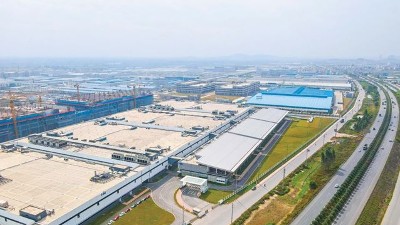
Becamex has focused on industrial real estate since the mid-1990s, developing its Industrial Park-Urban Area-Service model with foreign partners. The integrated model combines industrial, urban, and service development, helping communities affected by industrialization while supporting regional economic growth.
Industrial parks are now a key driver of local development. However, despite the success of the Industrial Park-Urban Area-Service model, it still lacks a dedicated legal framework. Though the Ministry of Construction is drafting policy groups for both laws, none specifically cover this model.
The revised Law on Housing should also clearly distinguish between different housing categories. For affordable commercial housing, it should specify incentives for eligible developers. For accommodation properties, including serviced apartments, officetel units, and shophouses, it should clearly differentiate commercial housing from rental housing for industrial park workers. Worker accommodation should also be available to workers’ families rather than being limited to individual employees.
Regarding Article 5, Becamex proposes that housing development plans should not require revision whenever provincial or urban plans change, provided the intended housing purpose remains the same.
The group also recommends amending Article 10, arguing that the draft’s provisions on simplified contractor appointment should align with existing bidding regulations, which do not apply to State-owned enterprises with less than 100 per cent State ownership.
Finally, the revised Law on Housing should introduce clearer mechanisms and incentives to encourage private sector investment in rental housing.
* * *

Our Association notes that the Law on Housing 2023 recognizes permanent home ownership linked to long-term residential land use rights, while also introducing the concept of fixed-term home ownership, under which buyers own a property for an agreed period before returning it to the seller.
To align with this framework, we propose amending Clause 2, Article 172 of the Land Law 2024 to specify that the land allocation or lease term should be calculated from the date the competent authority approves a project transfer, partial project transfer, land use extension, change in land use form, or decision resolving a land law violation.
Under the current law, the land use term is calculated only from the original land allocation or lease decision, leaving project transferees with only the remaining land use period and reducing the attractiveness of long-term investment.
For example, if a 50-year commercial or tourism project is transferred after 30 years, the new investor is left with only 20 years of land use rights, limiting its ability to expand operations. The same issue affects long-delayed projects expected to be resolved under Resolution No. 29/2026/QH16, as well as condotel projects whose land use terms remain significantly shortened despite subsequent legal resolutions.
We also recommend amending Clause 3, Article 172 to allow land users to extend or adjust land use terms more flexibly based on investment and business needs. The current requirement to apply for an extension at least six months before expiry is too rigid and does not accommodate changing business circumstances, such as partnerships or project expansion.
In addition, many distressed real estate projects secured by bad debts and auctioned through the Vietnam Asset Management Company (VAMC) have limited remaining land use terms, significantly reducing auction values. This not only lowers State budget revenue but also discourages investors from acquiring and reviving these projects.
* * *

Vietnam’s land-related legal framework has undergone sweeping changes in just a short period of time. The Land Law 2024, the Law on Housing 2023, the Law on Real Estate Business 2023, the Law on Bidding 2023, and the Law on Investment 2025, as well as related decrees, all took effect within a relatively short timeframe. At the same time, administrative restructuring, including provincial mergers and the removal of the district level, has created unprecedented transitional challenges.
While these reforms are necessary, their simultaneous implementation has exposed inconsistencies across related laws. Many businesses say implementing decrees and circulars have been delayed, remain incomplete, or lack sufficient clarity, making it difficult to prepare, appraise, and approve projects.
The business community has put forward four key recommendations. First, the Land Law should allow the State to allocate or lease land directly to successful investor consortiums and recognize their joint responsibility for financial obligations and project implementation. It should also confirm that project companies established by investors are eligible to receive land regardless of the investor selection method, ensuring consistency across the Land Law, the Law on Investment, and the Law on Bidding while reducing compliance costs.
Second, VCCI proposes removing, or at least limiting, the additional 3.6 per cent charge when delays in land valuation are caused by State authorities. Secondary investors should not bear this cost. It also recommends adjustment coefficients for large mixed-use projects and allowing provisional land payments based on independent valuations to prevent project delays.
Third, the Land Law should clarify that land transfers and mortgages take legal effect upon registration in the land registry. It should also allow assets eligible for enforcement under court judgments to be seized and auctioned without first extending land use terms. Additional guidance is needed on determining household land users, allowing mortgages over annually leased land use rights, and expanding foreign investors’ rights in bad debt resolution.
Fourth, conflicting provisions across the Land Law, the Law on Housing, and the Law on Real Estate Business should be harmonized, particularly those governing land registration and certificate issuance. Nationwide guidance is also needed on airport land management transfers, planning coordination, and the digitalization of land data.
Though these obstacles appear across different areas, they stem from two root causes: inconsistencies between related laws and delays in implementation. Every stalled project locks up land, investment capital, and State revenue.
The business community welcomes the National Assembly’s and government’s commitment to amending the Land Law to unlock development resources. If the reforms focus on practical implementation while reducing compliance costs and legal risks, Vietnam’s land legislation can become a powerful driver of investment, strengthen investor confidence, and support the country’s ambition of becoming a high-income developed economy.
* * *

A persistent supply shortage was seen in Vietnam’s real estate market between 2020 and 2024, particularly in the mid-priced housing segment. The problem stemmed less from weak demand than from lengthy approval procedures and project delays that constrained new supply.
Since 2025, however, the outlook has improved, as institutional bottlenecks have gradually been removed, allowing stalled projects to resume and new projects to be approved. Housing supply is expected to rise sharply in 2027-2028. While this is a positive shift, demand has yet to recover at the same pace, raising the prospect of stronger competition if supply outpaces market absorption.
Normally, higher supply would ease prices. Instead, construction costs have risen sharply, with material and labor costs up by around 20 per cent, leaving developers little room to cut prices. If this trend persists, unsold inventory could increase, placing greater financial pressure on developers and the banking system.
Borrowing costs remain another challenge. Commercial lending rates are around 11.5-12 per cent per annum, while most developers continue to rely heavily on bank financing. High interest rates also make housing less affordable for buyers.
Given the tight credit conditions, we propose that the State Bank of Vietnam require commercial banks to lend only to developers with strong capital adequacy, while prioritizing financing for ongoing projects to prevent them from being left unfinished. For social and affordable housing, the government should provide interest rate subsidies to participating banks.
To ease project delays caused by financial constraints, we also recommend revising Article 41 of the Law on Real Estate Business 2023 to make full and partial project transfers more flexible, particularly for phased developments.
We further believe Vietnam’s land valuation mechanism should be reviewed. Though the Land Law 2024 aims to balance the interests of the State, land users, and investors, current valuation methods do not adequately reflect the interests of businesses.
While higher land prices may facilitate compensation and site clearance, they also increase development costs and property prices. In the long run, the gains from higher budget revenue or compensation could be outweighed by weaker housing affordability and slower economic development.
* * *

With more than two-thirds of the world’s population expected to live in cities by 2050, urban areas face growing pressure to provide sufficient and sustainable housing. Savills’ Impact report estimates that 1.6 billion people worldwide still lack adequate housing.
An International Monetary Fund (IMF) study of 200 global cities found that 90 per cent are now classified as unaffordable, while UN-Habitat estimates that around 96,000 affordable homes must be built every day through 2030 to narrow the gap.
Vietnam reflects this global trend. Affordable housing is becoming increasingly scarce, with average primary prices in Hanoi and Ho Chi Minh City exceeding VND100 million ($3,846) per sq m, while homes priced below VND50 million ($1,923) per sq m are rare. Most new supply is concentrated in the mid and high-end segments, prompting more buyers to look to suburban areas and neighboring provinces with better transport links.
Globally, housing is increasingly being viewed as infrastructure rather than simply a real estate product. Integrating housing into long-term urban planning, infrastructure investment, and financing strategies not only supports sustainable development but also attracts long-term institutional capital that is better aligned with the sector’s funding needs.
Singapore has successfully adopted this model, with more than 80 per cent of its population living in quality public housing. By contrast, cities such as London and New York continue to struggle with housing supply because of high costs, regulatory constraints, and financing challenges.
Vietnam now has an opportunity to take a more long-term approach as the government continues to remove market bottlenecks. Legal reforms and major infrastructure investment are expected to improve housing supply in the years to come.
Since July 2026, the market has operated under new real estate laws and updated land price frameworks. Though these changes may increase costs in the short term, they should create a more transparent and consistent system for land valuation and project approvals - two of the main constraints on housing supply.
At the same time, major public investment in transport infrastructure, including Ho Chi Minh City’s Ring Roads 3 and 4 and Metro Line 2, and Hanoi’s five planned metro lines, is opening new opportunities for housing development. Combined with Transit-Oriented Development (TOD), these projects could create more sustainable residential growth.
Over the long term, integrating housing with infrastructure planning will help expand supply more sustainably, improve affordability, promote more efficient land use, and create a more resilient urban ecosystem capable of meeting future housing demand.
* * *

Vietnam has one of the world’s lowest levels of agricultural land per capita, yet its farmers and businesses have used this limited resource efficiently, making the country the world’s 15th-largest agricultural exporter and one of the leading exporters in the region. However, despite agriculture’s strong performance, land has yet to be fully recognized as a key driver of growth.
While there is little room to expand farmland and crop yields are already relatively high, land use efficiency and land quality still have significant potential for improvement. Just as land reform helped drive Vietnam’s economic transformation four decades ago, more effective land policies today could lay the foundation for the country’s development over the next 20 years.
Developing large-scale agricultural production zones requires more than farmland. It also depends on an integrated ecosystem of research and training institutions, quality control and technology transfer, processing industries, logistics, storage, transport infrastructure, and supporting residential and commercial land.
Vietnam’s agriculture is evolving from agricultural production to an agricultural economy, shifting from volume-based growth driven by small farmers to higher-value, more sustainable production linked with food processing, logistics, trade, tourism, and rural industries. At the same time, the country is moving beyond exporting agricultural products to exporting agricultural expertise, technology, equipment, management, and integrated production systems.
Against this backdrop, the government’s five-year land use planning should allocate sufficient land for establishing regional agricultural hubs serving major ecological zones, such as Can Tho for the Mekong Delta, Nha Trang and Da Nang for the central coastal region, and Buon Ma Thuot for the central highlands. These hubs should include land for research, training, logistics, processing industries, and high-tech agriculture.
Localities should also integrate large specialized farming areas with industrial, service, and logistics clusters, while making better use of underutilized land held by former State farms, armed forces, and inefficient non-agricultural projects to attract leading agribusiness investors.
At the same time, any conversion of agricultural land to other uses should be carefully managed to protect this valuable resource, safeguard long-term food security, and preserve decades of investment in irrigation and other agricultural infrastructure.







 Google translate