



With an overwhelming majority (94.60% of delegates present in favor), the 16th National Assembly (NA) on August 23 officially passed the Amended Petroleum Law.
Set to take effect on March 1, 2027, the Amended Petroleum Law consists of 12 chapters and 62 articles—an increase of one chapter and a decrease of seven articles compared to the previous version.
Overall, the Amended Petroleum Law focuses on five major policy groups: simplifying procedures and increasing decentralization; refining regulations on petroleum contracts and activities; investment incentive policies; developing the value chain, high-tech technical services, and offshore energy; and establishing a legal framework for emission reduction and Carbon Capture and Storage (CCS).
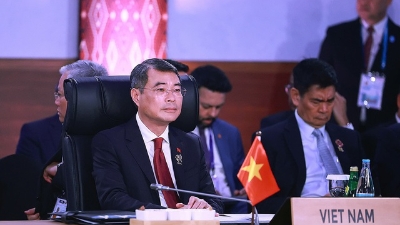
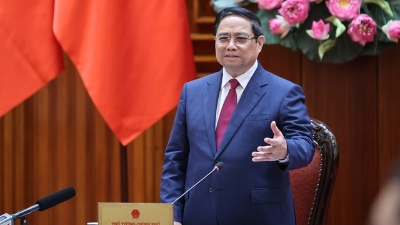
Prior to the vote, Minister of Industry and Trade Le Manh Hung, authorized by the Prime Minister, presented the Report of the Government on the explanation, reception, and revision of the Draft Law.
Minister Hung stated that based on the dedicated, profound, and responsible feedback from NA delegates and the verification reports from NA Committees, the Government carefully researched, incorporated, and fully explained the revisions. On August 14, the Government submitted Proposal No. 546 and Report No. 547 to the NA Standing Committee regarding the reception and explanation of delegates' opinions and verification reports across seven main content groups:
First, reviewing the consistency, constitutionality, legality, and compatibility with international treaties; ensuring national defense, security, and implementation resources; and reviewing administrative procedures, decentralization, and requirements for science, technology, innovation, digital transformation, gender equality, and ethnic policies.
Second, activities related to the capture, processing, transport, injection, and storage of CO2; the application of high-tech techniques and services; and the development of offshore energy projects linked to petroleum activities.
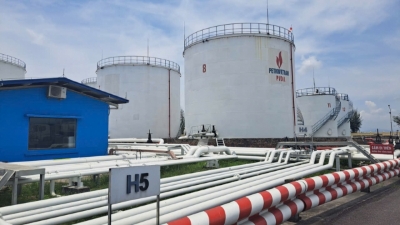
Third, regulations to enhance decentralization and empowerment for state management agencies in the petroleum sector and granting specific powers to the Vietnam National Energy Industry Group (Petrovietnam).
Fourth, incentives in petroleum activities and resource extraction policies for marginal, clustered, or exhausted oil and gas fields/blocks.
Fifth, issues related to petroleum contracts.
Sixth, the formulation, appraisal, and approval of master development plans (MDP), early production plans, and field development plans (FDP).
Seventh, handling the costs of Petrovietnam and transitional provisions.
According to the Minister, there were three areas of particular interest to the delegates: the decentralization, empowerment, and role of Petrovietnam; investment incentive policies in petroleum activities; and Carbon Capture and Storage (CCS), the development of offshore energy projects, and high-tech petroleum technical services associated with petroleum activities.




 Google translate