


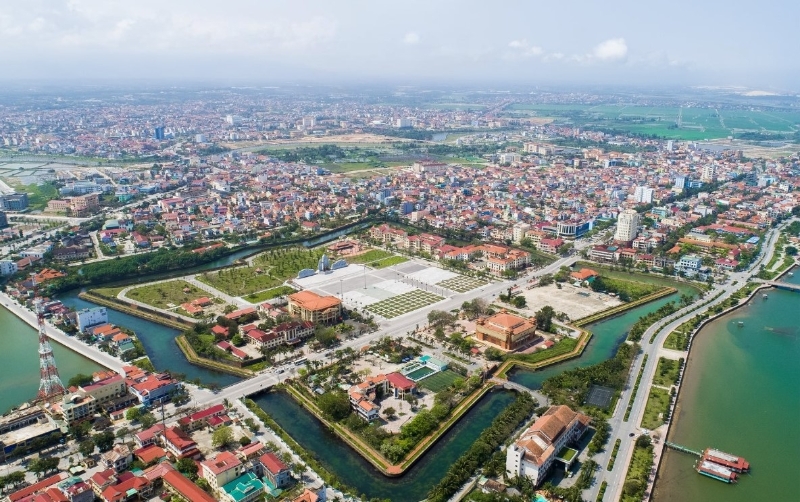
The 8th Quang Tri Provincial People's Council (2021-2026 term) recently passed a Resolution on adjusting the Provincial Master Plan for the 2021-2030 period, with a vision toward 2050.
Under the approved plan, by 2030, Quang Tri strives for rapid and sustainable development, building a dynamic economy alongside a safe, civilized, and happy living environment. The province aims to gradually assert its role as a key growth pole on the East-West Economic Corridor and within the Central region, contributing significantly to national development.
By 2050, the province envisions becoming a dynamic and sustainable economy primarily driven by industry and services. It aims to emerge as a new growth pole for the North Central region and one of the nation’s specialized hubs for energy, logistics, and tourism.
A key highlight of the plan is the orientation of spatial development toward a multi-centric model with close regional connectivity. Specifically, the province identifies three main economic corridors:
First, the North-South Economic Corridor is linked to the North-South Expressway, National Highway 1A, coastal roads, and the national railway, this will serve as the central driving axis.
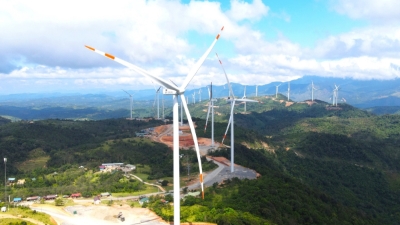
Second, the Auxiliary Western North-South Economic Corridor is linked to the Ho Chi Minh Highway (West branch), focusing on the forest economy and renewable energy while ensuring national defense and security.
Third, the Trans-Asian East-West Economic Corridor features the Dong Ha – Lao Bao, Cha Lo, and La Lay – My Thuy axes. This corridor is designed to boost logistics, cargo transit, and international integration.
In tandem with these corridors, seven growth poles have been identified: Hon La – Ba Don – Quang Trach; Dong Hoi – Hoan Lao; Dong Ha – Quang Tri – Cam Lo; the Southeast Economic Zone; the Cha Lo International Border Gate Economic Zone; the Lao Bao International Border Gate Economic Zone; and the La Lay International Border Gate.
These growth poles will serve as the nuclei for economic, urban, and commercial development. They are expected to ensure a balanced distribution of development drivers across the North-South, coastal-mountainous, and urban-rural regions.



 Google translate