


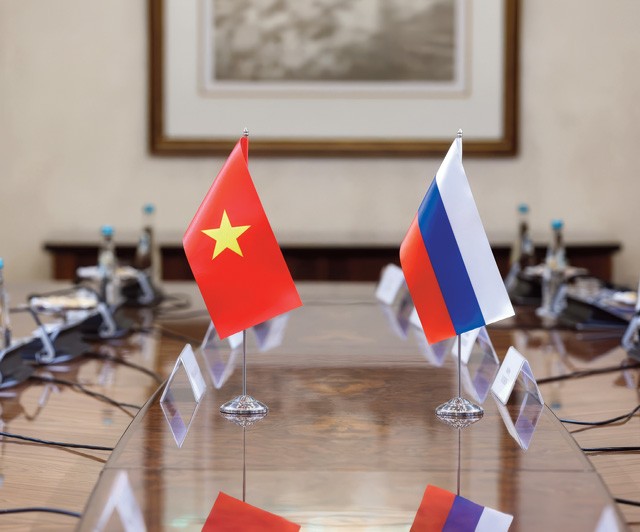
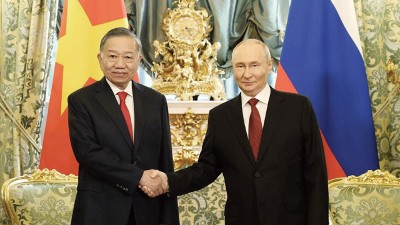
When Party General Secretary and State President To Lam met Russian President Vladimir Putin and Prime Minister Mikhail Mishustin in Moscow in early September, the conversations moved beyond the familiar language of traditional friendship. Both sides stressed the need for more substantive economic results, greater two-way investment, and new production and supply chains. The top leaders of the two countries engaged in extensive discussions on strategic issues, charting a long-term vision for bilateral ties.
The two sides agreed to develop the Vietnam - Russia Comprehensive Strategic Partnership (CSP) in the new era with high political and strategic trust; balanced and sustainable economic, trade, and investment foundations; defense and security cooperation as a strategic pillar; energy and oil and gas as a strategic breakthrough; science and technology, innovation, and human resources as primary drivers; and culture and people-to-people exchanges as a connecting bridge between the two nations.
Bilateral trade regains momentum
According to research on Vietnam - Russia trade in the 2025-2026 period, released recently by the St. Petersburg-based Colaboratoria Centre in coordination with the Russia-Viet Nam Cooperation Development Promotion Fund “Tradition and Friendship,” bilateral trade turnover reached approximately $4.77 billion in 2025, up around 4 per cent from the previous year.
Trade between the two countries has seen positive developments, as bilateral trade turnover reached approximately $4.1 billion in the first nine months of 2026, up 12.9 per cent year-on-year. The two countries aim to raise bilateral trade to $15 billion by 2030.
Total export turnover from Vietnam to Russia for 2026 as a whole is estimated to reach $2.2-$2.3 billion. The commodity pattern remains complementary, as Vietnam supplies coffee, textiles and garments, seafood, footwear, cashew nuts, fruit and vegetables, and selected industrial products such as steel. In turn, Russia exports coal, fertilizers, petroleum products, metals, chemicals, and other industrial inputs that support Vietnamese manufacturing and agriculture.
The Vietnam - Eurasian Economic Union (EAEU) Free Trade Agreement (Vietnam-EAEU FTA) took effect in 2016 and has offered a stable preferential framework that companies on both sides have increasingly utilized, even as payment and logistics channels faced external pressures. According to their strengthened CSP, Vietnam and Russia will continue to leverage the advantages of the Vietnam-EAEU FTA; remove barriers to bilateral trade; support exporters and investors; and strengthen effective coordination in banking and finance, industrial manufacturing, agriculture, and information and communications technology (ICT), including AI.
The two sides continue to pay particular attention to trade and economic cooperation and coordinate closely and effectively within the framework of the Intergovernmental Commission on Trade-Economic and Scientific-Technological Cooperation, its subcommittees, and working groups to implement the Master Plan for Vietnam - Russia Cooperation Development to 2030 and other joint agreements to increase bilateral trade turnover, while promoting cooperation in science and technology, AI, the digital economy, green energy, the maritime economy, and climate change adaptation.
A comprehensive report released in St. Petersburg in October, prepared with input from the Vietnam - Russia Knowledge Network, the ANO Coordination Laboratory, and the St. Petersburg Committee for External Relations, described the relationship as standing at a structural turning point. The Vietnam-EAEU FTA, the report noted, has provided important impetus for bilateral trade growth.
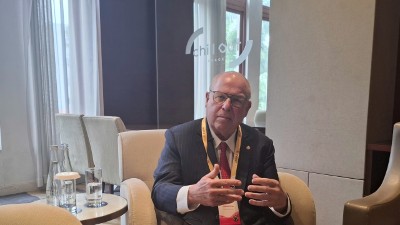
According to Ms. Anna Sitnyk, Managing Director and Co-founder of the ANO Coordination Laboratory, the two countries aim to raise bilateral trade to $15 billion by 2030, while turnover currently stands at around $5 billion. Achieving the target would therefore require annual trade growth of approximately 25 per cent; an ambitious pace that depends on removing remaining technical barriers, harmonizing standards, encouraging product localization, and integrating more effectively in distribution channels.
As economic and trade cooperation between Vietnam and Russia continues to create new opportunities, businesses involved in the import and distribution of goods play a vital role in connecting supply chains, expanding markets, and bringing products from both nations closer to consumers.
According to Ms. Tran Thanh Huyen, Deputy CEO of the Nguyen Hong Co., Ltd, like many other enterprises in the import sector, the company has encountered several challenges while bringing goods from Russia to Vietnam, most notably regarding logistics and exchange rates. “In my view, the Russian market, encompassing its products, its people, and its work culture, shares many striking similarities with Vietnam’s own history, culture, and consumer preferences,” she said. “Consequently, there remains significant room for the growth of Russian products in Vietnam, with numerous high-potential categories that Vietnamese consumers are likely to embrace.”
Mr. Pham Van Trinh, Chairman of the Tin Thanh Dat Joint Stock Company, which specializes in coffee exports, also believes Russia is a promising market for Vietnamese agricultural and food products.
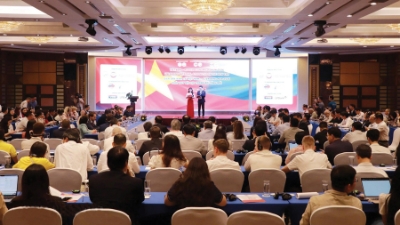
In September, more than 100 Vietnamese businesses and 29 companies from Russia took part in a Vietnam - Russia Business-to-Business (B2B) Trade Connection Program in Ho Chi Minh City. The event aimed to create new opportunities for cooperation across a range of sectors, including agriculture, food, chemicals, fertilizers, mechanical engineering, manufacturing, information technology, and logistics.
Ms. Nguyen Thi Thu Thuy, Deputy Director of the Trade and Investment Promotion Support Center at the Ministry of Industry and Trade’s Trade Promotion Agency, said that the CSP between Vietnam and Russia has continued to advance across multiple areas in recent years, with economic, trade, and investment cooperation playing an important role.
Ms. Anastasia Sayanok, Chairwoman of the Committee for Cooperation with Vietnam at the Russian Association of Exporters and Importers, emphasized that Vietnam is currently a major partner of Russia. The Russian side has been developing and continues to develop the necessary infrastructure to make it easier for Vietnamese businesses to access the Russian market and for Russian businesses to enter the Vietnamese market.
Investment flows
According to the National Statistics Office at the Ministry of Finance, Russia ranked 20th among 105 countries and territories investing in Vietnam in the first ten months of 2026. There were 41 new projects with investment capital of $94.26 million, three projects adding capital of $310,000, and 57 share purchase projects with $16.56 million in capital. Total investment by Russia into Vietnam stood at $111.132 million in the first ten months, an increase of 438 per cent compared to the same period last year.
As of late October, Russia had approximately 253 projects in Vietnam with total registered capital of $1.09 billion, ranking it around 28th among foreign investors. Meanwhile, Vietnamese investment in Russia consists of 19 projects with registered capital of around $1.64 billion, making Vietnam one of the more significant Asian investors in the country.
Major Vietnamese investments in Russia include Rusvietpetro, the Petrovietnam-Zarubezhneft joint venture established in 2008, which has produced more than 40 million tons of oil and generated profit of over $3 billion.
In May last year, the TH Group officially inaugurated its state-of-the-art fresh milk processing plant in Borovsk district in Russia’s Kaluga oblast, marking a significant milestone in its high-tech dairy farming and milk production project in the country. To date, the TH Group has invested around $2.7 billion in the dairy project, including two farms with more than 6,000 heads of dairy cattle, a farm currently under construction in Moscow, and a dairy plant in Kaluga.
On the Russian side, Vietsovpetro, another long-running Petrovietnam-Zarubezhneft partnership, has produced more than 255 million tons of oil and over 40 billion cu m of gas, making it one of the most commercially-significant bilateral ventures.
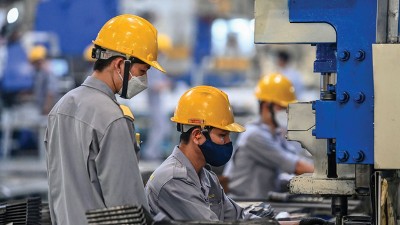
Other Russian investment is concentrated in oil and gas, mining, manufacturing, and services, while newer proposals from AFK Sistema, RDIF, and Zarubezhneft extend the pipeline into AI, cybersecurity, biomedicine, vaccines, renewable energy, offshore wind, tourism, and advanced manufacturing. Together, these projects show a relationship moving from resource-based investment toward a broader two-way model of energy, agriculture, technology, healthcare, and industrial production.
Under the strengthened CSP, Vietnam encourages Russian investment in high value-added projects featuring technology transfer, innovation, and human resources training. Russia will study prospects for expanding investments in Vietnam in energy, including renewable energy, manufacturing and processing industries, the circular economy, ICT, logistics, infrastructure development, high-tech agriculture, pharmaceuticals, healthcare, tourism, and culture. Russia supports Vietnamese business investments in Russia in textiles, consumer goods, furniture manufacturing, handicrafts, and tourism.
There can be no doubt that Vietnam - Russia economic relations are shifting from a foundation of traditional friendship toward more substantive cooperation, with trade recovering and investment flows diversifying into new sectors. To reach the $15 billion bilateral trade target by 2030 and fully unlock the potential of the CSP, the two countries need to continue removing technical barriers, improving payment and logistics infrastructure, and advancing two-way technology-intensive investment projects.
As economic and trade cooperation between Vietnam and Russia continues to create new opportunities, businesses involved in the import and distribution of goods play a vital role in connecting supply chains, expanding markets, and bringing products from both nations closer to consumers.




 Google translate