


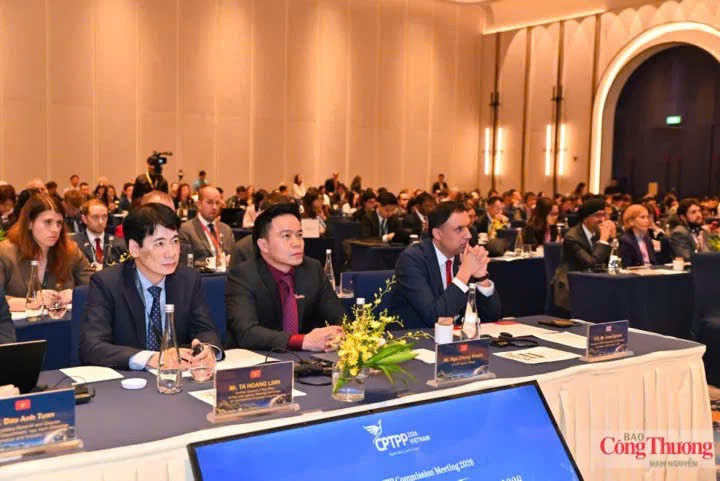
The CPTPP-ASEAN-EU Business Forum 2026 officially opened in Hanoi on November 25 afternoon, bringing together leaders and representatives from Vietnam, the European Union (EU), ASEAN, CPTPP member economies, international organizations, business associations, and enterprises from both domestic and international markets, reported the Government's online newspaper (chinhphu.vn).
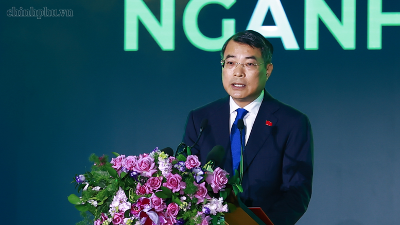
In his opening remarks, Vietnamese Deputy Minister of Industry and Trade Luong Hoang Thai, as quoted by the newspaper, noted that the global economy is undergoing profound transformations, including the restructuring of supply chains, rapid technological advancements, and increasing demands for sustainable development. These changes present new challenges while also highlighting the need for stronger economic connectivity among nations.
According to the Vietnamese Deputy Minister, the CPTPP member economies, the ASEAN, and the EU possess highly complementary strengths. CPTPP is distinguished by its high-standard trade commitments, ASEAN by its dynamic growth and manufacturing capabilities, and the EU by its large market, investment capital, technological expertise, and innovation capacity.
Strengthening ties among these three regions, he said, would create new growth momentum while helping reinforce an open, stable, and rules-based international trading system.
As Chair of CPTPP in 2026, Vietnam places particular emphasis on translating government commitments into tangible development opportunities for businesses. Following the dialogue between CPTPP senior officials and business leaders held in Ho Chi Minh City in July 2026, this forum marks a significant step forward by elevating discussions to the ministerial level and expanding participation to include ASEAN and EU stakeholders.
Four priority areas for cooperation
The Vietnamese Deputy Minister proposed four key areas for future cooperation.
First, the parties should make better use of existing free trade agreements (FTAs), enhance policy coordination, reduce compliance costs, and create favorable conditions for businesses, particularly small and medium-sized enterprises (SMEs), to benefit more effectively from economic integration.
Second, the three regions should leverage their complementary strengths in markets, capital, technology, and production capabilities to promote investment and cross-regional cooperation, building diversified, sustainable, and resilient supply chains.
Third, green transition, digital transformation, and innovation should become new drivers of economic growth and competitiveness.
Fourth, governments and businesses should foster a supportive environment that enables enterprises to propose initiatives, establish partnerships, and turn business opportunities into concrete projects.
He also expressed hope that the Hanoi Business Action Package 2026, unveiled at the forum, would provide a foundation for converting business recommendations and networking initiatives into practical cooperative activities after the event.
Speaking at the forum, Mr. Maroš Šefčovič, European Commissioner for Trade and Economic Security, reaffirmed the EU’s commitment to being a reliable partner through trade agreements based on fairness and mutual benefit. He noted that the EU currently maintains the world’s largest network of FTAs, with its agreements covering more than half of the global population.
Regarding ASEAN, Mr. Šefčovič described the bloc as strategically and economically significant to the EU. Trade relations between the two blocs are already strong, with free trade agreements with Singapore and Vietnam currently in force. The EU is continuing to expand and deepen its trade cooperation frameworks with ASEAN countries, aiming to strengthen economic integration between the two regions.
Beyond trade, the EU and ASEAN are also enhancing collaboration in areas such as digital trade, green technology, sustainable services, and resilient supply chains. The EU hopes that bilateral FTAs with individual ASEAN member states will gradually lay the groundwork for a future region-to-region trade agreement between ASEAN and the EU.

 Google translate