


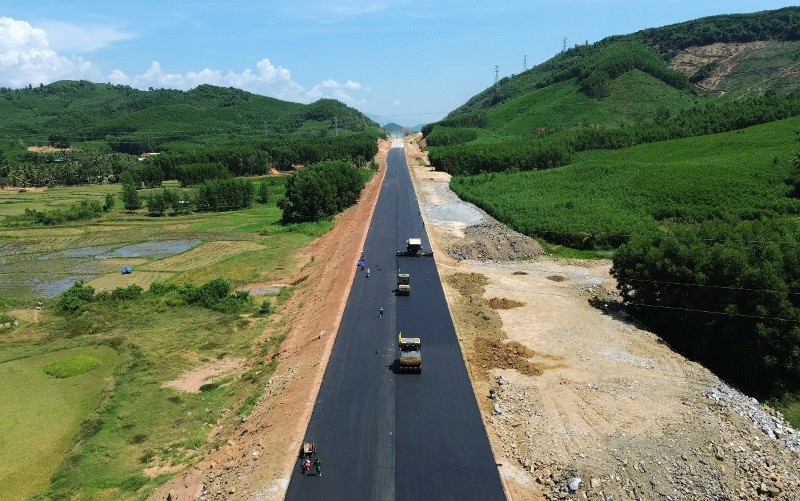
Vietnam's Road Administration has submitted a proposal to the Ministry of Construction to revise the national road network plan for 2021–2030, with a vision to 2050, including the addition of several expressways and adjustments to project timelines to improve regional connectivity and support economic development.
A key proposal is the inclusion of two large ring-road expressways in the northern midland and mountainous region.
The 327-km Northern Mountainous Ring Road would run from Ta Lung International Border Gate in Cao Bang through Lang Son, Thai Nguyen, Tuyen Quang and Lao Cai to Son La. The four-lane expressway is proposed for construction after 2030.
The Road Administration also proposed adding the 378-km Northern Midland Ring Road linking Tan Thanh, Lang Son, Thai Nguyen, Tuyen Quang, Lao Cai and Son La. The Lang Son–Thai Nguyen section has been recommended for priority investment before 2030 to accelerate regional connectivity.
According to the agency, the two routes would connect multiple international border gates, ease traffic pressure on existing expressways, and support the development of logistics, industrial parks, tourism and cross-border trade.
The revised plan also proposes three new expressways: the 85-km Ha Tinh–Cau Treo route linking the North–South Expressway with Cau Treo International Border Gate (in Ha Tinh province); the 45-km Hue–A Luoi route connecting western Hue with the North–South Expressway; and the 141-km Phan Thiet–Bao Loc–Gia Nghia–Bu Prang expressway to strengthen links between the Central Highlands, the south-central coast and Vietnam's southern key economic region.




 Google translate