



With the National Assembly (NA) entering the final stages of discussions ahead of a vote, the revised Law on Petroleum is expected to provide a significant boost to Vietnam’s energy sector. The “Enhancing Policy Frameworks to Build Competitive Advantage for Energy Development” forum, organized by Tap chi Kinh te Viet Nam / Vietnam Economic Times / VnEconomy, is the first discussion platform to provide an update on the Law and one of the final opportunities for experts and investors to contribute their views before the new provisions take effect, as the amended law was passed by the National Assembly on August 23.
With responsibility for reviewing the legislation, the NA’s Economic and Financial Committee has worked to incorporate and refine provisions based on lawmakers’ comments during committee and plenary discussions. The aim is to produce a draft that commands broad consensus while offering greater transparency and practical feasibility. Ultimately, the goal is not only to remove existing bottlenecks but to turn institutional reform into a national competitive advantage and elevate Vietnam’s petroleum industry regionally and internationally.
New mindset
Why is the Law on Petroleum 2022 being considered for another revision in 2026, just four years after its enactment? The question has drawn considerable attention from the public and investors. The answer lies in rapidly-changing global conditions and Vietnam’s increasingly ambitious development goals.
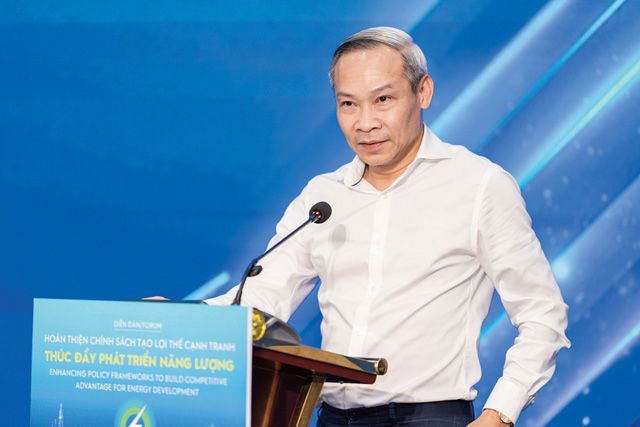
The world is undergoing major structural changes in energy, while Vietnam’s drive for faster, stronger, and more sustainable growth is placing greater pressure on its strategic economic sectors. Energy is the lifeblood of the economy, and petroleum remains indispensable. It contributes directly to energy security while also being closely linked to the country’s maritime economic strategy and the protection of national sovereignty and security at sea. As national development goals and economic conditions change, the legal framework must evolve accordingly rather than become a barrier to progress.
The revision is also needed to update major policies of the Party and State, including Politburo Resolution No. 20-NQ/TW on maritime economic development, Politburo Resolution No. 79-NQ/TW on the State sector, and, in particular, changes introduced under NA Law No. 68/2025/QH15 on the management and investment of State capital in enterprises. These new legal instruments reflect a different approach to decentralization and delegation of authority, as well as to the principles governing the preservation and growth of State capital.
Though the Law on Petroleum 2022 represented a major improvement over previous legislation, the rapid evolution of related laws has exposed areas where it is no longer fully aligned. The decision to revise it therefore reflects a proactive approach to institutional reform. The objective is not simply incremental improvement, but to turn the legal framework into a national competitive advantage and create an investment environment attractive enough to mobilize international resources in an increasingly competitive global petroleum market.
The guiding principle throughout the drafting process is that institutions must stay one step ahead. When practical experience reveals shortcomings, lawmakers need to respond quickly to unlock resources. The focus on five major policy groups proposed by the government reflects a comprehensive yet targeted approach. This is not simply about the petroleum industry, but about Vietnam’s position on the regional energy map.
For foreign investors and diplomatic missions, the draft sends a clear signal of a more transparent, stable, and promising investment environment. The confidence expressed by NA deputies during recent discussions suggests that the draft is moving in the right direction, reflecting practical realities and meeting the expectations of businesses and regulators.
Breakthrough decentralization
One of the most significant changes in the revised Law on Petroleum is a substantial expansion of decentralization and delegation of authority. This should not be understood simply as transferring individual powers from one agency to another, but as part of a broader redesign of the national petroleum governance model.
The objective is to establish clear lines of authority and responsibility for all parties, maximizing the effectiveness of both State management and business operations. Under the draft, the Prime Minister would focus only on matters of fundamental importance related to national defense and security and foreign affairs. Most other powers would be delegated to the Ministry of Industry and Trade as the State management agency and the Vietnam National Industry-Energy Group (PetroVietnam) as the implementing entity.
Under this model, State agencies would shift from intervening in specific business decisions toward policy development and oversight. This would help prevent government agencies from taking on matters outside their core expertise, which can slow decision-making while weakening their ability to perform essential oversight functions.
The draft also clarifies coordination mechanisms between government agencies, an area that has created significant implementation bottlenecks. The broad and often ambiguous practice of “seeking opinions,” which can blur responsibility and extend waiting periods, would be replaced by more transparent mechanisms. There would be two principal forms of participation: where an agency has decision-making authority, its role would involve a clearly-defined appraisal or approval process; where it has only an oversight role, notification would apply. This clearer division of responsibilities is intended to ensure that every stage of petroleum operations has an accountable authority, reducing delays and administrative overlap.
For the first time in Vietnam’s legal system, the revised law also introduces a strong “integrated chain project” approach. Instead of regulating each stage or industry under separate laws with overlapping procedures, the revised Law on Petroleum would treat a project from upstream to downstream, including offshore and onshore components, as an integrated whole. This would allow a single procedural framework and lead agency to be applied, reducing the risk of conflicting timelines or regulatory requirements.
Reducing administrative procedures here means more than cutting paperwork. It represents a fundamental change in how projects are processed, helping accelerate major investments and deliver greater economic benefits. Other reforms, such as requiring petroleum contracts to be amended only when there are material changes and allowing automatic extensions in force majeure situations, are similarly designed to minimize delays and facilitate business operations.
Driving investment and high-tech industries
As Vietnam’s existing petroleum fields mature and production becomes increasingly challenging, the revised law introduces breakthrough investment incentives and provisions for emerging sectors. The objective is not merely to create a better investment environment than in the past, but one that is genuinely competitive at the regional and international levels.
The incentive framework is designed around four flexible levels, ranging from standard incentives to special incentives for particularly challenging fields. The concept of “special of special” incentives for marginal fields is based on the actual economics of costs and benefits rather than rigid criteria. In highly-exceptional cases, the Prime Minister would also have the authority to approve tailored incentives to attract strategic investors. This reflects a more flexible approach to regulation, with the government prepared to share risks and benefits with investors to maximize resource development.
Another major addition is the inclusion of provisions on carbon capture and storage (CCS) and offshore energy, particularly offshore wind. This is an important step toward meeting emission reduction commitments and the net-zero target while making greater use of existing petroleum infrastructure. Integrating these activities into petroleum contracts would allow investors to leverage existing resources and infrastructure to support a smoother energy transition.
The draft also establishes a clear distinction: CCS and offshore energy activities associated with petroleum blocks would be governed by the Law on Petroleum, while standalone projects would fall under the revised Law on Electricity, which is expected to be submitted at the second regular session of the NA later in 2026. This would create a specialized legal framework while maintaining consistency in national energy management. Coordination between the Law on Petroleum and the Law on Electricity will help shape a broader framework for Vietnam’s future energy sector.
The revised law also goes beyond raw resource extraction by setting a broader ambition to develop high-quality technical petroleum services into a globally-competitive domestic industry. The addition of a dedicated chapter on petroleum services signals a shift from “resource extraction” toward “resource-based industrial development.”
Vietnam aims not only to develop domestic capabilities to operate drilling rigs and complex offshore projects but also to export these technical services internationally. Building a self-reliant and competitive petroleum industry is a strategic objective for long-term economic security. Achieving it will require sustained investment in technology and human resources, with the revised Law on Petroleum providing an important legal foundation.
Finally, the revised Law opens broader discussions on completing the legal framework for the energy sector, including the forthcoming Law on Electricity. Some experts have suggested considering a change in its name to the Law on Energy to provide a broader framework for emerging issues associated with the energy transition. Together, these efforts aim to establish a coordinated, modern, and transparent legal ecosystem.
With new technologies and strong legislative commitment supporting the process, recommendations from expert forums are expected to be consolidated and submitted to the NA as it completes the final stages of the legislation. With its new mechanisms and reforms, the Law on Petroleum 2026 could mark an important turning point for Vietnam’s energy sector, opening a new chapter for sustainable development and strengthening the country’s position on the international stage.






 Google translate