


In the latest wave of technological innovation, AI, semiconductors, and quantum computing are emerging as the three foundational layers of the future digital economy. While AI is transforming data processing and automation, and semiconductors provide the computing infrastructure, quantum computing is expected to unlock an entirely new generation of computational capabilities for solving optimization problems, materials simulation, financial modeling, and cybersecurity.
Quantum technology is steadily moving closer to practical deployment. Global technology companies such as IBM, Google, Microsoft, and Amazon have invested heavily in quantum infrastructure, while governments increasingly view the field as the next strategic frontier after AI and semiconductors. Industry experts say the quantum race extends well beyond building quantum computers, creating an entirely new technology value chain spanning hardware, algorithms, simulation, post-quantum cybersecurity, and middleware software platforms.
Though Vietnam does not yet have an advantage in quantum hardware, experts believe the country has an opportunity to participate in critical parts of the ecosystem, particularly in software development and engineering talent.
Rapidly-expanding market
According to McKinsey & Company’s April 2026 Quantum Technology Monitor, global quantum companies generated more than $1 billion in revenue in 2025. That figure is projected to increase to approximately $4.4 billion by 2028 as commercial applications begin reaching the market.
Looking further ahead, the broader quantum technology market, including computing, communications, and sensing, is expected to reach between $60 billion and $100 billion by 2035 as the industry transitions from research to large-scale deployment.
Quantum communications alone, including post-quantum security solutions, generated approximately $1.2 billion in revenue in 2024 and is forecast to grow to between $10 billion and $15 billion by 2035, reflecting rising demand for security in the quantum era.
At the same time, the rapid advancement of quantum computing is raising growing concerns about post-quantum cybersecurity risks. Mr. Phuong Cao, Research Scientist at the National Center for Supercomputing Applications (NCSA) at the University of Illinois Urbana-Champaign, warned that sufficiently powerful quantum computers could eventually break many of today’s widely used encryption systems and digital signature standards.
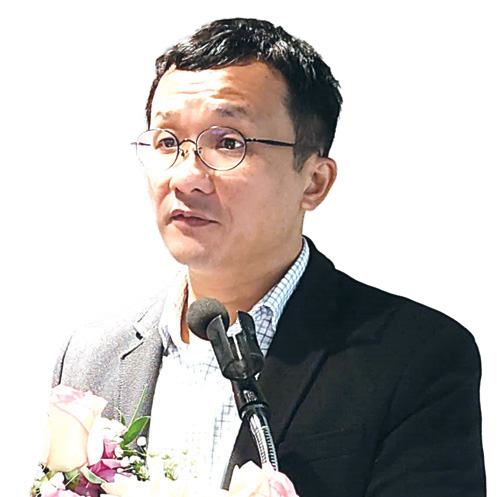

Quantum computing still faces significant challenges in technology, talent, and infrastructure.
“The point at which quantum computers become powerful enough to crack current encryption standards was once expected to fall between 2030 and 2040, but current projections suggest that timeline may arrive sooner,” he said.
Those cybersecurity challenges are also creating an entirely new technology market. As governments and businesses prepare for the post-quantum era, demand is rising for quantum simulation software, quantum programming platforms, risk assessment tools, and post-quantum security solutions.
According to Mr. Dongwoo Hwang, Director of the Quantum AI Co., Ltd. Vietnam, this means the quantum race is not limited to countries capable of building advanced quantum computers or quantum chips. Much of the ecosystem’s value remains concentrated in software, algorithms, and technology services - areas that require engineering and mathematical expertise rather than massive hardware investments.
Entering the ecosystem
Mr. Hwang said quantum computing remains at an early stage of development, comparable to the early years of personal computers. That creates opportunities for countries without strong hardware capabilities but with competitive software industries. “Vietnam has a strong pool of software developers and can play a much more active role in the quantum computing ecosystem,” he believes.
Within that ecosystem, software is not simply a supporting tool but a core component of unlocking the capabilities of quantum hardware. Developing quantum algorithms, system simulations, middleware platforms, and programming tools are all areas where Vietnamese companies and researchers could contribute.
As quantum hardware remains expensive and limited in availability, software development and simulation platforms have become essential bridges that enable businesses and researchers to access the technology. This creates a window of opportunity for countries such as Vietnam to establish a presence. For businesses, experts say the question is no longer whether to participate, but where and how to enter the ecosystem. According to Mr. Phuong Cao, preparing for the quantum era is fundamentally a strategic and economic challenge. “Systems that can be upgraded should begin transitioning to new security standards as early as possible, while systems that cannot be upgraded must have appropriate replacement plans,” he advised.
That transition is expected to drive significant demand for software solutions ranging from risk assessment tools and post-quantum encryption systems to integrated cybersecurity management platforms. Experts believe these are all areas that align well with the strengths of Vietnam’s technology sector.
Other Asian economies are already pursuing quantum strategies tailored to their own competitive advantages. Singapore, for example, has launched its National Quantum Strategy (NQS). Rather than competing to build the world’s largest quantum computers, the city-state is positioning itself as a “living lab,” with a focus on developing a National Quantum-Safe Network to protect critical infrastructure such as banking and telecommunications ahead of “Q-Day” - the point when conventional encryption can be broken by quantum computers.
India, meanwhile, is leveraging its position as a global software development hub to capture a larger share of the quantum value chain. Through its National Quantum Mission (NQM), the country has established specialized research centers focused heavily on quantum-inspired engineering simulation.
Three priorities
The Vietnamese Government has introduced a series of major policies in recent years aimed at shaping the country’s long-term technology strategy. Politburo Resolution No. 57-NQ/TW on science, technology, and innovation, together with national digital transformation initiatives and semiconductor industry development plans, reflects an ambition not only to adopt advanced technologies but also to master core technologies. Within that context, quantum computing is increasingly being recognized as a long-term strategic field.
Though quantum technology is not yet ready for widespread commercialization, experts believe this represents Vietnam’s window of opportunity. Dr. Nguyen Quoc Hung, Director of the Institute for Quantum Technology at Vietnam National University, Hanoi, and Vice Chairman of the VNQuantum Network, said quantum computing has reached a pivotal stage of development driven by two major forces.
The first is the accelerating global investment by governments and leading technology companies, and the second is the growing need for countries to develop expertise and gradually master advanced technologies. “Quantum computing still faces significant challenges in technology, talent, and infrastructure,” Dr. Hung said, adding that Vietnam needs a clear national strategy if it is to avoid missing the opportunity.
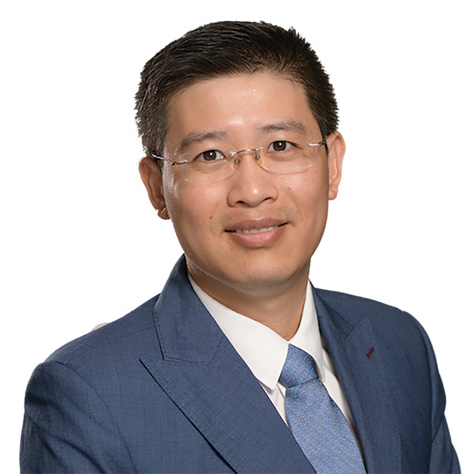
The point at which quantum computers become powerful enough to crack current encryption standards was once expected to fall between 2030 and 2040, but current projections suggest that timeline may arrive sooner.
In the near term, experts recommend that Vietnam focus on three priorities. The first is building foundational infrastructure, including computing capacity and testing environments. The second is promoting pilot projects and real-world applications to accumulate practical experience. And the third is expanding international partnerships to leverage global expertise and resources.
Above all, developing a highly-skilled workforce will be critical. Quantum computing is an interdisciplinary field that combines physics, computer science, and mathematics, presenting both a challenge and an opportunity for Vietnam to cultivate a new generation of engineers and researchers.
Looking further ahead, Mr. Hwang believes Vietnam’s strengths in software development and engineering talent could allow the country to play a meaningful role in the industry’s evolution. “If Vietnam fully leverages its software capabilities and human resources, it can do more than participate, it can contribute to the development of the global quantum computing ecosystem,” he said.




 Google translate