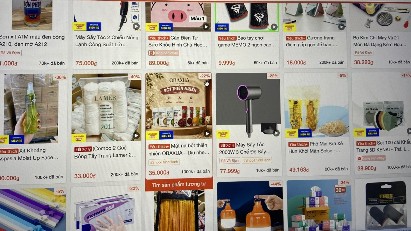
The programme targets businesses with promising products that have established domestic online sales and are seeking to expand their operations globally.
The program aims to translate national and municipal policies on digital transformation, the digital economy and e-commerce into practical initiatives, while implementing Hanoi’s plans for developing digital commerce.
Customer attraction and retention, getting the best out of AI, and navigating a more stringent regulatory environment count among the key factors driving a changeable e-commerce space.
The capital is currently home to 221 science and technology enterprises, more than 1,000 innovative start-ups and nearly 11,000 digital technology companies.
The program aiming not only to establish an additional online sales channel but also to build a safe, transparent and traceable digital consumption ecosystem under the supervision of the municipal government.
A significant part of this strategy involves digitalizing local commerce, with a target of having 80% to 90% of "One Commune, One Product" (OCOP) items and typical rural industrial products featured on e-commerce platforms.
Vietnam is rapidly positioning itself as one of the most dynamic retail markets in the Asia-Pacific (APAC) region, driven by strong economic growth, rising consumer incomes, and accelerated adoption of digital technologies...
The total value of authentic product transactions through online stores is projected to account for 55 per cent of the total e-commerce market in the region by 2030, equivalent to $150 billion...
The draft Law on E-commerce submitted by the Government to the National Assembly on November 3 is expected to create a level and transparent playing field, protect consumers and promote the development of the digital economy...