


US Section 301 tariffs are reshaping the competitive landscape for Vietnamese seafood, according to the Vietnam Association of Seafood Exporters and Producers (VASEP).
However, the association noted that the decisive factor is not merely the 12.5% tax rate, but the total "landed cost" of bringing products into the US market, which encompasses MFN tariffs, Section 301 duties, anti-dumping and countervailing duties (AD/CVD) where applicable, as well as logistics costs and technical requirements.
Seafood exports from Vietnam in the first seven months of 2026 reached nearly $6.8 billion, an 11.5% increase over the same period last year. Despite this, the growth momentum is slowing as several key commodities—such as pangasius, tuna, and squid—show sluggish growth or declines in major markets.
Notably, exports to the US remained nearly flat, totaling over $1 billion—a marginal increase of just 0.3%. The US has become the most challenging market for Vietnamese seafood enterprises due to escalating competition, tax burdens, and increasingly stringent technical requirements.
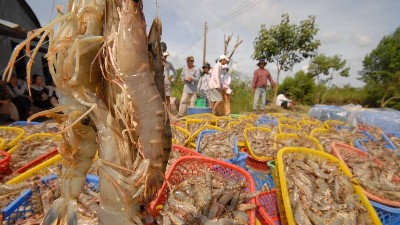
During the same seven-month period, shrimp exports reached nearly $2.8 billion, up 13.5% year-on-year. VASEP observes that the shrimp industry's current growth is driven primarily by the Chinese market and lobster products, while the US market faces mounting pressure from competitors like Ecuador and India.
The situation was further complicated since the United States implemented new permanent Section 301 tariffs of 10% or 12.5% on imports from 60 trading economies starting July 24, 2026, replacing expired temporary global levies.
As a result, Vietnam has been placed in the group subject to the higher 12.5% rate.
Deputy Secretary-General of VASEP, Ms. Le Hang, explained that while 12.5% is only 2.5 percentage points higher than the 10% tier, this gap can significantly shift competitive advantages. Given that US importers have various sourcing options—including Ecuador, India, Indonesia, Thailand, China, and Malaysia—even a small tariff discrepancy can influence order allocations, particularly for highly substitutable products.
Vietnam’s three major competitors—India, Ecuador, and Indonesia—all benefit from a lower Section 301 rate of 10%, creating a distinct disadvantage for Vietnam in the standard frozen shrimp segment where price competition is fierce.
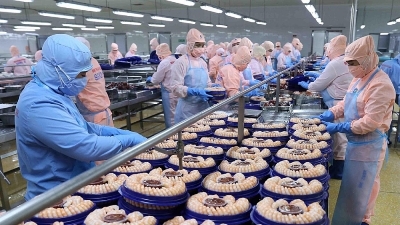
Conversely, for deep-processed, value-added, and convenience products, Vietnamese firms may still mitigate price pressure through superior processing capacity, quality, and strong customer relationships.
However, many Vietnamese shrimp exporters are simultaneously hit by anti-dumping and countervailing duties. For major exporters to the US, the total tax obligation has climbed to approximately 19.6%, significantly higher than the rates faced by competitors in Ecuador, Indonesia, and Thailand.
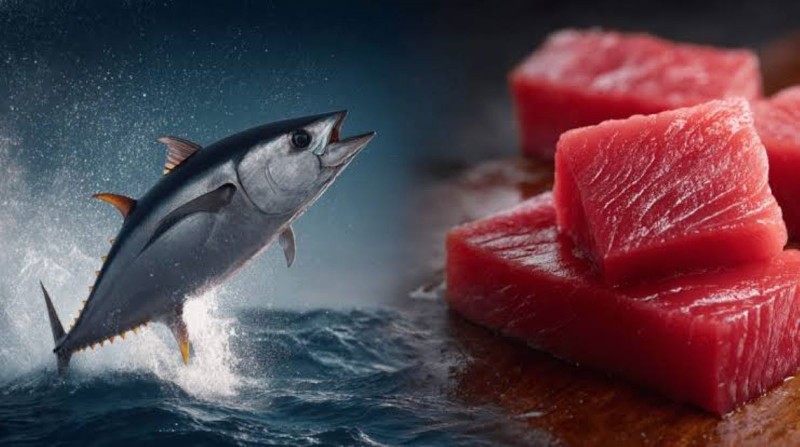
While VASEP notes that pangasius faces a lower direct impact from Section 301 than shrimp, the tuna sector is currently grappling with a "double squeeze". In addition to the new tax burdens, tuna exporters must navigate increasingly rigorous requirements regarding fishing practices and traceability, making the US an exceptionally difficult environment for the industry.





 Google translate