


On November 7, the National Assembly (NA) approved a resolution on the socio-economic development plan for 2027, targeting economic growth of 10% or more.
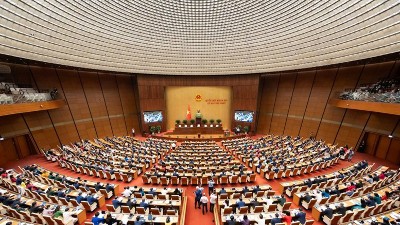
Under the chair of NA Vice Chairwoman Nguyen Thi Hong, the National Assembly passed the resolution with 467 out of 469 delegates voting in favor, accounting for 93.40% of the total delegates.
Prior to this, authorized by the Prime Minister, Minister of Finance Ngo Van Tuan presented a report on the main contents of the draft resolution.
According to the Minister, the draft resolution has been refined by the government based on feedback from National Assembly delegates, clearly defining objectives, 45 key indicators, and 11 groups of tasks and solutions, closely aligned with the 14th Party Congress documents and the Party Central Committee's conclusions.
The government has identified key priorities, including macroeconomic stability, unlocking resources, fostering new growth drivers, and enhancing labor productivity
To achieve the economic growth target of 10% or more in 2027, the government focuses on completing institutional frameworks, unlocking and enhancing the efficiency of resource utilization, leveraging traditional growth drivers, and creating breakthroughs from new drivers.
The focus is on restructuring the economy in conjunction with innovating the growth model based on science, technology, innovation, digital transformation, and enhancing labor productivity.
The government also aims to strongly develop economic sectors, promote the role of the private economy, enhance endogenous capacity, autonomy, and competitiveness of the economy.
Alongside promoting growth, the government emphasizes linking economic development with culture, society, environmental protection, job creation, and income enhancement, ensuring that people benefit from development achievements.
Ministries, sectors, and localities will be clearly assigned responsibilities, linked with progress, deadlines, and implementation results to strive to meet and exceed the targets set by the National Assembly.
Amid forecasts of continued complex global economic developments in 2027, with volatile energy prices, raw materials, transportation costs, and monetary policies of major economies, the government identifies macroeconomic stability, inflation control, and ensuring major balances as crucial tasks to achieve the growth target of 10% or more.
Regarding fiscal policy, the government continues to study and flexibly adjust tax, fee, and charge policies for petroleum in line with market developments and budget balancing capabilities; evaluate the effectiveness of support policies to consider continued implementation in 2027.
Simultaneously, it will accelerate tax system reform towards modernization, transparency, expanding the tax base, and nurturing sustainable revenue sources.
In terms of monetary policy, the government directs flexible interest rate and exchange rate management according to market developments; controls reasonable credit growth, prioritizes capital flows for production, business, and growth drivers, while tightly controlling risky sectors to ensure system safety.
Additionally, it strengthens analysis, forecasting, proactively builds price management scenarios; ensures the supply of essential goods and appropriately adjusts prices of state-managed items to control inflation and consolidate macroeconomic stability.
To promptly implement the resolution in practice, the government has directed the Ministry of Finance along with ministries, sectors, and localities to urgently develop a government resolution on key tasks and solutions for implementing the socio-economic development plan for 2027, with specific, practical solutions aimed at achieving the set targets and objectives of the 2026–2030 five-year plan.

 Google translate