


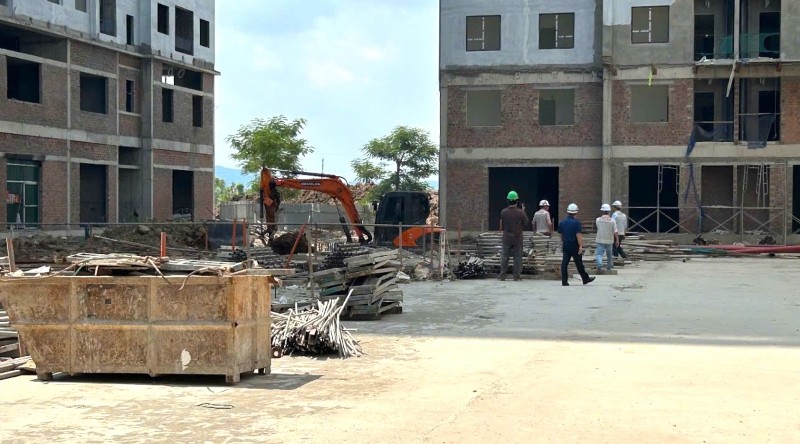
Detailed regulations regarding label specifications and administrative penalties have also been officially established.
To ensure management transparency, the Ministry of Construction has promulgated regulations on energy labeling for building materials within its jurisdiction, clearly identifying impacted entities as well as exemption cases.
The regulations apply to manufacturers, importers, distributors, and retailers, including e-commerce platforms, handling building materials subject to mandatory energy labeling. They also govern testing laboratories measuring thermal characteristics for labeling, along with relevant state management agencies, organizations, and individuals.
Exemptions are granted to building materials under temporary import for re-export, transit, or transshipment; goods manufactured or processed strictly for export; non-commercial imports, gifts, samples, displays, and research or testing items not placed on the market; and materials serving national defense, security, or state secret purposes.
The energy labeling catalog for building materials is divided into two distinct groups based on implementation timelines.
Group 1 products face mandatory energy labeling starting January 1, 2029. This group comprises construction glass (including float glass, sheet glass made via horizontal or vertical drawing, patterned glass, tempered glass, laminated and safety laminated glass, low-E glass, reflective glass, sealed insulating glass units, heat-absorbing colored glass, photochromic glass, solar-integrated glass, and wire glass), emulsion wall paints, as well as metal roofing and cladding sheets.
Group 2 products will require energy labeling from January 1, 2031. This group includes thermal insulation foam boards made of polystyrene, polyurethane, and other materials; ceiling and partition panels; and non-baked building materials such as autoclaved aerated concrete blocks and panels, extruded hollow concrete wall panels, three-layer sandwich lightweight panels, and lightweight concrete blocks and panels.
Energy labels must display key information, including the manufacturer or importer name, product name, model identifier, thermal characteristics, declared values, testing standards used, and an electronic lookup code where available. Labels can be integrated into product labeling or displayed separately, with sizes appropriate to ensure clarity. Manufacturers and importers must submit electronic declarations to the Ministry of Construction for publication on its portal and publish them on their corporate websites.
Re-testing and re-declaration are mandatory when changes occur in product structure, raw materials, technology, or manufacturing location. For purely administrative changes, businesses must update their websites and notify the ministry without re-testing.
Energy labels will be suspended or revoked for counterfeit labeling, unapproved labeling, inaccurate specifications, fraudulent dossiers, or repeated violations penalized two or more times. Provincial People's Committees will issue enforcement decisions based on inspection findings and notify the Ministry of Construction. Non-compliant enterprises must execute corrective measures before resuming label usage.





 Google translate