


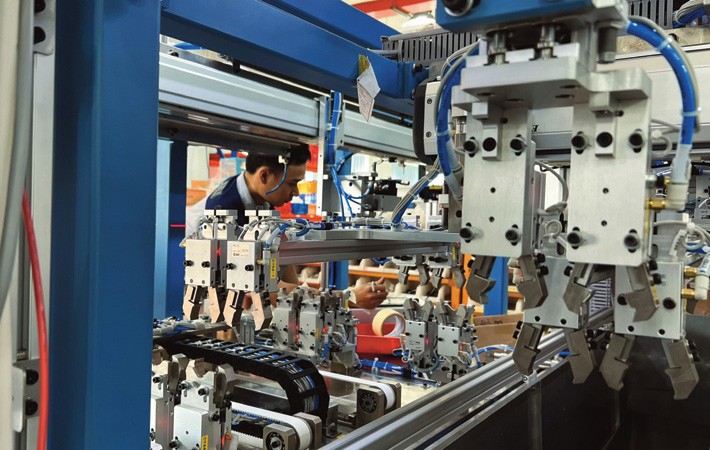
Vietnam enters the second half of 2026 with solid momentum but a more challenging operating environment. Globally, the recovery remains uneven, while geopolitical tensions, volatile energy prices, higher freight costs, rising trade protectionism, and the monetary policies of major economies continue to weigh on exports, exchange rates, and inflation.
At home, the government’s pursuit of double-digit growth has raised the stakes. The economy must accelerate investment, production, consumption, and exports while maintaining macro-economic stability. First-half performance provides a strong foundation. Even so, the economy faces mounting headwinds, including a return to a trade deficit, rising inflationary pressures, sluggish public investment disbursement, financial strains among businesses, and risks to financial and monetary stability. Maintaining momentum in the second half will require targeted policy action that supports growth without undermining macro-economic stability.
Growth bottlenecks and macro-economic risks
While Vietnam’s economy performed strongly in the first half of 2026, several structural constraints remain beneath the headline figures.
First, achieving double-digit growth will be extremely challenging. Though GDP expanded 8.18 per cent in the first half, growth in the second half would likely need to reach around 11.5-12 per cent for full-year GDP to approach or exceed double digits, depending on the relative weighting of output across the year. That places heavy pressure on the three main growth drivers - investment, consumption, and exports.
Second, the return of a sizeable trade deficit warrants close attention. Vietnam posted a goods trade deficit of $16.65 billion in the first half of 2026, reversing the surplus recorded a year earlier. Stronger imports partly reflect rising demand for raw materials, machinery, and components as production expands. However, imports have outpaced exports by a wide margin, underscoring the economy’s reliance on imported inputs, especially electronic components, machinery, petroleum products, chemicals, and metals. This dependence poses risks to the trade balance, exchange rate stability, and the long-term resilience of domestic manufacturing.
Third, the business sector has yet to make a full recovery. Though business registrations and total registered capital increased, market exits remain elevated. An average of 25,200 businesses exited the market each month during the first half, while the number completing dissolution procedures rose sharply from a year earlier. The recovery remains uneven: firms with strong balance sheets, stable order books, and integrated supply chains have rebounded quickly, while many small and medium-sized enterprises (SMEs) continue to struggle with high financing costs, rising input prices, weak demand, and limited competitiveness.
Fourth, inflation remains under control, but upward pressures are becoming more pronounced. Consumer prices rose an average of 4.38 per cent in the first half, while core inflation reached 4.12 per cent. Both warrant close monitoring as housing, utilities, construction materials, transportation, food services, and production costs continue to rise. The producer input price index for raw materials, fuels, and production materials increased 5.4 per cent, suggesting higher costs could increasingly feed through to consumer prices in the months ahead. Unless adjustments to State-administered prices are carefully managed, inflationary pressures could build more quickly than expected.
Fifth, public investment disbursement remains a major bottleneck. Despite being the government’s most powerful policy tool to support growth, only about 30.9 per cent of the Prime Minister’s approved annual investment plan had been disbursed by mid-year; below both expectations and the pace a year earlier. Administrative procedures, land clearance delays, shortages of construction materials, limited implementation capacity, and weak coordination continue to slow the flow of capital into the economy. Unless disbursement accelerates sharply in the third quarter, public investment is unlikely to play its intended catalytic role in the second half.
Sixth, growth remains heavily dependent on the FDI sector. Foreign-invested enterprises continue to dominate exports, particularly in electronics, computers, components, machinery, and equipment. While this is a key strength, it also highlights the limited integration of domestic firms into global value chains. Unless stronger links are forged between foreign investors and local suppliers, robust export growth will not translate fully into stronger domestic industrial capacity, higher productivity, or greater value added.
Seventh, external risks remain highly unpredictable. As one of the world’s most open economies, Vietnam is highly exposed to geopolitical tensions, volatile energy prices, freight costs, the monetary policies of major economies, and rising trade protectionism. Any of these could quickly affect exports, investment, exchange rates, inflation, and market sentiment. At the same time, policymakers have less room to maneuver. Excessive easing could fuel inflation and weaken the currency, while tightening too early could undermine the recovery.
Eighth, financial and monetary conditions are becoming more challenging. Credit expanded 7.41 per cent in the first half, outpacing deposit growth of 5.02 per cent, making liquidity management more difficult as financing demand rises. Though borrowing costs have eased, lending rates of 8-10.1 per cent remain high for many SMEs, particularly those recovering slowly or lacking collateral. Meanwhile, the return of a trade deficit, US dollar volatility, widening global interest rate differentials, exchange rate pressures, and capital flows warrant close monitoring. While the stock market has strengthened in terms of capital raising and market capitalization, trading liquidity weakened in June and the insurance sector continues to recover slowly.
Three growth scenarios
Baseline scenario: GDP grows 8.3-9 per cent in the second half, delivering full-year growth of 8.2-8.6 per cent. This remains the most likely outcome if industrial production maintains momentum, services and consumer spending continue to recover, FDI disbursement stays robust, tourism sustains its rebound, credit growth is managed prudently, and public investment accelerates in the third and fourth quarters. Under this scenario, Vietnam would continue to outperform many regional peers but remain short of double-digit growth.
Optimistic scenario: Second-half GDP expands 10-11 per cent, lifting full-year growth to 9.1-9.7 per cent. Reaching this range would require several growth engines to accelerate at once: faster public investment disbursement, stronger spillover effects from major infrastructure projects, sustained double-digit manufacturing growth, continued export expansion, firmer domestic demand, and inflation remaining under control. This would bring the economy within striking distance of double-digit growth but demand more decisive and closely coordinated policymaking.
Breakthrough scenario: Double-digit growth would require second-half GDP expansion of 11.5-12.5 per cent, pushing full-year growth to 10 per cent or higher. This is the most ambitious outcome and depends on an exceptional alignment of conditions: rapid public investment disbursement, sustained manufacturing growth, uninterrupted export expansion despite external risks, strong domestic demand without excessive inflation, stable financial markets, and businesses able to absorb credit and expand production.
Achieving double-digit growth will require more than injecting additional capital into the economy. Investment must flow into productive sectors, infrastructure, technological upgrading, consumption, and industries with strong multiplier effects.
Which scenario unfolds will depend on faster public investment, sustained double-digit manufacturing growth, a genuine recovery in consumption and services, and a balanced fiscal and monetary policy mix. If public investment continues to lag, industrial production slows, consumer spending remains weak, or credit shifts toward higher-risk sectors, the higher-growth scenarios will be difficult to achieve.
Conversely, faster investment in transport, logistics, energy, and digital infrastructure, combined with stronger manufacturing, effective consumer stimulus, and stable inflation, exchange rates, liquidity, and non-performing loans, could lift growth to 9-9.7 per cent. Double-digit growth, however, would require all major growth drivers to accelerate simultaneously while external risks remain contained.
Overall, the baseline outlook of 8.2-8.6 per cent GDP growth remains the most likely for 2026. With decisive policy implementation and stronger momentum in public investment, industry, and services, growth could approach 9-9.7 per cent. Double-digit growth remains an ambitious target, achievable only under exceptionally favorable conditions without compromising macro-economic stability.
Breakthrough measures
Conventional policy measures will be necessary but insufficient if Vietnam is to pursue double-digit growth. The government should consider a set of high-impact “growth levers” capable of delivering rapid, measurable, and broad-based economic effects. These measures should focus on six priorities: (i) accelerating public investment through special implementation mechanisms; (ii) establishing a “green lane” for manufacturing and exports; (iii) introducing targeted consumption stimulus; (iv) channeling working capital to productive businesses; (v) converting FDI inflows into stronger domestic industrial capacity; and (vi) adopting real-time, data-driven economic management.
First, launch a 180-day public investment acceleration campaign under a special implementation mechanism. The campaign should set monthly disbursement targets for major projects, assign clear accountability, and establish rapid-response mechanisms to remove bottlenecks in land clearance, construction materials, and project approvals.
Second, establish a “green lane” for manufacturers and exporters with strong order books. Despite exports rising 21 per cent in the first half, many businesses continue to face delays in customs, tax refunds, inspections, logistics, and access to working capital.
Third, stimulate consumption through targeted digital incentives rather than broad-based subsidies. Though retail sales rose 12.9 per cent in the first half, real growth was only 7.3 per cent. Targeted incentives delivered through digital platforms could support spending on Vietnamese products, domestic tourism, and consumer services.
Fourth, pilot a risk-sharing working capital facility for businesses with confirmed orders. Rather than expanding credit broadly, policymakers should provide credit guarantees for short-term loans backed by purchase orders, export contracts, cash flow, and tax data.
Fifth, convert more FDI into opportunities for domestic firms. While FDI inflows remain strong, deeper integration of local suppliers into global value chains is essential.
In short, accelerating growth in the second half should be less about introducing new policies than deploying the right high-impact levers: speeding up public investment, creating a green lane for production and exports, stimulating consumption through digital tools, directing working capital toward businesses with confirmed orders, integrating domestic firms more deeply into FDI supply chains, and managing the economy using real-time data.






 Google translate